NYC Mayor's Reform Sparks Concerns Over Public Safety
The mayor's decision to dismantle the NYPD's Strategic Response Group has raised concerns among police unions and officials about the city's readiness to handle violent protests and terrorism.

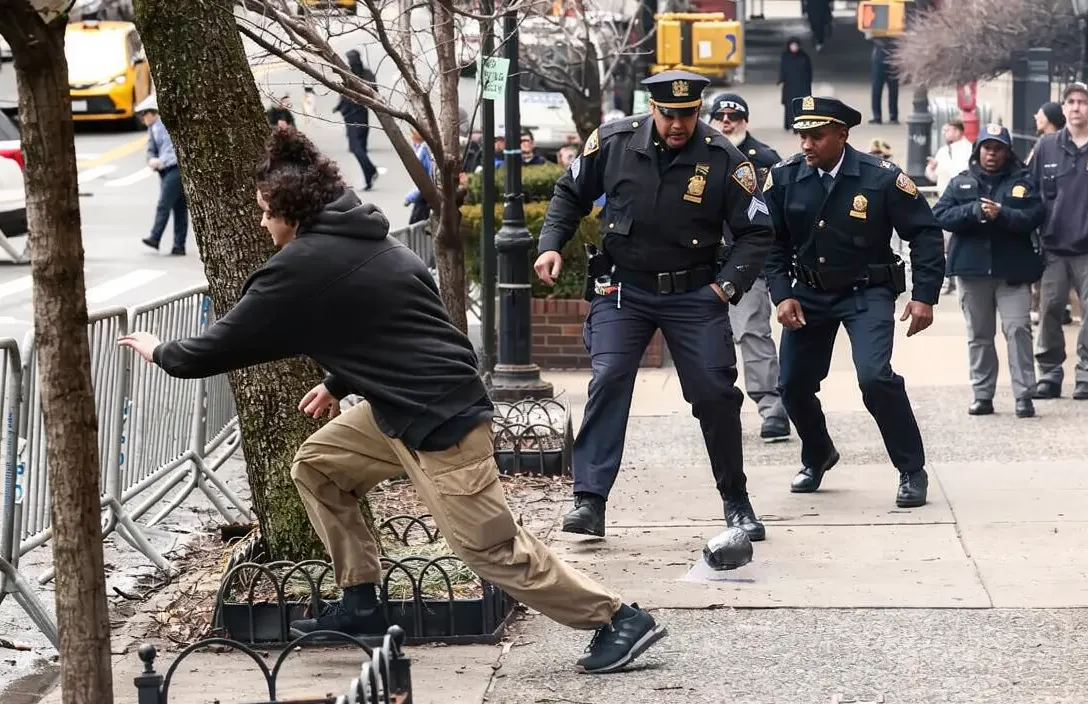

The mayor's decision to dismantle the NYPD’s Strategic Response Group has drawn criticism from police officials, who argue that the move could compromise public safety. NYPD Sgt. Luis Navarro and Chief Aaron Edwards were praised for their actions during an ISIS-inspired attack attempt near Gracie Mansion in March, where they helped prevent a potential mass-casualty event (NY Post). The mayor's plan to replace the SRG with an unarmed civilian division focused on dialogue and de-escalation has been questioned for its ability to respond effectively to violent situations (NY Post). [1]
The administration's proposal to transfer counterterrorism duties and crowd management responsibilities to new divisions has been met with skepticism. Critics argue that unarmed personnel may lack the training and equipment necessary to handle emergencies involving explosives, weapons, or armed attackers (NY Post). The mayor's plan assumes that terrorism and protest response can be neatly separated, but the March incident at Gracie Mansion demonstrated that violence can emerge unexpectedly within peaceful demonstrations (NY Post). [1]
The mayor has been challenged to provide concrete answers regarding how quickly trained officers can reach a civilian team facing violence, who will command the response, and what resources will be available during emergencies (NY Post). Concerns have also been raised that dismantling the SRG may inadvertently encourage violent agitators to infiltrate protests, expecting a softer response (NY Post). The NYPD Sergeants Benevolent Association has urged the city to demonstrate that the new system can handle simultaneous emergencies and sudden violence before the changes take effect (NY Post). [1]
The mayor's decision to dismantle the NYPD’s Strategic Response Group has drawn criticism from police officials, who argue that the move could compromise public safety. The administration's proposal to transfer counterterrorism duties and crowd management responsibilities to new divisions has been met with skepticism. The mayor has been challenged to provide concrete answers regarding how quickly trained officers can reach a civilian team facing violence, who will command the response, and what resources will be available during emergencies (NY Post). [1]
Advertisement
The mayor’s plan creates an unarmed civilian division focused on dialogue and de-escalation, supported by a police dialogue team. Counterterrorism duties will move elsewhere within the NYPD, while a new Patrol Support Division assumes crowd management responsibilities. The administration insists these changes will preserve public safety. Those assurances deserve scrutiny, particularly when the mayor’s central selling point is that he has delivered a political victory over a specialized police unit (NY Post). [1]
Putting unarmed employees in that position also raises questions about their own safety. Gracie Mansion operates under the comforting assumption that terrorism and protest response can always be neatly separated. The danger emerged within a demonstration. The officers confronting it did not have the luxury of waiting for City Hall to decide which organizational box applied (NY Post). [1]
The mayor owes New Yorkers concrete answers. How quickly will trained officers reach a civilian team confronting violence? Who commands the response? What personnel and equipment will be immediately available? Who decides when dialogue ends and intervention begins? Reassigning responsibilities on an organizational chart does not answer those questions (NY Post). [1]
The mayor’s decision to dismantle the NYPD’s Strategic Response Group has raised alarms among police officials, who argue that the move could compromise public safety. The administration’s proposal to transfer counterterrorism duties and crowd management responsibilities to new divisions has been met with skepticism. The mayor has been challenged to provide concrete answers regarding how quickly trained officers can reach a civilian team facing violence, who will command the response, and what resources will be available during emergencies (NY Post). [1]
Advertisement
The mayor’s plan creates an unarmed civilian division focused on dialogue and de-escalation, supported by a police dialogue team. Putting unarmed employees in that position also raises questions about their own safety. The mayor owes New Yorkers concrete answers. The administration insists these changes will preserve public safety. Those assurances deserve scrutiny, particularly when the mayor’s central selling point is that he has delivered a political victory over a specialized police unit (NY Post). [1]
Whether the mayor sends social workers or other civilian personnel, good intentions cannot provide arrest powers, tactical training or the ability to stop an armed attacker. Gracie Mansion operates under the comforting assumption that terrorism and protest response can always be neatly separated. The danger emerged within a demonstration. The officers confronting it did not have the luxury of waiting for City Hall to decide which organizational box applied (NY Post). [1]
Reassigning responsibilities on an organizational chart does not answer those questions. There is another danger: deterrence. Violent agitators watch what government does. My concern is that dismantling the SRG, while advertising a softer approach, will encourage people intent on violence to infiltrate otherwise peaceful protests because they expect less immediate resistance (NY Post). [1]
The mayor’s plan creates an unarmed civilian division focused on dialogue and de-escalation, supported by a police dialogue team. Counterterrorism duties will move elsewhere within the NYPD, while a new Patrol Support Division assumes crowd management responsibilities. The administration insists these changes will preserve public safety. Those assurances deserve scrutiny, particularly when the mayor’s central selling point is that he has delivered a political victory over a specialized police unit (NY Post). [1]
Advertisement
Whether the mayor sends social workers or other civilian personnel, good intentions cannot provide arrest powers, tactical training or the ability to stop an armed attacker. Putting unarmed employees in that position also raises questions about their own safety. Gracie Mansion operates under the comforting assumption that terrorism and protest response can always be neatly separated. The danger emerged within a demonstration (NY Post). [1]
The mayor owes New Yorkers concrete answers. How quickly will trained officers reach a civilian team confronting violence? Who commands the response? What personnel and equipment will be immediately available? Who decides when dialogue ends and intervention begins? Reassigning responsibilities on an organizational chart does not answer those questions (NY Post). [1]
Sources
Prepared with AI assistance from the cited sources.
The Cali Reporter newsletter
The stories worth your time.
California, the country, and what comes next. Join our free newsletter for reporting that keeps you informed.
More in U.S. News
- Parents Sue LAUSD Over Son's Death, Claim No Condolences Offered
The mother of a Highland Park teen who died by suicide at Benjamin Franklin High School is suing the Los Angeles Unified School District, alleging the district has failed to offer condolences or provide information…
- Ex-Reality TV Star Alleges Boss Spied on Her at Work
A former 'Naked and Afraid' contestant alleges her boss at an emergency-management agency in Maine installed hidden cameras and hacked her computer to spy on her, according to court documents.
- Historic Super El Niño Brings Heavy Snow to California Ski Resorts
A historic 'super El Niño' is expected to bring significant snowfall to California's ski resorts, with long-range forecasts predicting a wetter-than-normal winter for the region.