NVIDIA’s November GFN Update Ties DLSS 5, Dawn of War IV and Cloud Streaming
The Nov. 12, 2026 GFN Thursday post lists a Dec. 3 Steam launch for Dawn of War IV, DLSS 5 support for War Thunder and Where Winds Meet, Dragon’s Dogma 2: Dark Arisen streaming and 10 library additions. Tier, latency and availability questions remain open.

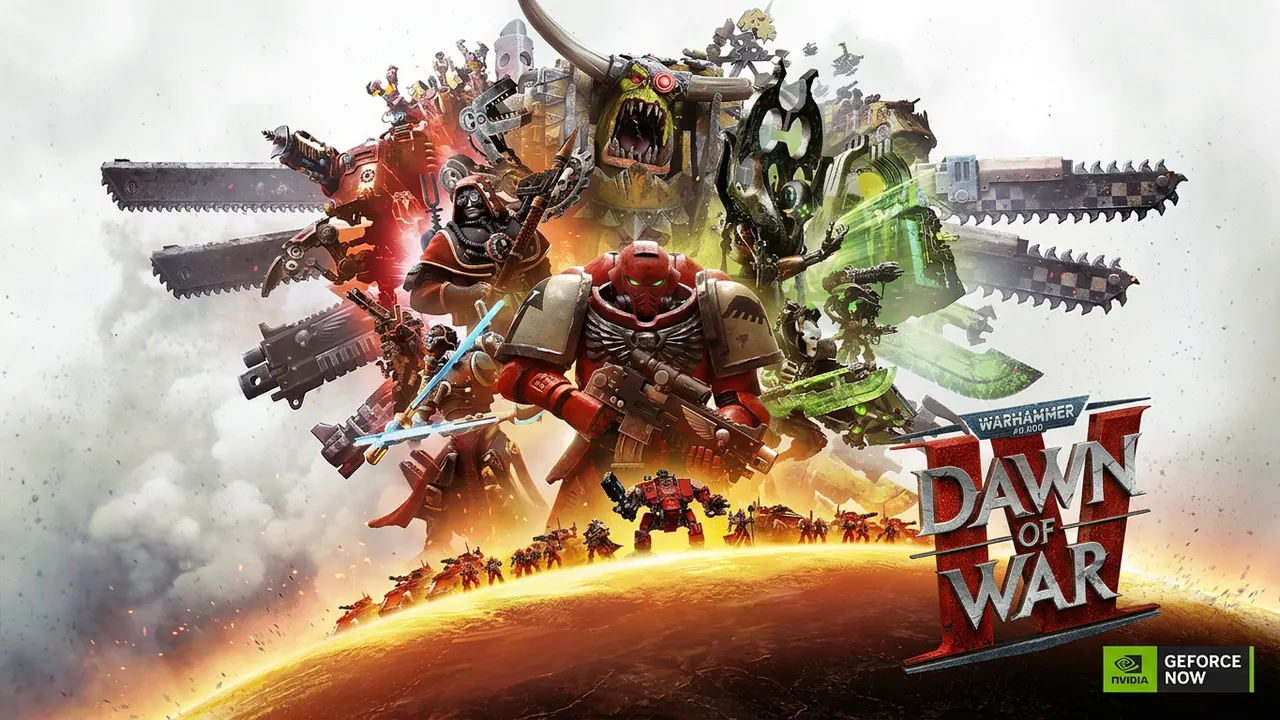
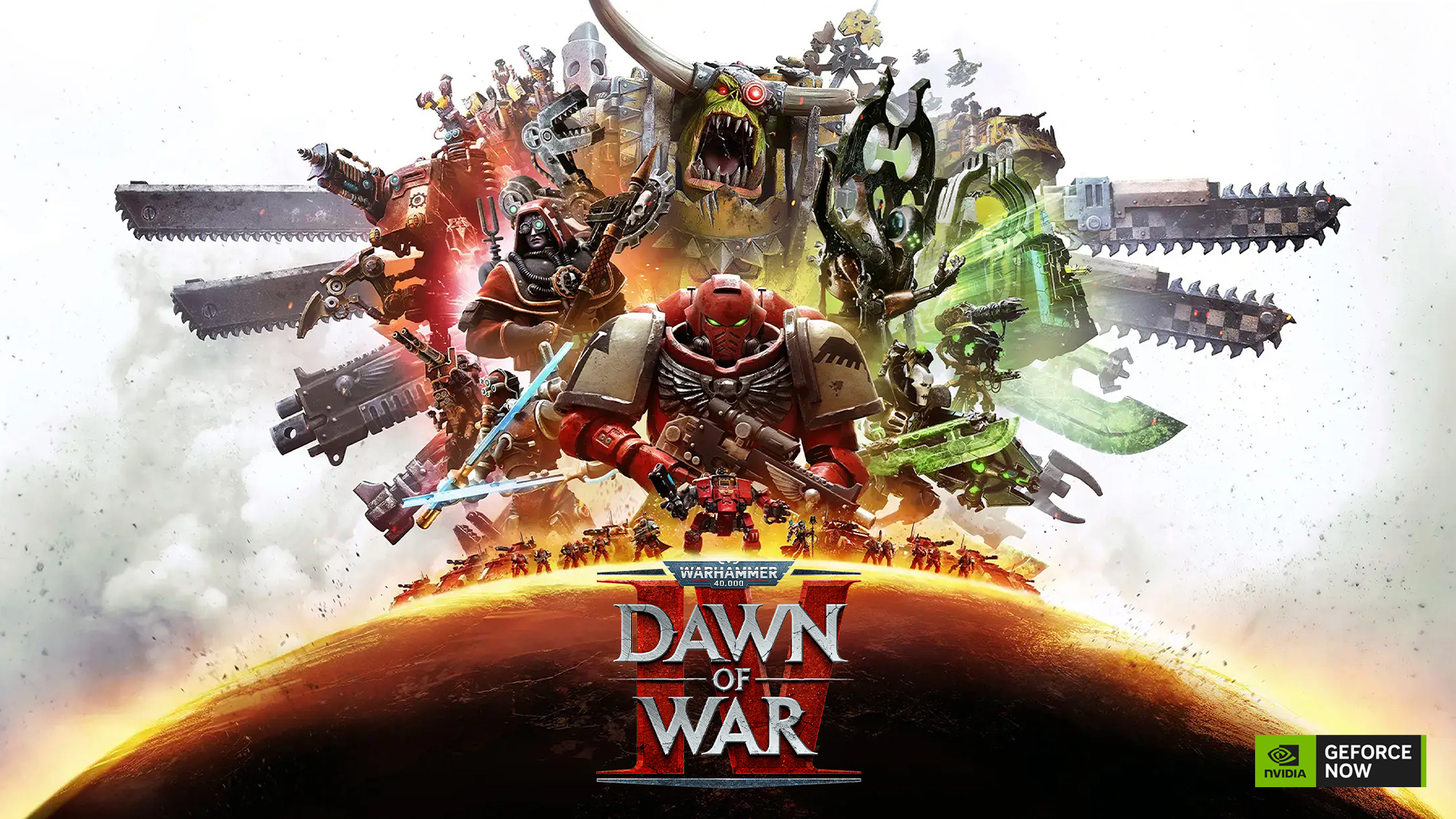
NVIDIA’s Nov. 12, 2026 GFN Thursday post said Warhammer 40,000: Dawn of War IV is coming to GeForce NOW. KING Art Games is developing the real-time strategy title and Deep Silver is publishing it; the Steam launch is scheduled for Thursday, Dec. 3, according to the post. NVIDIA describes large-scale battles, base building and a renewed fight for planet Kronus. Players can command Space Marines, Orks, Necrons or the Adeptus Mechanicus, which the post calls a series debut. It cites more than 70 campaign missions playable solo or co-op, plus The Last Stand, Skirmish and multiplayer modes. [1] [2]
The same update said DLSS 5 with 3D-Guided Neural Rendering will reach War Thunder from Gaijin Entertainment and Where Winds Meet from Everstone Studio. War Thunder’s Eagle’s Shadow update arrives mid-November with DLSS 5, dozens of new aircraft, ships and tanks, cluster bombs for planes and visual-effect improvements, NVIDIA said. Where Winds Meet is scheduled for DLSS support Monday, Nov. 23. The post says both titles will use the latest DLSS 5 model, released in October, which NVIDIA says doubles the previous version’s model performance. [1]
NVIDIA also said Dragon’s Dogma 2: Dark Arisen is already streaming through GeForce NOW. The post cites the abandoned region of Norgan, the character Eir, the undying Fallen Dragon, relics that unlock weapons and skills, 12 Lost Rites dungeon challenges, new customization options and a Delicious in Dungeon collaboration. It lists 10 library additions for the week, including Worst Class Ever, Ashes of the Singularity II, Cyberpunk 2077, DreamWorks Shrek 2 Remastered, Warhammer Survivors, Main Sequence, Deadly Days: Roadtrip, Graveyard Keeper and Tape to Tape. It says store dates do not guarantee same-day GeForce NOW availability. [1]
The common thread is not one game but the pairing of AI-assisted rendering with cloud distribution. NVIDIA says GeForce NOW runs supported games on PCs, Macs, handhelds and other devices, with downloads and updates handled remotely. That can reduce local storage demands and let players use devices they already own, if the title is supported and the membership tier fits. The post presents the appeal as convenience and access. It does not claim cloud streaming replaces local hardware for every player or game, and it offers no cost comparison with buying or upgrading a PC. [1]
Advertisement
The DLSS 5 passage is the most concrete technology signal because it includes a performance timeline. NVIDIA says the October model doubles the previous version’s model performance and that, since the technology’s March announcement, model performance has improved tenfold, bringing it to more gamers, including Ultimate members streaming on RTX 5080 cloud rigs. Those are NVIDIA’s own figures, not independent benchmarks. The post does not explain how model performance is measured, whether gains apply uniformly across titles and devices, or how image quality changes alongside speed. Those gaps matter for claims spanning cloud hardware and local GPUs. [1]
NVIDIA anchors the update historically with a playable demo titled GeForce 8800 GTX – 20 Years of a Legend, available to Ultimate members this week. NVIDIA frames it as a 20th-anniversary tribute to a well-known graphics chip, with DLSS 4.5 and path tracing delivered through the cloud. The post says the demo takes players back to 2006. It does not independently document the original product’s launch date beyond that anniversary framing, and it does not say whether the demo is a full game, benchmark or short interactive tribute. Those limits matter because anniversary marketing can be mistaken for a product roadmap. [1]
The DLSS timeline in the post is specific. NVIDIA says DLSS 5 was first announced in March, the October model doubles model performance versus the prior version, and model performance has improved tenfold since March. NVIDIA’s archive shows a regular cadence of cloud-gaming posts. On Nov. 5, 2026, it said Hogwarts Legacy received a DLSS 5 upgrade with 3D-Guided Neural Rendering. On Oct. 15, 2026, it said DLSS 4.5 controls arrived on GeForce NOW. That archive supports the existence of title-specific upgrades and platform-level controls. It does not establish that every future title will receive the same treatment or that the cadence will continue unchanged. [1] [2]
The library list is broad but conditional. NVIDIA names dates for several releases and says the dates reflect store releases. It describes Cyberpunk 2077 as an Xbox Play Anywhere title and a new Battle.net release. It also says GeForce NOW availability may vary because titles are onboarded after release and added across the week. That caveat is the operative detail. A store launch date is not a cloud launch guarantee. The post gives players a list to watch, but it does not promise every listed title will be playable the same day it appears in a store. [1]
Advertisement
NVIDIA also points to a day pass for Performance or Ultimate and says its cost can be applied toward a first monthly subscription. The post does not state the day-pass price or the monthly membership price. That leaves the commercial picture incomplete for a buyer comparing cloud gaming with local hardware. The operational detail is clearer: supported games run on PCs, Macs, handhelds and other devices, with downloads and updates handled in the cloud. For a household or small team with limited storage, that is a practical difference. For a buyer needing guaranteed performance, tier and device questions remain. [1]
For game developers and publishers, the verifiable point is that cloud availability is separate from store release. NVIDIA says titles are onboarded after release and added throughout the week, so a Steam launch date does not equal a GeForce NOW date. The post does not say inclusion guarantees discoverability, revenue or marketing benefit. It does say a cloud release can let players try a game without a local download, subject to availability. That is a distribution detail with operational consequences: publishers need to track onboarding separately from store launches, and players need to check availability rather than assume launch-day parity. [1]
For businesses outside gaming, the post shows how NVIDIA markets AI graphics: as a feature tied to cloud hardware and membership. It is not a general cost model for cloud services. A company evaluating the model would need title lists, device support, tier details, pricing, latency, bandwidth requirements, regional availability and service-level terms. The post provides some of those items and omits others. It says GeForce NOW runs supported games on multiple device types and handles downloads and updates remotely. It does not provide prices, latency figures, bandwidth requirements or regional coverage. Those omissions are the practical boundary of what the announcement can support. [1]
Several questions remain unanswered. The post does not specify which membership tiers will receive DLSS 5 for each title, how performance will compare across PCs, Macs and handhelds, or whether all announced titles will be available on GeForce NOW on their store release dates. It says availability may vary and games are onboarded after release. It also does not detail latency, bandwidth requirements or regional availability. Those omissions matter because cloud gaming’s value depends on the experience at the device, not only on the model running in the data center. [1]
Advertisement
The 8800 GTX demo’s duration is also unclear. The post describes it as available to Ultimate members this week but does not say how long it will remain. It does not state whether the demo is a full game, a benchmark or a short interactive tribute beyond calling it a playable demo. And while the post says DLSS 5 model performance has improved tenfold since March, it provides no independent measurements or game-by-game image-quality results. Those are open questions, not conclusions. [1]
The next concrete dates are mid-November for War Thunder’s Eagle’s Shadow update, Nov. 23 for Where Winds Meet’s DLSS support, and Dec. 3 for Dawn of War IV’s Steam launch. The post says GeForce NOW availability may lag store releases, so the key watch item is whether each title is playable on the cloud service at or near launch. Another watch item is the weekly GFN Thursday cadence. NVIDIA has used these posts to announce DLSS upgrades, library additions and membership trials; whether that rhythm continues is a question, and the post does not promise specific future titles. [1] [2]
One scenario is that continued DLSS 5 model improvements make the technology easier to adopt across more titles and devices, strengthening the cloud pitch. Another is that onboarding delays or tier restrictions blunt the launch-day effect, leaving players to wait for availability updates. A third is that the 8800 GTX anniversary demo functions mainly as nostalgia and marketing rather than a signal about future products. These are scenarios, not forecasts. NVIDIA’s post does not commit to any of them, and the evidence does not establish which is more likely. [1]
The Nov. 12 update is best read as a convergence story. NVIDIA is using a weekly cloud-gaming post to promote a major strategy release, two DLSS 5 upgrades, a streaming expansion and an anniversary demo for a 20-year-old GPU. The through-line is that AI rendering and cloud delivery are packaged together for players on multiple devices. For businesses watching the AI stack, the useful signal is the delivery model: features arrive through cloud hardware, supported titles and membership tiers, with availability controlled by onboarding rather than a single download. [1]
Advertisement
The evidence here is limited to NVIDIA’s announcement and its archive of prior GFN Thursday posts. It supports what NVIDIA says is coming and when, but not independent performance claims, pricing comparisons or universal availability. The practical next step is to watch the stated dates and weekly availability updates. Unresolved tier, device and regional questions should be treated as unresolved until NVIDIA or third-party testers provide more detail. That is the appropriate limit of what this announcement can prove. [1] [2]
Sources
Prepared with AI assistance from the cited sources.
The Cali Reporter newsletter
The stories worth your time.
California, the country, and what comes next. Join our free newsletter for reporting that keeps you informed.
More in Technology
- Google Play's Closed Testing Requirements and the Importance of Feedback
Google Play's closed testing rule emphasizes the need for developers to gather meaningful feedback from testers, not just track app installs. This approach ensures that real user experiences are evaluated and addressed…
- World Diabetes Day 2026 Focuses on Early Diagnosis and Awareness
The 2026 World Diabetes Day campaign emphasizes the importance of early diagnosis, equitable access to care, and reducing diabetes stigma, according to the WHO. The theme 'Early action on diabetes' highlights the need…
- Understanding Memory Usage on Linux VPS
This article explains how to accurately interpret memory usage on a Linux VPS, focusing on the importance of the 'available' metric and the potential pitfalls of relying on the 'free' column.