NVIDIA Blog Portrays Dyania Health's Chart-Reading AI as Clinical Support
An analysis of NVIDIA's Nov. 13, 2026 newsroom post, separating the vendor's description of Synapsis AI and an on-premise deployment from evidence the supplied material does not provide.

The item carries a Nov. 13 timestamp, and NVIDIA's newsroom index places it in 2026. [1] [2]
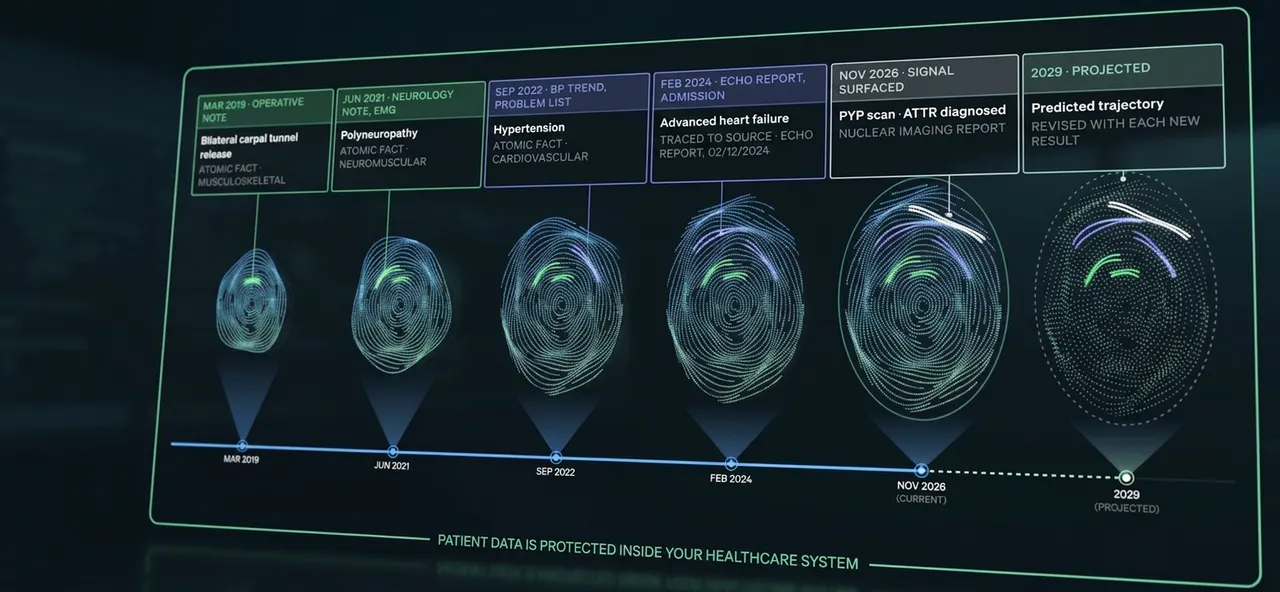
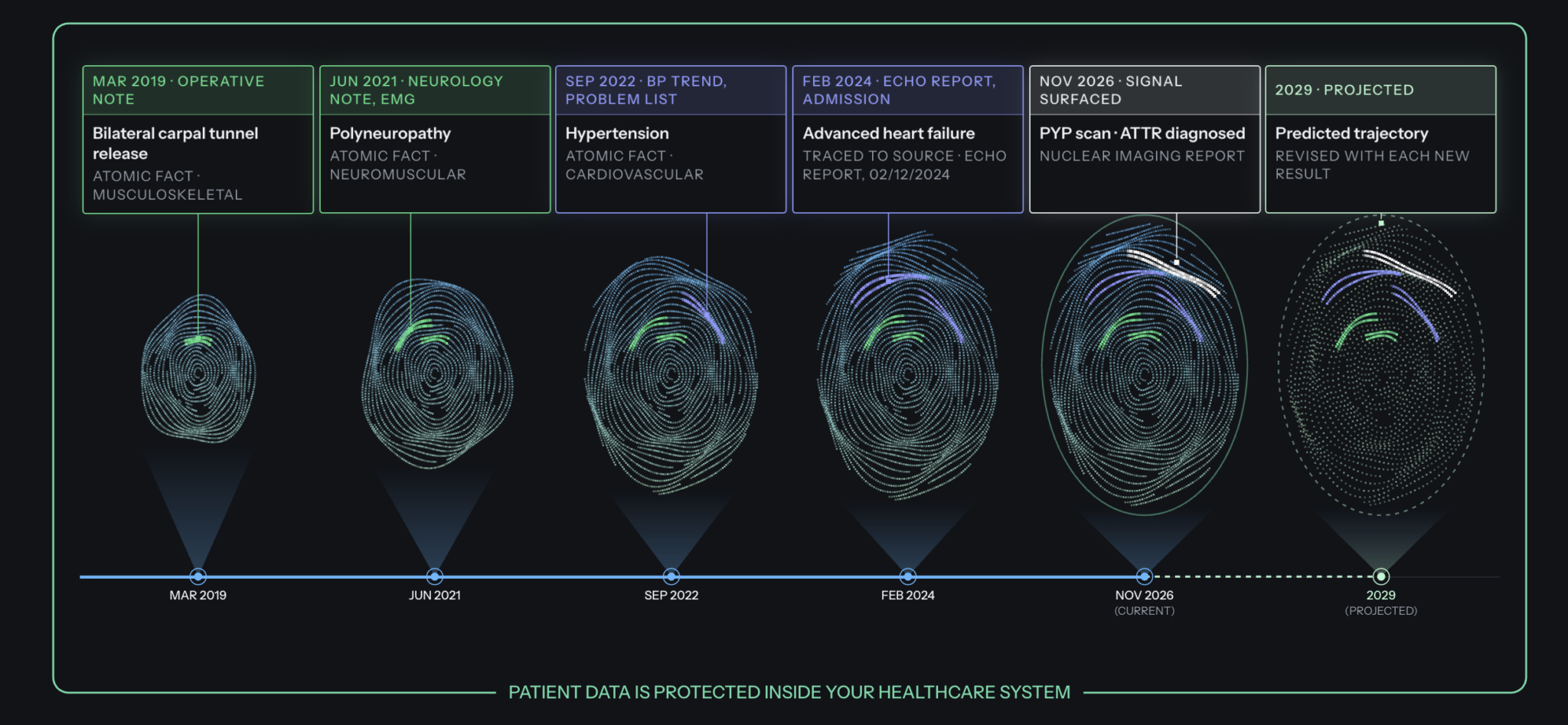
The post centers on Dyania Health, described as a New Jersey clinical AI company, and its product Synapsis AI. NVIDIA calls it a clinical reasoning engine. According to the post, the software reads notes, reports, and lab data in a patient chart and links observations separated by long intervals to answer clinical questions, approximating a specialist's chart review. [1]
NVIDIA says results arrive as clinical signals. Each signal is said to point back to its source in the record and to explain which patients may need attention and why. Clinicians review the evidence and make decisions, according to the post. That description puts the product in decision support, not autonomous diagnosis; the supplied text does not explain how clinician disagreements with a signal are handled. [1]
The deployment model is a central part of the pitch. NVIDIA says Synapsis AI is deployed on NVIDIA hardware within a provider's network perimeter, so records can be handled at the hospital rather than sent outside. The post says patient data is not shared and does not leave the health system. It does not provide independent security audits or deeper technical detail beyond that description. [1]
Advertisement
Dyania trains its models using NVIDIA NeMo libraries, the post says, and applies TensorRT and TensorRT-LLM to optimize them for local GPU servers. The supplied text does not explain how much site-specific tuning each hospital needs, how installed models are updated, whether non-NVIDIA hardware is an option, or how much configuration a deployment requires. [1]
The concrete example is research at Cleveland Clinic. NVIDIA says the clinic employed Synapsis AI in a study covering more than 7,800 aortic valve replacement cases from 2005 through 2021. The software reviewed each chart, including follow-up echocardiograms added after surgery, and formed a model estimating valve degeneration and need for reintervention at three, five, and ten years. [1]
NVIDIA says the system handled chart review for the whole group, work the post says would have required years of manual clinician review. The supplied post provides no formal or quantified comparison with manual review, no comparison with another tool, and no error rates, calibration results, or measured patient outcomes. It describes analysis of historical records, not a prospective care intervention. [1]
The post quotes Dr. Lars Svensson, who leads Cleveland Clinic's Heart, Vascular & Thoracic Institute. He describes the effort as a promising step toward better outcomes and more personalized care. That is an attributed comment in a vendor post, not an independent finding. The post does not say whether Cleveland Clinic plans further use of the tool. [1]
Advertisement
The premise is that much patient history sits in free text, so assembling a complete picture can mean reading years of charts. If a tool reliably shortens that review, it could free clinical teams for patient-facing work, the benefit NVIDIA emphasizes. The conditional matters: the supplied post does not quantify time saved or show that reallocated time improves care. [1]
The on-premise design is presented as a trust and compliance feature. For readers outside health IT, the significance is that sensitive records are analyzed without being shipped to an external service. The post does not compare on-premise performance with cloud alternatives or discuss total cost. It also does not say whether the system is intended for research, clinical use, or both. [1]
Traceability is another trust mechanism on paper. NVIDIA says each signal can be checked against its source and that clinicians review the evidence. The post does not describe agreement rates between clinicians and the tool, how contradictory records are resolved, or what happens when the system misses a relevant finding. Those omissions matter for a product whose value depends on connecting scattered text. [1]
The clinician-centered framing also has workflow implications. A system that flags patients still requires someone to read the flag, check the cited record, and decide what to do. If the tool produces many signals, verification could become a new task. The post does not give signal volume, false-positive rates, or the time needed to check a flag. [1]
Advertisement
The commercial context is explicit: NVIDIA supplies the compute stack and publishes the post on its newsroom blog. That does not make the claims false, but the account is promotional and vendor-sourced. The supplied material contains no peer-reviewed paper, regulatory filing, or independent evaluation. Readers should weigh the claims accordingly. [1]
NVIDIA says the approach could extend to trial matching, cardiology and oncology care gaps, and registry completion. Those are attributed possibilities, not demonstrated results in the supplied text. They map the vendor's ambitions more than they prove current performance. [1]
The historical background in the post is limited but specific. It says hospitals hold decades of patient history in free text and that the Cleveland Clinic study spans records from 2005 to 2021. The supplied evidence does not include a study publication, a regulatory clearance, or a rollout announcement beyond the Cleveland Clinic example. [1]
The post lists record types the system reads: free-text notes, surgical summaries, imaging and pathology interpretations, discharge documents, and lab results. It says the software works across a patient's record. The post does not show ambiguous records or explain error handling. Those gaps matter because the claim concerns linking findings across years of text. [1]
Advertisement
The limits are as important as the claims. The blog does not state how many records were excluded, how valve deterioration was defined, how the predictive model was validated, or whether the model changed care. It gives no formal or quantified comparison with manual review and no comparison with another tool. It also does not say whether the valve-risk model was for research or for care, a distinction that matters for oversight. [1]
Several questions remain unanswered. What sensitivity and specificity does the system achieve on the Cleveland Clinic cohort? Was the valve-risk model validated outside that cohort? Has any version of Synapsis AI received regulatory review, and for which claims? How do clinicians resolve disagreements? What are the compute, integration, and maintenance costs? These are questions, not findings. [1]
A second set concerns governance. Who audits the on-premise deployment? What logs are kept when the system flags a patient? How are errors corrected? The post says records stay inside the firewall but does not lay out oversight procedures or performance monitoring. A related question is whether patients are told that records were analyzed by an AI tool. [1]
Data retention is another open area. The post says processing occurs at the hospital and records do not leave, but it does not describe retention schedules, access controls, audit trails, or how the software handles records from patients who object to AI analysis. Those details would matter in procurement and privacy reviews. [1]
For health-system buyers, practical questions move from technical possibility to operational fit. Would the tool integrate with existing electronic records? Who trains clinicians to interpret signals? How often would models update? The post describes the software stack and a study use case but gives no deployment checklist or pricing. It also does not say what happens when the system is unavailable or how teams fall back to manual review. [1]
The most direct signal would be publication of the Cleveland Clinic work in a form that reports methods and results, if such a publication appears. Another would be regulatory or accreditation disclosures tied to Synapsis AI. A third would be independent workflow studies measuring clinician time, agreement rates, and patient outcomes. None is asserted in the supplied post; they are watch items. [1]
A scenario worth considering: if hospitals adopt record-wide reasoning tools, the bottleneck may shift from reading charts to verifying flags and managing false alarms. That is a scenario, not a prediction. NVIDIA's post emphasizes clinician review, suggesting the company expects humans in the loop. Whether that review is quick and reliable remains open. [1]
Another scenario is that on-premise deployments become a differentiator for health systems that want record analysis without external data transfer. That is a possibility suggested by the architecture, not a demonstrated market outcome. The post does not compare local performance with cloud alternatives or discuss total cost. [1]
For now, the verifiable takeaway is narrow. NVIDIA's newsroom says Dyania Health's Synapsis AI uses NVIDIA software and hardware, runs inside a hospital firewall, and supported a Cleveland Clinic study of a large aortic-valve replacement cohort. The post presents a promising use case but not independent proof of clinical or operational benefit. Readers should treat the claims as vendor-attributed until more evidence appears. [1]
A useful follow-up question is whether later disclosures distinguish research use from clinical deployment; the supplied post does not make that distinction explicit. Another is whether the Cleveland Clinic work yields peer-reviewed methods and results. The supplied material does not include a publication date for the Cleveland Clinic study or a link to a peer-reviewed paper. For now, the evidence supports a description of a vendor's product and a research example, not a conclusion about improved care. [1]
Sources
AI-assisted analysis based on a review of the cited sources.
The Cali Reporter newsletter
The stories worth your time.
California, the country, and what comes next. Join our free newsletter for reporting that keeps you informed.
More in Technology
- Google Play's Closed Testing Requirements and the Importance of Feedback
Google Play's closed testing rule emphasizes the need for developers to gather meaningful feedback from testers, not just track app installs. This approach ensures that real user experiences are evaluated and addressed…
- World Diabetes Day 2026 Focuses on Early Diagnosis and Awareness
The 2026 World Diabetes Day campaign emphasizes the importance of early diagnosis, equitable access to care, and reducing diabetes stigma, according to the WHO. The theme 'Early action on diabetes' highlights the need…
- Understanding Memory Usage on Linux VPS
This article explains how to accurately interpret memory usage on a Linux VPS, focusing on the importance of the 'available' metric and the potential pitfalls of relying on the 'free' column.