

Newfound Brain Circuit Explains Why You Crave Snacks When Temperatures Drop
New research shows the hypothalamus controls hunger and energy use during cold weather.

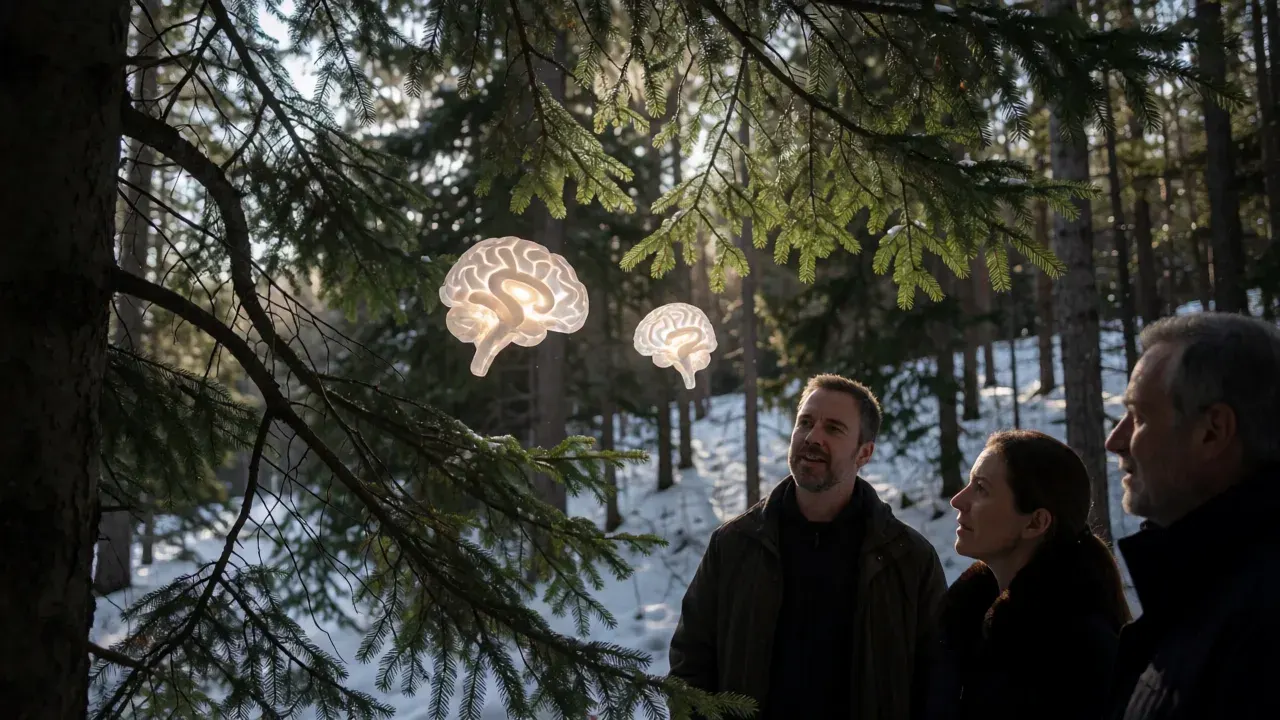
We all know the feeling. The furnace kicks on, the house gets stuffy, and suddenly a bag of chips looks like a necessity. It is not just laziness. It is your biology trying to keep you alive. A fascinating new study from USF Health shines a light on exactly why this happens when the temperatures drop. Researchers have finally cracked the code on how the brain tells us to eat more and burn more energy when the weather gets chilly.
The lead researcher, Dr. Yong Xu, who is with the Morsani College of Medicine, has uncovered something pretty wild. They looked at a specific part of the brain called the dorsal posterior periventricular hypothalamic nucleus, or dPVp. Most of us have walked past this area a thousand times in our heads without knowing its job. Xu describes it as an underexamined region that acts as a cold-response control center. When your body temp drops, this little part of the brain goes into action to coordinate a total system reboot.
Here is where it gets practical. The study published in the journal Neuron shows that once the dPVp activates, it starts pushing two major buttons. First, it ramps up your desire for food. Second, it tells your body to generate more heat. This is why you might feel the urge to curl up with a heavy stew or a carb-heavy meal when it is frosty outside. The brain is essentially trying to keep the core temperature up while simultaneously replacing the fuel you are burning to do it.

The implications here are huge for anyone watching their waistline or managing blood sugar. When scientists artificially activated these cold-responsive neurons in their models, they saw something unexpected. It did not just make people hungry. It actually improved glucose regulation and helped prevent weight gain. Dr. Hailan Liu, a faculty member at the Center for Molecular Psychiatry, notes that activating this pathway helps the body use energy more efficiently. Instead of just starving yourself, this pathway might be the key to turning your metabolism into a furnace that works while you sleep.
There is a specific protein involved in this whole operation called KCNK2 or TREK-1. Think of this protein as the cold sensor inside your brain cells. It is what lets the dPVp know that the thermostat needs to be cranked up. Because this protein is a biological target, researchers are hopeful that one day we will have drugs that mimic this response. The goal is not to make you freeze your tail off to lose weight. Dr. Xu points out that if we can target this cold sensor, we could maintain metabolic health without changing our diet at all.
We are talking about a potential game changer for obesity and type 2 diabetes. Right now, most treatments focus on suppressing your appetite, which is rarely sustainable in the long run. Future therapies might work differently by targeting this newly identified neural circuit. The idea is to help your body burn calories naturally without the cold exposure. Imagine a medication that tricks your brain into thinking it is winter, prompting it to rev up its engines, without you ever having to put on a sweater.
For the home cook and the budget-conscious eater, this is a reminder to listen to your body. When the wind howls, do not fight the urge to eat heartier, warming foods. Trust the dPVp. It is doing what it evolved to do. It is balancing the books of your energy needs against the chill of the outside world. Understanding this circuit gives us a new empathy for our internal thermostat. Even if you are not running out to buy a new drug, knowing that your body is trying to protect you makes that extra slice of cinnamon toast a little easier to swallow.
First reported by Medical Xpress.
More in Health & Nutrition
- Long-term opioid use fails to alleviate chronic back pain, Northwestern University study suggests
Researchers identified distinct brain activity patterns and molecular markers that may guide future treatments for pain management and opioid tapering.
- Human tau seeds trigger disease-specific shapes in mouse brains, new study finds
Study in Nature shows that injectable human tau aggregates from Alzheimer’s and corticobasal degeneration template their 3D folds onto mouse tau, supporting the prion-like seeding model.
- Menopause Largely Missing from Electronic Health Records Despite Its Health Impact
study of nearly 240,000 women finds only 12% of electronic records include menopause status, even though over half reported being in transition.