

How New US Sanctions Mechanism Grounds Iranian Airlines and Reshapes Regional Aviation Law
A shift in financial strategy forces airlines in third countries to choose between compliance and bankruptcy.

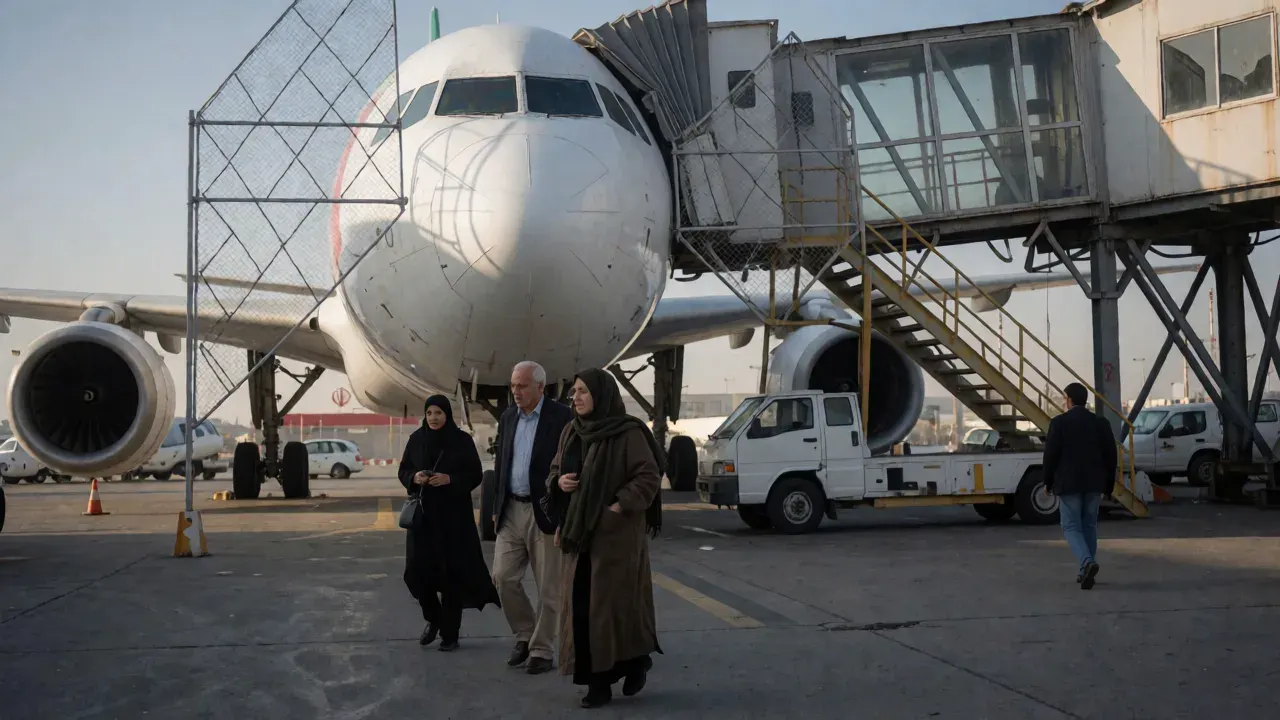
The conflict in the Middle East has evolved beyond traditional battlefield engagements into a complex legal battle over financial and logistical dominance. While the physical campaign known as Operation Epic Fury continues to disrupt global energy supplies and test the resolve of regional powers, Washington has introduced a new layer of legal pressure. This new policy represents a significant pivot in the United States strategy targeting companies in third countries that do business with Iranian firms. By implementing a specific deadline of September 23, the administration has initiated a mechanism designed to ground Iran’s entire civil fleet worldwide. This analysis examines how these sanctions are being enforced and the immediate impact on international travel routes.
The first major jurisdictional impact of this legal shift has been confirmed by the General Civil Aviation Authority of the United Arab Emirates. As the Middle East’s biggest travel hub, the UAE’s decision to suspend all flights by Iranian airlines until further notice serves as a critical case study in the enforcement of these new sanctions. This suspension is not merely a suggestion but a definitive administrative order affecting commercial operations. It follows a broader announcement that the United States intends to put sanctions on any global companies that continue to facilitate business with Iranian airlines. This legal framework effectively creates a choice for international logistics firms and travel agencies. They must either sever ties with Iranian aviation entities or face potential financial penalties.
The ripple effects of this decision extend far beyond the borders of the UAE. Iran’s Tasnim news agency has reported that flights to neighboring countries have been shut down. The affected destinations include Oman, Georgia, and Azerbaijan, as well as the Iraqi capital Baghdad. Iranian authorities are currently working to reroute flights to the airport in Najaf. This southern Iraqi city is identified as a major Shi’ite Muslim religious pilgrimage site, making it a strategic logistical alternative for travelers seeking to reach Iran. The inability to land in the major hubs has created a logistical bottleneck that highlights the effectiveness of the sanctions in isolating the Iranian aviation sector. The disruption forces travelers to navigate a more complicated and time-consuming transit network.

At Tehran’s Imam Khomeini Airport, the practical application of these sanctions is visible in the daily schedules. The airport lists scheduled arrivals and departures to and from several nations including Afghanistan, Armenia, China, Iraq, Pakistan, Tajikistan, and Turkey. However, a distinct pattern emerges when comparing these routes to the country’s ties with the Gulf region. There are no flights listed to or from the nearby Gulf states with which Iran has long maintained some of its most important business and travel ties. This exclusion suggests that the legal pressure is specifically targeting the most vital commercial arteries. It creates a dichotomy in Iranian international connectivity where flights continue to established international partners while being severed from key regional neighbors.
Observers note that the enforcement of this US-mandated air blockade could lead to potential escalation. The legal pressure is matched by political rhetoric. On Wednesday, a senior Iranian official threatened that regional countries abiding by the US ban would see their airports made “unusable.” This threat adds a layer of geopolitical risk to the logistical restrictions. Furthermore, the strategic comparison made by the administration is revealing. Trump referred to the new strategy as “economic D-Day,” drawing a parallel to the assault on Nazi-controlled France in World War Two. This analogy suggests that the administration views economic isolation as a primary weapon to achieve political objectives similar to those seen in major twentieth-century conflicts.
The economic impact of these measures is already being felt by the population. “We are living in an open-air prison,” a retired teacher in Tehran told Reuters by text message on condition her name is not used. This sentiment reflects the broader economic crisis facing the country, which is already subject to a US blockade of its ports at sea. The simultaneous pressure from land and sea creates an environment of severe restriction. While the war has disrupted global energy supplies and pushed up oil prices, the specific focus on aviation adds a personal dimension to the sanctions. It limits the physical mobility of a population already struggling under intense economic pressure.
Parallel to the air blockade, the conflict in Yemen continues to test the defensive capabilities of regional allies. Separately on Thursday, authorities in Saudi Arabia reported that they had intercepted six ballistic missiles fired by Yemen’s Houthi fighters. The Houthis stated that they had launched dozens of missiles and drones at Saudi targets. An escalating conflict between Saudi Arabia and the Houthis has emerged this month as the combat zone in the wider Middle East war expands. The defensive actions taken by Saudi Arabia include issuing emergency alerts for areas including the holy city of Mecca, Jeddah, and Yanbu. Yanbu is identified as the main Saudi Red Sea oil port, a critical infrastructure point for the nation’s economy.
Defense statements from the Saudi-led coalition fighting the Houthis in Yemen emphasize a hardline approach. “Any escalation and violations by the terrorist Houthi militia will be dealt with firmly,” the coalition said in a statement. Houthi military spokesman Yahya Saree provided specific details of the attacks, claiming they targeted operations rooms, command and control centers, weapons depots, missile launch sites, and military camps in the Jazan province bordering Yemen. This granular detail of the attacks provides insight into the intensity of the current engagement. The conflict is not limited to the border but extends into the interior of the kingdom.
On the ground in Yemen, the situation remains dire for civilians. Sources in the internationally recognized, Saudi-backed Yemeni government indicated that their forces had repelled overnight Houthi attacks on a key supply route to Aden. Aden is the Indian Ocean port city where the government is based. The Houthis, who already controlled the north including the capital Sanaa, seized Yemen’s entire Red Sea coast this month. Their advances have pushed forces into adjacent highlands near the central mountain city of Taiz and the road from Aden. The strategic importance of the Taiz-Aden road is significant. Seizing parts of this road could allow the Houthis to tighten their grip around Taiz. This would deal a blow to the government, which has struggled to regain the initiative since losing the western coast.
One specific location of intense fighting is Hejat al-Abd, a steep winding mountain pass. This location is described as a lifeline for hemmed in pro-government forces. It is also vital for the flow of goods entering Taiz. Further complications arise from the Houthis keeping up pressure on the government forces holding this pass. The broader displacement statistics underscore the human cost of this legal and military maneuvering. More than 700 people have been killed and thousands wounded in the latest fighting, according to the United Nations. Nearly 130,000 Yemenis have been displaced within the country, while more than 3,000 have fled by boat across the Red Sea to Africa.
First reported by The Algemeiner.
More in National
- HBO's 'War' Offers Classy-Trashy Divorce Drama with West and Miller
Anthology series debuts with a sharp, well-cast first season centered on a bitter London divorce between two lawyers.
- Putin Claims Baltic Rights Violations But Denies War Plans in Europe
Kremlin leader claims response strategy relies on humanitarian grounds and international law.
- Canadian Potash Giant Drops $500M on Vancouver Port Upgrade to Secure Global Food Supply
The massive investment aims to boost exports to non-U.S. markets.