New Sponge Test for Early Detection of Oesophageal Cancer and Barrett's Oesophagus
A new sponge test is being considered for wider use in the NHS to detect early signs of oesophageal cancer and Barrett's oesophagus, according to recent recommendations from NICE.

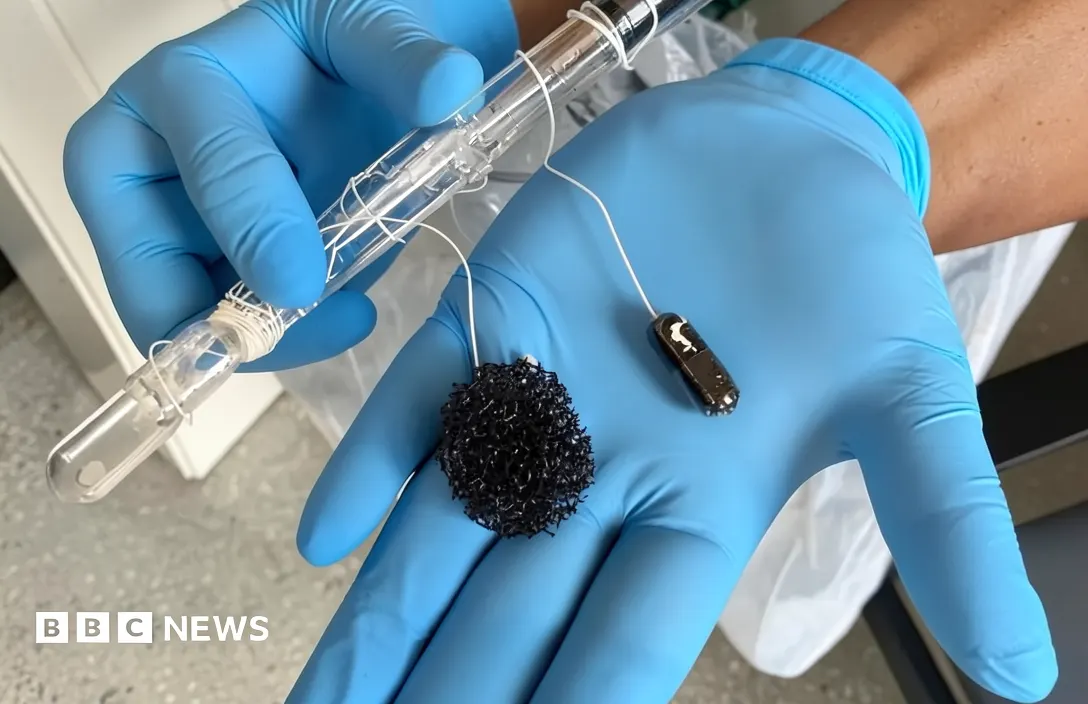

A new sponge test is being considered for wider use in the NHS to detect early signs of oesophageal cancer and Barrett's oesophagus, according to recent recommendations. The test involves patients swallowing a small dissolving capsule attached to a thread, which releases a tiny sponge in the stomach. The sponge collects cells from the lining of the gullet as it is gently pulled back out of the patient's mouth by the doctor (Source ID: 1). This method is described as a "quick and less invasive" way to detect concerning changes in the oesophagus (Source ID: 1). [1]
The National Institute for Health and Care Excellence (NICE) suggests that sponge tests could help give more patients peace of mind and reduce the need for more complicated endoscopy tests. This would help the NHS free up resources to find cancers at an earlier stage (Source ID: 1). Prof Jonathan Benger, chief executive of NICE, highlights the potential of the sponge tests to identify people who should go on to have further tests and treatment (Source ID: 1). [1]
Prof Peter Johnson, national clinical director for cancer at NHS England, states that thousands have already benefited from this test through pilots, and it is now being considered for roll out across the country. However, NICE adds that no diagnostic test, including endoscopy, identifies every case and people who receive an all-clear sponge test result should still be monitored in the long term (Source ID: 1). [1]
A new sponge test is being considered for wider use in the NHS to detect early signs of oesophageal cancer and Barrett's oesophagus, according to recent recommendations from the National Institute for Health and Care Excellence (NICE). The test involves patients swallowing a small dissolving capsule attached to a thread, which releases a tiny sponge in the stomach. The sponge collects cells from the lining of the gullet as it is gently pulled back out of the patient's mouth by the doctor, as reported by BBC Top Stories (ID: 1). [1]
Advertisement
Prof Jonathan Benger, chief executive of NICE, states that sponge tests offer a "quick and less invasive" way to detect concerning changes, helping to identify people who should go on to have further tests and treatment. The test is already offered in some areas, and NICE suggests that it could help give more patients peace of mind and reduce the need for more complicated endoscopy tests, as noted in the same source (ID: 1). [1]
Prof Peter Johnson, national clinical director for cancer at NHS England, said that thousands have already benefited from this test through pilots and that it is now being considered for roll out across the country. However, NICE adds that no diagnostic test, including endoscopy, identifies every case and people who receive an all-clear sponge test result should still be monitored in the long term, as stated in BBC Top Stories (ID: 1). [1]
It is thought between one and two adults in every 100 has Barrett's oesophagus, where cells have started to change. Most won't go on to develop cancer, but demand for NHS endoscopy is high, meaning some with the condition aren't checked as often as recommended. The National Institute for Health and Care Excellence (NICE) says the sponge tests, already offered in some places, could help give more patients peace of mind (Source ID: 1). [1]
For the test, patients swallow a small dissolving capsule attached to a thread. Once in the stomach, it releases a tiny sponge. The sponge collects cells from the lining of the gullet as it is gently pulled back out of the patient's mouth by the doctor. The cells can then be analysed (Source ID: 1). [1]
Advertisement
However, no diagnostic test, including endoscopy, identifies every case and people who receive an all-clear sponge test result should still be monitored in the long term, NICE adds. The sponge tests can help detect oesophageal cancer and Barrett's oesophagus in people with reflux disease (Source ID: 1). [1]
Sources
Prepared with AI assistance from the cited sources.
The Cali Reporter newsletter
The stories worth your time.
California, the country, and what comes next. Join our free newsletter for reporting that keeps you informed.
More in World
- Irish Man Charged with Destroying U.S. Military Aircraft at Shannon Airport
A man from Ireland has been indicted for allegedly destroying a U.S. military aircraft at Shannon Airport, according to prosecutors in New York.
- Trump's APEC Summit and Strategic Meetings
President Donald Trump is set to attend the APEC summit in Shenzhen, China, where he is expected to meet with Chinese President Xi Jinping and participate in a trilateral meeting with Russian President Vladimir Putin,…
- Early Snowfall in Northern England and Scotland
Snowfall occurred in parts of Northern England and southern Scotland, with subsequent melting due to milder temperatures, according to the BBC.