Netanyahu's Political Struggle and the Path to Power
As Benjamin Netanyahu faces a potential government formation by Gadi Eisenkot, the political landscape in Israel is in flux, with multiple factors influencing the outcome.

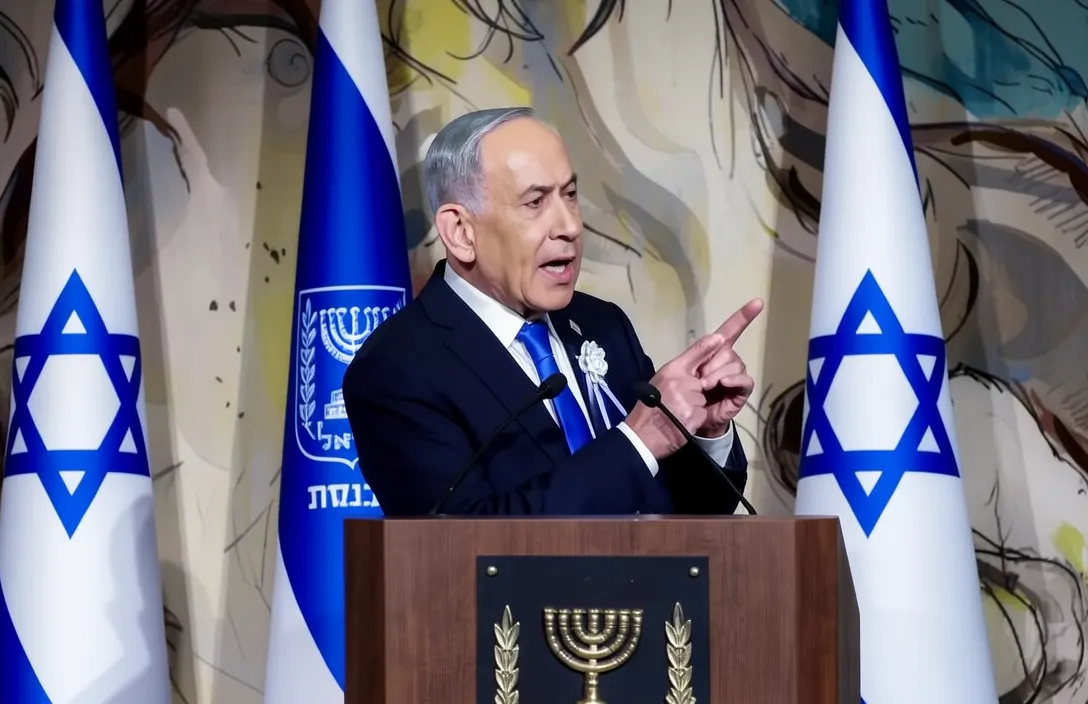

Benjamin Netanyahu's political bloc secured 53 seats in the Knesset, falling eight short of a majority, according to Al Jazeera (All). This outcome has placed Netanyahu in a precarious position, as former army chief Gadi Eisenkot, leader of the Yashar party, now has up to 42 days to form a government. For Netanyahu, this period may be the most challenging of his political career, as his corruption trial continues and a potential prison sentence looms. His request for a presidential pardon has remained unaddressed for months, adding to the pressure on him. [1]
Netanyahu has proposed a 'national unity government' that excludes Arab parties, which represent 21 percent of the population, while including Jewish supremacists and anti-Zionist Haredi parties. This approach has been framed as a strategy to maintain Jewish dominance in the government, as noted by Al Jazeera (All). Eisenkot has agreed to negotiate with Likud, but the proposal has been met with skepticism. Netanyahu's attempt to incite opposition against Arab-backed governments has faced challenges, as Ra’am leader Mansour Abbas and Joint List lawmaker Ahmad Tibi have revealed private communications suggesting a willingness to engage with Arab parties. [1]
In an effort to delay the formation of a government, Netanyahu has also been pushing for a return to full-scale war with Iran, according to Al Jazeera (All). This strategy could potentially create an emergency situation that would allow him to form a government. However, former chief of staff Gadi Eisenkot has access to military sources that suggest there is no urgent need for another conflict with Iran. Additionally, former U.S. President Donald Trump has indicated a desire to see the war concluded, which may limit Netanyahu's options in this regard. [1]
Benjamin Netanyahu's political bloc secured 53 seats in the Knesset, falling eight short of a majority, according to Al Jazeera (All). Netanyahu has proposed a 'national unity government' that excludes Arab parties, which represent 21 percent of the population, while including Jewish supremacists and anti-Zionist Haredi parties. This move is part of Netanyahu's strategy to delay the formation of a government, as he faces a potential prison sentence from his ongoing corruption trial and a possible investigation into the October 7 attacks. [1]
Advertisement
In an effort to delay the formation of a government, Netanyahu has also been pushing for a return to full-scale war with Iran, according to Al Jazeera (All). This strategy is aimed at creating a scenario where an emergency government could be formed, which would allow Netanyahu to retain influence and avoid facing the consequences of his legal troubles. His allies have been inciting against Arab parties, branding them as 'terror supporters' and 'haters of Israel', in an attempt to prevent an Arab-backed government from being formed. [1]
Netanyahu's proposal for a 'national unity government' includes the inclusion of Jewish supremacists and anti-Zionist Haredi parties, while excluding Arab parties that represent 21 percent of the population. This move has been criticized as a way to maintain his political power and avoid facing the consequences of his legal troubles. The proposal has been described as 'another spin' by some, but it has been agreed to by some parties, as they recognize the need to negotiate with Likud to avoid a potential government formed by Arab supporters of Hamas. [1]
Benjamin Netanyahu's political bloc secured 53 seats in the Knesset, falling eight short of a majority, according to Al Jazeera (All). Netanyahu has proposed a 'national unity government' that excludes Arab parties, which represent 21 percent of the population, while including Jewish supremacists and anti-Zionist Haredi parties. This strategy aims to ensure that the government remains aligned with Netanyahu's vision of Israel as the nation-state of the Jewish people, as detailed in Al Jazeera (All). [1]
In an effort to delay the formation of a government, Netanyahu has also been pushing for a return to full-scale war with Iran, according to Al Jazeera (All). This move is intended to create a scenario where an emergency government could be formed, which would be more favorable to Netanyahu's interests. The potential for war with Iran is being used as a lever to buy time and prevent the formation of a government that does not include his allies, as reported by Al Jazeera (All). [1]
Advertisement
Netanyahu's incitement against Arab parties and his allies within the Haredi community is another tactic aimed at preventing the formation of a government that could exclude him. By branding Ra’am and the Joint List as 'terror supporters' and 'haters of Israel', Netanyahu seeks to alienate potential coalition partners and maintain his political influence. These actions are part of a broader strategy to stall the formation of a government and avoid a situation where he could be removed from power, as highlighted in Al Jazeera (All). [1]
Benjamin Netanyahu's political bloc secured 53 seats in the Knesset, falling eight short of a majority, according to Al Jazeera (All). Netanyahu has proposed a 'national unity government' that excludes Arab parties, which represent 21 percent of the population, while including Jewish supremacists and anti-Zionist Haredi parties. This strategy is designed to prevent the formation of a government that could exclude him, as noted in the same source. [1]
In an effort to delay the formation of a government, Netanyahu has also been pushing for a return to full-scale war with Iran, according to Al Jazeera (All). This tactic is intended to create a crisis that could justify an emergency government, thereby giving Netanyahu more time to maneuver politically. The source highlights that this approach is part of a broader strategy to avoid a government that would not be under his control. [1]
Netanyahu has been using incitement against Arab parties and his allies within the Haredi community as another tactic aimed at preventing the formation of a government that could exclude him, according to Al Jazeera (All). By branding Arab parties as 'terror supporters' and 'haters of Israel,' Netanyahu seeks to isolate them and discourage Haredi parties from joining a potential coalition led by former army chief Gadi Eisenkot. [1]
Advertisement
The Cali Reporter newsletter
The stories worth your time.
California, the country, and what comes next. Join our free newsletter for reporting that keeps you informed.
More in World
- Irish Man Charged with Destroying U.S. Military Aircraft at Shannon Airport
A man from Ireland has been indicted for allegedly destroying a U.S. military aircraft at Shannon Airport, according to prosecutors in New York.
- Trump's APEC Summit and Strategic Meetings
President Donald Trump is set to attend the APEC summit in Shenzhen, China, where he is expected to meet with Chinese President Xi Jinping and participate in a trilateral meeting with Russian President Vladimir Putin,…
- Early Snowfall in Northern England and Scotland
Snowfall occurred in parts of Northern England and southern Scotland, with subsequent melting due to milder temperatures, according to the BBC.