NATO Special Forces Adapt Training to Mirror Ukraine Battlefield Realities
NATO special forces are undergoing training exercises that simulate the conditions of the Ukraine battlefield, emphasizing survival without advanced technology.

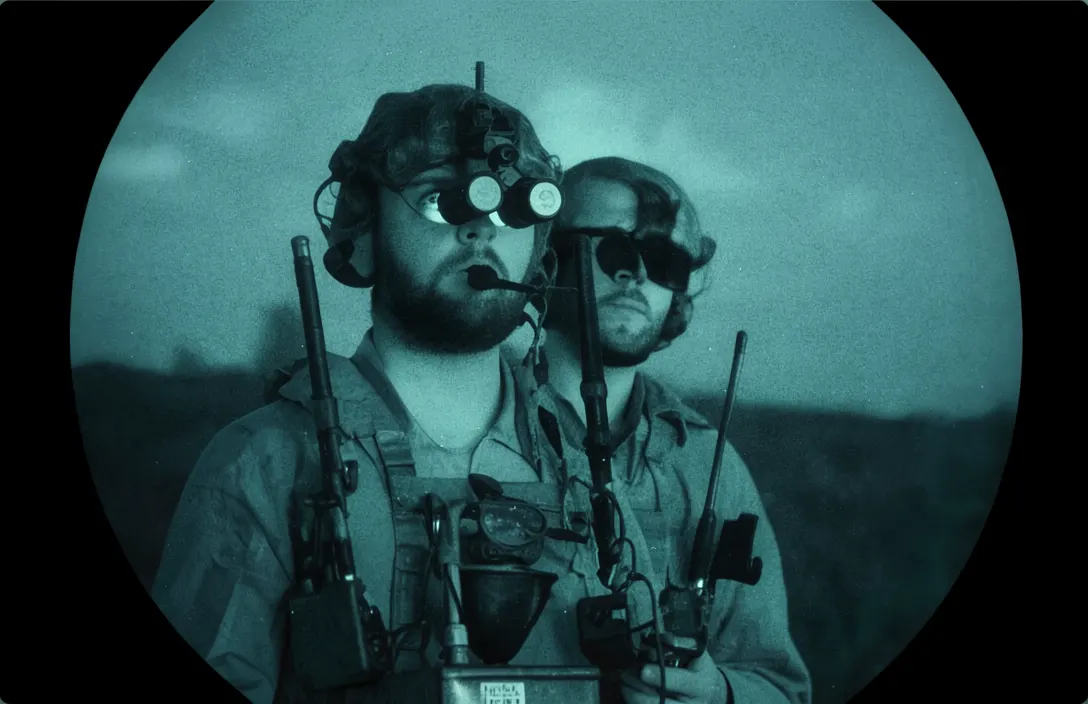
NATO special forces are training without high-tech gear to survive on a battlefield similar to the one in Ukraine, where advanced equipment can be easily tracked by enemy drones and other sensors (Business Insider). Polish special forces recently participated in 'Deep Strike,' a new NATO exercise designed to test how Western operators get back to basics. According to a NATO statement, Polish troops had to cross dozens of miles of forest and farmland in just a few days, during which they were hunted by drones with thermal cameras, dogs, and US Army paratroopers (Business Insider). [1]
The mission required completing the task without the cutting-edge technology typically used by special operations forces. 'Indeed, on the modern battlefield, sophisticated electronics can broadcast a team's location, leading to their capture,' NATO said in its statement (Business Insider). The exercise was informed by lessons learned from Ukrainian special operators, as both sides now have access to night vision goggles and advanced thermal optics, making it harder to move undetected (Business Insider). [1]
Drones have transformed the front lines into a miles-wide kill zone, where any movement can be tracked, leading to instantaneous pinpoint strikes. As the kill zone evolved, NATO military leaders decided to create an exercise that would test how soldiers could survive on a battlefield like the one in Ukraine (Business Insider). The special operators who participated in the recent exercise carried assault rifles with short barrels and traveled light for increased agility, successfully evading US paratroopers and assaulting the target (Business Insider). [1]
NATO special forces are training without high-tech gear to survive on a battlefield similar to the one in Ukraine, where advanced equipment can be easily tracked by enemy drones and other sensors (Business Insider). The mission required completing the task without the cutting-edge technology typically used by special operations forces. This shift in training is a response to the evolving nature of modern warfare, particularly the increased use of drones that have transformed the front lines into a miles-wide kill zone, where any movement can be tracked, leading to instantaneous pinpoint strikes. [1]
Advertisement
Polish special forces recently became the first to participate in 'Deep Strike,' a new NATO exercise designed to test how Western operators get back to basics (Business Insider). The Polish troops, who were tasked with assaulting a target with drones, had to cross dozens of miles of forest and farmland in just a few days, during which they were hunted by drones with thermal cameras, dogs, and US Army paratroopers, NATO said in a statement this month. Completing the mission meant doing so without the cutting-edge technology that special operations forces are known for. [1]
NATO special forces units have long leveraged what the alliance described as 'high-tech wizardry' to operate in stealth, while relying on jets for air support and helicopters for surprise insertion and rapid extraction (Business Insider). Russia's war against Ukraine has demonstrated the potential vulnerabilities of overreliance on some high-end tech. 'Indeed, on the modern battlefield, sophisticated electronics can broadcast a team's location, leading to their capture,' NATO said in its statement. [1]
NATO special forces are training without high-tech gear to survive on a battlefield similar to the one in Ukraine, where advanced equipment can be easily tracked by enemy drones and other sensors (Business Insider). This training approach is part of a broader effort to adjust to the reality that modern battlefields, particularly those involving drone technology, have transformed into kill zones where any movement can be detected and targeted with precision. [1]
Polish special forces recently became the first to participate in 'Deep Strike,' a new NATO exercise designed to test how Western operators get back to basics (Business Insider). During the exercise, Polish troops had to cross miles of forest and farmland while being hunted by drones equipped with thermal cameras, dogs, and US Army paratroopers. The mission required completing the task without the cutting-edge technology typically used by special operations forces, emphasizing the need for adaptability and stealth in the modern battlefield. [1]
Advertisement
NATO special forces units have long relied on 'high-tech wizardry' to operate in stealth, including the use of jets for air support and helicopters for insertion and extraction (Business Insider). However, the war in Ukraine has highlighted the vulnerabilities of overreliance on such technology. As a result, NATO has shifted focus to training that emphasizes low-technology, high-agility operations, ensuring that soldiers can survive in environments where advanced electronics can easily expose their location. [1]
NATO special forces are training without high-tech gear to survive on a battlefield similar to the one in Ukraine, where advanced equipment can be easily tracked by enemy drones and other sensors (Business Insider). Polish special forces recently became the first to participate in 'Deep Strike,' a new NATO exercise designed to test how Western operators get back to basics (Business Insider). The mission required completing the task without the cutting-edge technology typically used by special operations forces. [1]
The Polish troops, who were tasked with assaulting a target with drones, had to cross dozens of miles of forest and farmland in just a few days, during which they were hunted by drones with thermal cameras, dogs, and US Army paratroopers (Business Insider). Completing the mission meant doing so without the cutting-edge technology that special operations forces are known for. 'Indeed, on the modern battlefield, sophisticated electronics can broadcast a team's location, leading to their capture,' NATO said. [1]
NATO special forces units have long leveraged what the alliance described as 'high-tech wizardry' to operate in stealth, while relying on jets for air support and helicopters for surprise insertion and rapid extraction (Business Insider). Russia's war against Ukraine has demonstrated the potential vulnerabilities of overreliance on some high-end tech. 'When both sides have night vision goggles, nobody owns the night,' NATO said in its statement, adding that 'the proliferation of advanced heat-sensing thermal optics makes moving undetected even more difficult.' [1]
Advertisement
The Cali Reporter newsletter
The stories worth your time.
California, the country, and what comes next. Join our free newsletter for reporting that keeps you informed.
More in Business
- Kirkland Signature Meals: A Family's Take on Taste and Value
A family's review of Kirkland Signature meals highlights a mix of flavors, textures, and value at Costco, with some dishes standing out while others fall short of expectations.
- Ex-OpenAI Engineer Donates Equity to AI Safety
Jacob Coxon, a former engineer at OpenAI and Anthropic, has pledged to donate his equity in OpenAI to AI safety research, citing concerns over the risks of uncontrolled AI development.
- Scottish Hacker Sentenced for Crypto Theft Scheme
A Scottish hacker has been sentenced to six years in U.S. federal prison for orchestrating a large-scale cryptocurrency theft operation, according to a report from the U.S. Attorney’s Office for the Central District of…