NATO Expansion and Its Historical Context
The expansion of NATO in the late 1990s brought significant changes to the geopolitical landscape of Europe, with the inclusion of several Eastern European nations. This move was not without controversy, as some…


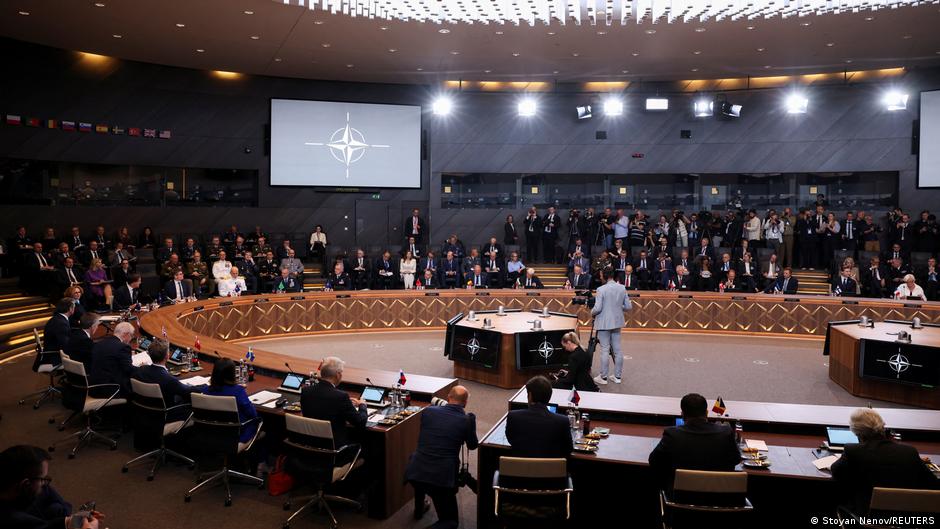
NATO welcomed the Czech Republic, Hungary, and Poland as its newest members, marking a significant step in the process initiated in 1994 (clintonwhitehouse3.archives.gov). The invitation for these countries to begin accession negotiations was issued during the July 1997 NATO Summit in Madrid. In December 1997, protocols to the NATO treaty were signed by the Allies and the three invitees, leading to their eventual accession in 1999. This expansion was the fourth instance of NATO adding new members since its founding in 1949, following the admissions of Greece and Turkey in 1952, the Federal Republic of Germany in 1955, and Spain in 1982. The inclusion of these countries was seen as a way to strengthen the Alliance and widen the zone of stability in Europe. [1]
The expansion of NATO was met with criticism from some quarters, with concerns raised about its potential consequences for international relations. In a statement from March 1998, Senator Moynihan referenced a critique by George F. Kennan, who warned that NATO expansion could be considered a historic blunder (www.govinfo.gov). Kennan, a respected commentator on foreign affairs, expressed concerns that expanding NATO might have serious implications for relations with Russia, suggesting that it could be perceived as a strategic threat. This perspective was echoed by others, including Owen Harries, who emphasized the need to carefully consider the arguments for expanding NATO's membership and purposes. [2]
The debate around NATO expansion highlighted the differing views on its implications for international security. In a letter to The National Interest, Kennan argued that the implicit understanding during the Cold War was that the West would not take advantage of the Russian strategic and political withdrawal from Eastern Europe. He noted that the lack of coordination between political and military policies and the amateurism of later White House diplomacy could have led to misunderstandings. This perspective was also reflected in the writings of Owen Harries, who emphasized the importance of examining the arguments for NATO expansion carefully and placing it in the context of the political changes that occurred in Eastern Europe after the fall of the Soviet Union. [2]
NATO welcomed the Czech Republic, Hungary, and Poland as its newest members, marking a significant step in the process initiated in 1994 (clintonwhitehouse3.archives.gov). The expansion of NATO was met with criticism from some quarters, with concerns raised about its potential consequences for international relations. The Process of Accession Invitations to the Czech Republic, Hungary, and Poland to begin accession negotiations were issued by NATO leaders at the July 1997 NATO Summit in Madrid. In December 1997, Allies and the three invitees signed protocols to the NATO treaty. These protocols were subsequently ratified by all 16 NATO allies, allowing Secretary General Solana, in January 1999, to invite the three to accede to the North Atlantic Treaty. Their instruments of accession were deposited in a ceremony at the Truman Library in Independence, Missouri on March 12, 1999. [1]
Advertisement
The addition of new members has strengthened NATO and widened the zone of stability and security in Europe. NATO's Door Remains Open NATO's 19 leaders have reaffirmed in Washington their enduring commitment to NATO's Open Door policy, pledging that this round of NATO enlargement will not be the last. Nine of NATO's current partners have declared their candidacy for future membership, including Albania, Bulgaria, Estonia, the Former Yugoslav Republic of Macedonia, Latvia, Lithuania, Romania, Slovakia, and Slovenia. Initiation of NATO's Membership Action Plan will help these states build the strongest possible candidacy for future membership. [1]
In a speech to the Senate, Senator Moynihan referred to a letter by George F. Kennan, who warned that NATO expansion is an historic blunder. Kennan's letter came in response to an article by Owen Harries on ``The Dangers of Expansive Realism'' in the current, winter issue of The National Interest. Kennan stated that ``expanding NATO would be the most fateful error of American policy in the entire post- cold-war era.'' The debate around NATO expansion highlighted the differing views on its implications for international security. [2]
NATO welcomed the Czech Republic, Hungary, and Poland as its newest members, marking a significant step in the process initiated in 1994 (clintonwhitehouse3.archives.gov). This historic step culminated from a series of formal procedures, including invitations to begin accession negotiations at the July 1997 NATO Summit in Madrid, the signing of protocols to the NATO treaty in December 1997, and the subsequent ratification by all 16 NATO allies (clintonwhitehouse3.archives.gov). The instruments of accession were deposited in a ceremony at the Truman Library in Independence, Missouri on March 12, 1999, completing the process of their inclusion into the alliance (clintonwhitehouse3.archives.gov). [1]
The expansion of NATO was not universally welcomed, as concerns were raised about its potential consequences for international relations. In a speech to the Senate, Senator Moynihan referred to a letter by George F. Kennan, who warned that NATO expansion would be ``the most fateful error of American policy in the entire post-Cold War era'' (www.govinfo.gov). Kennan's letter, responding to an article by Owen Harries, highlighted the potential risks of expanding NATO's boundaries and the historical implications of such a move (www.govinfo.gov). [2]
Advertisement
The addition of new members to NATO has been described as a move that ``widened the zone of stability and security in Europe'' (clintonwhitehouse3.archives.gov). However, the debate around NATO expansion highlighted differing views on its implications for international security, with some arguing that it could lead to a redivision of Europe and even risk a new cold war (www.govinfo.gov). These concerns were echoed in statements by various commentators and officials who questioned the strategic and financial commitments associated with NATO expansion (www.govinfo.gov). [1] [2]
NATO welcomed the Czech Republic, Hungary, and Poland as its newest members, marking a significant step in the process initiated in 1994 (clintonwhitehouse3.archives.gov). The addition of these three countries was the result of a long and deliberate process, beginning with invitations to begin accession negotiations at the July 1997 NATO Summit in Madrid. In December 1997, protocols to the NATO treaty were signed by the Allies and the three invitees, which were subsequently ratified by all 16 NATO allies (clintonwhitehouse3.archives.gov). This allowed for the formal invitation to the three countries to accede to the North Atlantic Treaty, which was deposited in a ceremony at the Truman Library in 1999 (clintonwhitehouse3.archives.gov). [1]
The expansion of NATO was not universally welcomed, as concerns were raised about its potential consequences for international relations. In a speech to the Senate, Senator Moynihan referenced a letter by George F. Kennan, who warned that NATO expansion would be ``the most fateful error of American policy in the entire post-Cold War era'' (www.govinfo.gov). Kennan's letter was a response to an article by Owen Harries, and it highlighted the potential risks of expanding NATO's boundaries, particularly in relation to Russia's strategic concerns (www.govinfo.gov). [2]
Kennan's critique was not an isolated voice, as it was echoed in a column by Thomas L. Friedman, who described the Senate Foreign Relations Committee's handling of NATO expansion as ``a shameful performance'' (www.govinfo.gov). Friedman raised questions about the endgame of NATO expansion and the potential for increased tensions with Russia. He also pointed out discrepancies in the estimated costs of NATO expansion, highlighting the lack of clarity in the U.S. government's approach to the issue (www.govinfo.gov). [2]
Advertisement
The Cali Reporter newsletter
The stories worth your time.
California, the country, and what comes next. Join our free newsletter for reporting that keeps you informed.
More in World
- Irish Man Charged with Destroying U.S. Military Aircraft at Shannon Airport
A man from Ireland has been indicted for allegedly destroying a U.S. military aircraft at Shannon Airport, according to prosecutors in New York.
- Trump's APEC Summit and Strategic Meetings
President Donald Trump is set to attend the APEC summit in Shenzhen, China, where he is expected to meet with Chinese President Xi Jinping and participate in a trilateral meeting with Russian President Vladimir Putin,…
- Early Snowfall in Northern England and Scotland
Snowfall occurred in parts of Northern England and southern Scotland, with subsequent melting due to milder temperatures, according to the BBC.