Nationwide Flight Halt Lifted After FAA Telecom Failure; Nearly 5,000 Cancellations
Domestic departures resumed at SFO and airports across the country Friday evening after a multi-hour ground stop. Officials pointed to aging switches and to upgrade work without issuing a final technical finding, weekend delays remained possible, and the record left key questions unanswered.

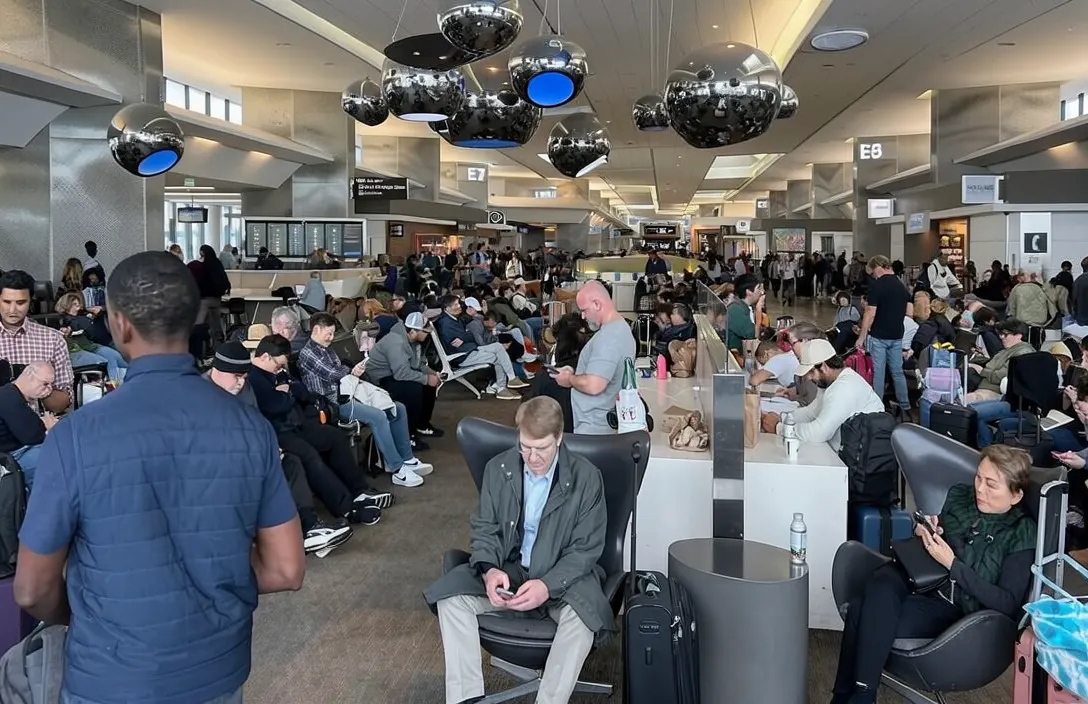
A national halt on domestic departures ended Friday evening when the FAA cleared flights to leave again from San Francisco International and airports around the country, according to The San Francisco Standard. Transportation Secretary Sean Duffy, speaking at a White House briefing around 5:30 p.m., confirmed that the airspace had reopened while cautioning that restoring normal schedules would be gradual; he said unwinding the afternoon's disruption would take time and that he hoped Saturday would show better movement. [1]
The order had been triggered by a communications breakdown at air traffic control facilities, which the agency later characterized as a short-lived telecommunications outage at regional control centers. The national advisory went out from the FAA's Air Traffic Control System Command Center at 12:54 p.m. PT. Roughly 20 minutes afterward, Duffy posted on X that the halt followed a communication issue affecting every Air Route Traffic Control Center and that agency technicians were looking into it. In later remarks, he said controllers experienced intermittent communication and radar rather than a complete blackout. Flights already in the air were permitted to continue to their destinations, and the agency said it would handle arriving international flights individually. [1]
At SFO, departures toward Hawaii and Asia were released around 3 p.m., roughly two hours after the stop began. FlightAware put the nationwide cancellation count at nearly 5,000, and airport officials cautioned that travelers should anticipate ripple delays through the weekend. The airport had already been absorbing delays earlier Friday, when the FAA slowed arrivals bound for SFO because of wind and weather, so the national order landed on an operation already under strain. A reporter at SFO observed a takeoff at about 2:30 p.m.; travelers waiting in the terminal cheered when a second aircraft left before 3 p.m. The account was published as a developing story, meaning Friday evening's details may not represent the final record. [1]
Duffy attributed the failure to aging infrastructure. He described the air traffic control system as very old and analog, saying switches became overloaded with data and began producing inconsistent information, and that the legacy hardware was what went down. He said he would happily blame airlines or weather but called this a system failure. The account locates the failure in old equipment while also describing data overload that degraded what controllers could see; it offers no definitive technical diagnosis, and the FAA said its technicians were investigating. [1]
Advertisement
Homeland Security Secretary Markwayne Mullin, asked whether a cyberattack was possible, said the disruption appeared to stem from upgrade work. In his account, workers installing patches and new equipment and technology overwhelmed the older system. Mullin said the public was never in danger during the episode and that the response was taken out of an abundance of caution. The two explanations stress different factors, old switches on one hand and disruption from patching and new equipment on the other, and neither constitutes a verified root cause. [1]
The reporting identifies the incident as a short telecommunications outage at regional facilities but does not specify which centers lost or degraded service, how many controllers encountered intermittent links, or which upgrade work was underway. It does not explain how inconsistent data reached controller positions or how the agency judged the problem contained enough to lift the order. No final technical finding was released in the account, and officials gave no timeline for completing a review. [1]
In SFO's International Terminal, passengers passed the hours before departures resumed with irritation, boredom and phones in hand. Check-in lines at gates were short as travelers gathered in United lounges and at Mustards Grill near Gate G3. Many fliers were calm but had no plan beyond waiting. Sarah Mendoza, 27, bound for Hong Kong to vacation with friends, said her 11:25 a.m. flight had slipped to 8 p.m. United gave her a meal voucher and an app message noting that air traffic control was limiting the number of planes allowed to land in Hong Kong; she settled in to wait. [1]
Soon afterward, a flight attendant hurried along the concourse flagging passengers to say that United Flight 857 to Shanghai, delayed from 12:55 p.m., had received clearance to leave at 3:20 p.m. The attendant told one passenger the FAA was approving flights individually and that the aircraft was ready. Domestic travelers had thinner options. In Terminal 3, three salesmen facing a board of cancellations and delays booked hotels and backup Saturday flights home to Texas. Harrison Durrett, 32, traveling to Austin, worried that seats would fill if everyone was booking at once; Timm Silva, 37, was luckier, with a friend in San Francisco to stay with. [1]
Advertisement
Local officials were swept up as well. BART Board Vice President Edward Wright, who had planned to fly to Paris for a post-election vacation, chose to rebook for Saturday and said he hoped matters would be resolved by then. Travelers at SFO had heard intercom announcements about the halt before departures resumed. The account describes a terminal that was unsettled rather than panicked, with some international flights leaving within hours while domestic passengers sorted out rebooking and uncertainty about Saturday seats. [1]
The National Weather Service reported nationwide communications and internet problems Friday afternoon. Officials have not confirmed any connection between those problems and the aviation outage. Local forecast offices continued issuing weather updates and warnings through the day as storms crossed the Bay Area, according to the account. Timing alone does not establish a shared infrastructure failure or a cyber event, and the reporting offers no evidence linking the two. Port of Oakland spokesperson Kaley Skantz said by email during the stoppage that Oakland San Francisco Bay Airport was aware of the nationwide order, was coordinating with airline partners and monitoring developments, and advised passengers to check with their airlines for the latest information on delays and cancellations. [1]
San Jose Mineta International Airport posted on X during the halt that it did not know when operations would return to normal but would relay updates from the FAA on social media as they arrived. The report does not provide a complete airport-by-airport timeline, a carrier-by-carrier breakdown, or a full count of delayed flights. It also does not quantify how many travelers were affected or how airlines compensated passengers beyond the meal voucher described by one traveler. [1]
CNBC reported that the FAA halted flights in January 2023 over problems with a pilot alert system, and that an earlier nationwide stop followed the Sept. 11, 2001, terror attacks. The account places Friday's action alongside those episodes without comparing duration, scope or flight counts, and it does not say whether the earlier events produced a similar volume of cancellations. The outage came just days after the FAA expanded an AI-driven route-planning tool called SMART to all 22 of its regional air traffic control centers. Air Space Intelligence, the startup behind the software, said the ground stop is not based on or a result of the SMART system. The report includes no FAA statement tying SMART to the failure, and it establishes only the timing of the expansion, not a causal link. It does not say whether the rollout finished on schedule or what testing preceded it. [1]
Advertisement
The episode matters because a communications failure inside air traffic control cascaded into a nationwide halt of domestic departures, nearly 5,000 cancellations and warnings of weekend delays at SFO. It also placed competing official emphases before the public before any technical account was available. Among the questions left open: which regional centers lost or degraded service, how many controllers saw intermittent links, what exactly failed, what upgrade work was underway, and how many flights were delayed rather than canceled. [1]
Another open question is how the FAA decided when to lift the order and how individual clearances for inbound international flights were handled. The account distinguishes domestic departures resuming after the order was lifted from airborne flights that could continue and inbound international flights managed individually. It reports that SFO cleared Pacific-bound flights around 3 p.m. and that a United flight to Shanghai received clearance for 3:20 p.m., but it does not give a complete picture of which departures were halted or cleared at each airport or whether some carriers received clearances earlier than others. [1]
What happens next is a matter of questions and scenarios, not predictions. SFO said weekend delays were possible; Duffy said recovery would take time and hoped for better movement Saturday; Oakland advised passengers to contact airlines; San Jose promised FAA updates. Watch for FAA and airport updates on restoration and weekend schedules, airline rebooking and customer communications, and any public findings from the technicians' investigation. The report does not say when those findings might appear. [1]
A policy and oversight scenario is a review of legacy air traffic control hardware and of how upgrade work is scheduled and tested. Another scenario is that investigators focus on the interaction between old switches and upgrade work, which would leave both official emphases partly relevant rather than mutually exclusive; Mullin's description of patching overwhelming the old system points in that direction, but it is not a finding. A cybersecurity assessment is another scenario, though officials said the problem appeared to stem from upgrade work and did not assert an attack. None of these outcomes is established. [1]
Advertisement
The practical effect for travelers remained uneven. Some international departures left within hours of the order, while domestic passengers faced rebooking, hotel costs and uncertainty about Saturday seats. The account does not quantify how many travelers were affected or how airlines compensated passengers beyond the meal voucher described by one traveler. Those gaps matter because the official statements described a contained system failure while also warning that the unwind would stretch into the weekend. The public record Friday evening supported both conclusions: flights were moving again, and the explanation was not complete. [1]
Sources
Prepared with AI assistance from the cited sources.
The Cali Reporter newsletter
The stories worth your time.
California, the country, and what comes next. Join our free newsletter for reporting that keeps you informed.
More in San Francisco
- Documentary Explores the Discovery of Lesbian Seagulls and Its Impact on LGBTQ+ History
A new documentary, 'Love Birds,' delves into the scientific discovery of lesbian seagull pairs in the 1970s and its broader implications for LGBTQ+ history and representation in nature films.
- Lower Haight Parklet Removal Sparks Community Division
The removal of a community-built parklet in the Lower Haight neighborhood of San Francisco has ignited debate among residents, raising questions about public safety, neighborhood management, and the challenges of…
- Bayview Black Women Family Homes in San Francisco
The San Francisco Standard reports on the challenges and significance of Black families maintaining their homes in the Bayview neighborhood, highlighting the stories of Cyn Babalola, Jeanette Wright, and others who are…