Nadia Murad's Advocacy and Journey of Healing
Nadia Murad, a survivor of conflict-related sexual violence, continues her advocacy for survivors' rights and healing, sharing her personal journey in her new memoir.

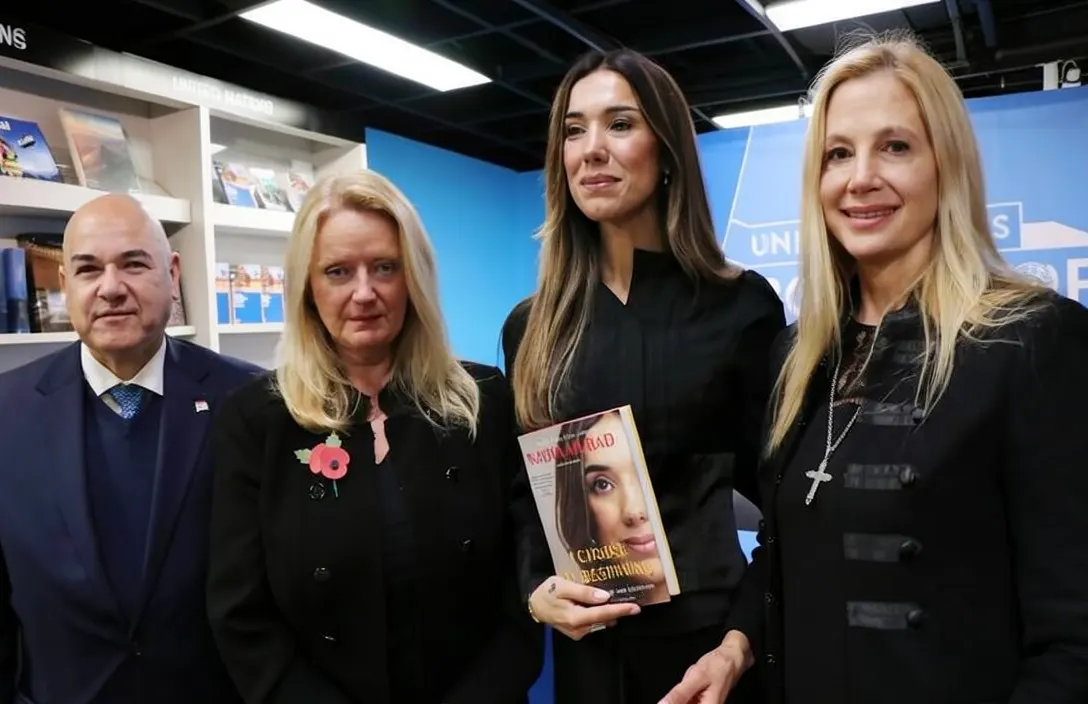
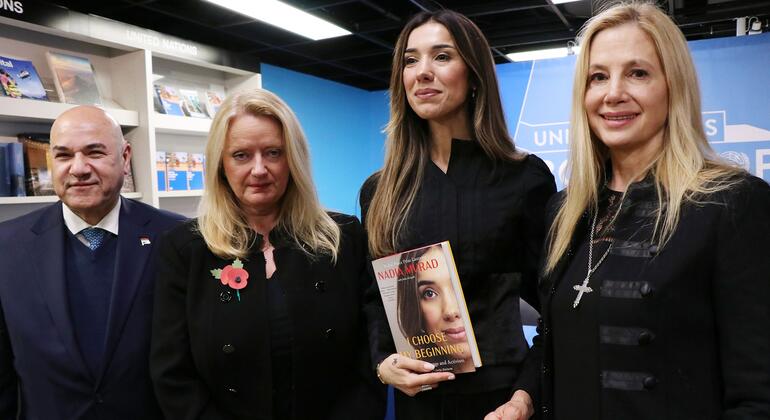
Nadia Murad has dedicated over eight years to advocating for survivors of human trafficking and sexual violence, working with the UN Office on Drugs and Crime (UNODC) to ensure that survivors are recognized not only as victims but as leaders capable of shaping change (Source ID: 1). Her first book, 'The Last Girl: My Story of Captivity and My Fight Against the Islamic State,' detailed her experiences during the 2014 genocide against the Yazidis, where she was taken into sexual slavery by ISIL. This event marked the beginning of a long and painful journey for Murad and many other Yazidi women, with over 6,000 Yazidi women taken captive, according to UN figures (Source ID: 1). [1]
In her new memoir, 'I Choose My Beginning,' Murad explores a different part of her journey, focusing on healing, relationships, and the possibility of building a future. She described how repeated public appearances and interviews left her feeling that she was disappearing into activism, leading to physical and emotional distress (Source ID: 1). Despite the trauma, Murad has worked to reclaim her story, emphasizing that survivors must be seen as individuals with ideas and the capacity to lead change. She has called for survivors to be included in policy discussions as leaders and experts, rather than being treated solely as victims (Source ID: 1). [1]
Murad's advocacy has not only focused on personal healing but also on pushing for justice and systemic change. She testified before the UN Security Council in 2015, recounting the atrocities committed against the Yazidi community and calling for international action against human trafficking and sexual violence in conflict (Source ID: 1). Her efforts have inspired others, including Mira Sorvino, an Academy Award-winning actress and UNODC Goodwill Ambassador, who praised Murad for transforming her suffering into a source of strength and inspiration for others (Source ID: 1). [1]
Nadia Murad has spent over eight years advocating for survivors of human trafficking and sexual violence, working with the UN Office on Drugs and Crime (UNODC) to ensure that survivors are recognized not only as victims but as leaders capable of shaping change (Source ID: 1). Her new memoir, 'I Choose My Beginning,' focuses on a different part of her journey, exploring healing, relationships, and the possibility of building a future. This book marks a shift from her earlier work, which centered on the 2014 genocide against the Yazidis by ISIL, where Murad was taken into sexual slavery and escaped after three months (Source ID: 1). [1]
Advertisement
In her memoir, Murad reflects on the emotional and physical toll of her early advocacy, describing how repeated public appearances and interviews left her feeling that she was disappearing into activism. At one point, she felt that she had lost herself, with physical symptoms such as hair loss, weight loss, and sleep deprivation. However, the hope of rescuing her niece, who was still in captivity, kept her going (Source ID: 1). [1]
Murad's journey of healing was further complicated by the death of her niece, Kathrine, which led her to lose faith in humanity for the first time. However, her family reminded her that she could feel safe again, get educated, and pursue life beyond activism. Finding love also played a transformative role in her recovery, as she explained in her book (Source ID: 1). [1]
Nadia Murad has spent over eight years advocating for survivors of human trafficking and sexual violence, working with the UN Office on Drugs and Crime (UNODC) to ensure that survivors are recognized not only as victims but as leaders capable of shaping change (Source ID: 1). In her memoir, Murad reflects on the emotional and physical toll of her early advocacy, describing how repeated public appearances and interviews left her feeling that she was disappearing into activism. She described how she felt she was losing herself, with physical symptoms such as hair loss, weight loss, and sleep deprivation, but the hope of rescuing her niece kept her going. [1]
Murad's journey of healing was further complicated by the death of her niece, Kathrine, which led her to lose faith in humanity for the first time. She said she could not continue with her advocacy and felt that the world had failed her. However, her family reminded her that she could feel safe again, get educated, and pursue a life beyond activism. Finding love also changed her, as she explained in her book, and she began to reclaim her story piece by piece. [1]
Advertisement
In her new memoir, Murad focuses on healing, relationships, and the possibility of building a future. She emphasized that survivors must be seen not only through the violence they have endured but as individuals with ideas and the capacity to lead change. She also called for survivors to be included in policy discussions as leaders and experts, highlighting the importance of their voices in shaping responses to human trafficking and sexual violence in conflict. [1]
Sources
Prepared with AI assistance from the cited sources.
The Cali Reporter newsletter
The stories worth your time.
California, the country, and what comes next. Join our free newsletter for reporting that keeps you informed.
More in World
- Irish Man Charged with Destroying U.S. Military Aircraft at Shannon Airport
A man from Ireland has been indicted for allegedly destroying a U.S. military aircraft at Shannon Airport, according to prosecutors in New York.
- Trump's APEC Summit and Strategic Meetings
President Donald Trump is set to attend the APEC summit in Shenzhen, China, where he is expected to meet with Chinese President Xi Jinping and participate in a trilateral meeting with Russian President Vladimir Putin,…
- Early Snowfall in Northern England and Scotland
Snowfall occurred in parts of Northern England and southern Scotland, with subsequent melting due to milder temperatures, according to the BBC.