Mission Indian Federation and the Fight for Native Rights
The Mission Indian Federation emerged in the early 20th century as a key force in advocating for Native American rights and self-governance in Southern California. This article highlights the formation of the…

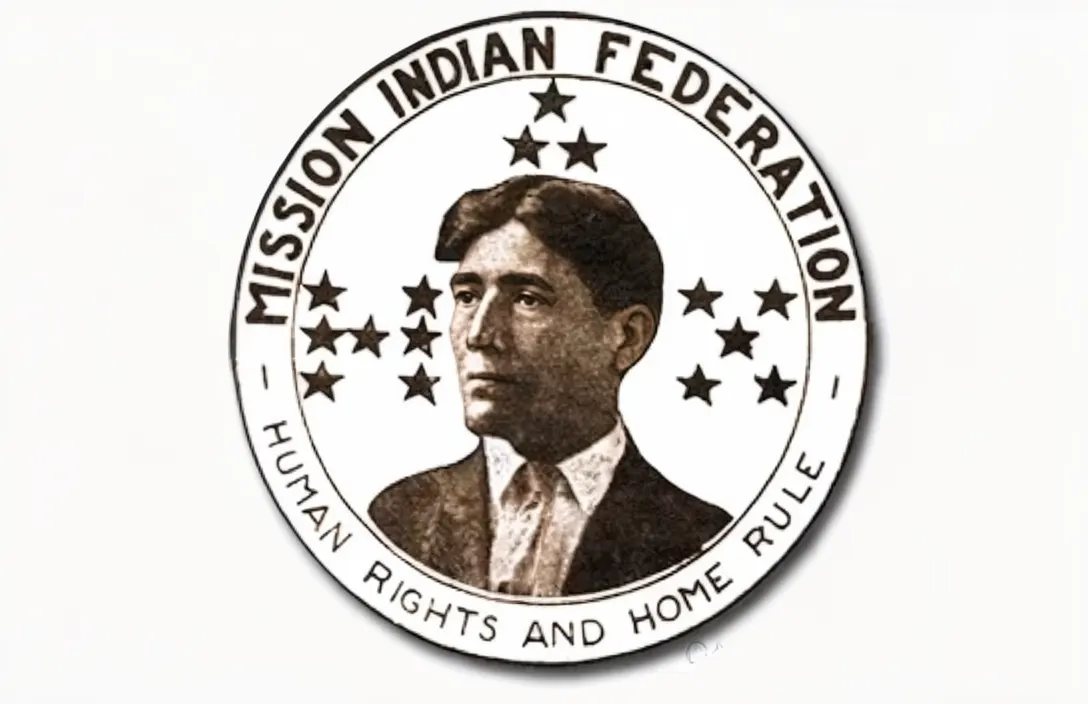
The Mission Indian Federation was established in 1919 with the support of 70 Native leaders representing 2,000 Southern California tribal people. Their goals included opposing government allotment plans, securing water rights, and investigating injustices by Indian agents and their police. The federation also aimed to abolish the Bureau of Indian Affairs (BIA) from reservations altogether (Hanks). [1]
The formation of the Mission Indian Federation was a response to years of inhumane treatment, broken treaties, and the mission system. Hereditary leaders such as Olegario Calac, Payomkawish; William Pablo, Cahuilla; and Leonicio Lugo, Cahuilla, played a significant role in the fight for self-governance and justice at the federal level. These leaders faced hostility from government-appointed Indian agents on reservations and from the BIA (Hanks). [1]
In 1875, Olegario Calac traveled to Washington, D.C., to meet President Ulysses S. Grant to discuss the encroachment of white farmers on traditional Payomkawichum lands. According to Richard A. Hanks, Calac may have been the first Southern California Indian leader to gain an audience with a sitting U.S. president. In December 1875, Grant signed the executive order establishing nine reservations in what is today Riverside, San Bernardino and San Diego counties (Hanks). [1]
The Mission Indian Federation was formed in 1919 with the support of 70 Native leaders representing 2,000 Southern California tribal people. This response to years of inhumane treatment, broken treaties, and the mission system was a pivotal moment in Native American history. The formation of the Federation was driven by the need to address ongoing injustices such as forced labor, land encroachment, and the oppressive policies of the Bureau of Indian Affairs (BIA). These challenges had long been part of the lives of Southern California's Native communities, and the Federation aimed to provide a unified voice for these struggles (Raincross Gazette). [1]
Advertisement
Olegario Calac, a prominent Native leader, played a significant role in the early efforts to address these injustices. In 1875, Calac traveled to Washington, D.C., to meet President Ulysses S. Grant to discuss the encroachment of white farmers on traditional Payomkawichum lands. According to an excerpt from This War Is For A Whole Life by Richard A. Hanks, Calac may have been the first Southern California Indian leader to gain an audience with a sitting U.S. president. This meeting led to the establishment of nine reservations in what is today Riverside, San Bernardino, and San Diego counties (Raincross Gazette). [1]
The formation of the Mission Indian Federation was also influenced by the efforts of other Native leaders, such as William Pablo and Leonicio Lugo, who worked to improve the lives of their communities. These leaders, despite facing hostility from government-appointed Indian agents and the BIA, continued to advocate for Native rights and self-governance. Their efforts were part of a broader movement that sought to challenge the systemic oppression faced by Native communities and to assert their right to self-determination (Raincross Gazette). [1]
The Mission Indian Federation was formed in response to years of inhumane treatment, broken treaties, and the mission system, which had long oppressed Native communities in Southern California. This political activist group emerged as a leader in the fight for self-governance, changes in California state policy, and justice at the federal level. The formation of the Federation was deeply rooted in the struggles faced by Native peoples, including the hostility from government-appointed Indian agents, the impact of boarding schools, and the aggressive policies of the Bureau of Indian Affairs (BIA) that sought to control the "Indian situation" through forced labor and land encroachment (source ID: 1). [1]
Olegario Calac, a prominent Native leader, played a pivotal role in early efforts to address these injustices. In 1875, Calac traveled to Washington, D.C., to meet President Ulysses S. Grant and advocate for the protection of Payomkawichum lands from encroachment by white farmers. According to historical accounts, Calac may have been the first Southern California Indian leader to gain an audience with a sitting U.S. president. His efforts were met with resistance, particularly from figures like Cave Johnson Couts, who opposed Native rights and benefited from the forced labor system. Calac's sudden death in 1877, which many believe was the result of poisoning, remains a subject of speculation and controversy (source ID: 1). [1]
Advertisement
The Federation's formation was also influenced by other Native leaders, such as William Pablo and Leonicio Lugo, who worked to improve the lives of their communities. In 1908, William Pablo attended the Western Mohonk Conference with Clara True, a key advocate for Native rights. This event brought together numerous Native leaders who discussed land and water rights, as well as other issues affecting their communities. The Federation continued to grow and confront the BIA and other government agencies that sought to maintain control over tribal lands and people, despite the opposition and hostility it faced from some white society members (source ID: 1). [1]
The Mission Indian Federation in 1920 at the home of Jonathan Tibbet in Riverside. | Kumeyaay.infoIn honor of November being Native American Heritage Month, we recognize the emergence of the most influential Southern California political activist group of the early 20th century. What began in Riverside, the Mission Indian Federation linked Native communities across the United States and solidified itself as a leader in the fight for self-governance, changes in California state policy and justice at the federal level (Source ID: 1). [1]
What led up to the formation of the Mission Indian Federation came from years of inhumane treatment, broken treaties, the mission system, hostility from government-appointed Indian agents on reservations, boarding schools and other complex forms of attempts to control the "Indian situation" by the Bureau of Indian Affairs (BIA). Hereditary leaders Olegario Calac, Payomkawish; William Pablo, Cahuilla; and Leonicio Lugo, Cahuilla, are not as commonly known as Sitting Bull, Crazy Horse or Quanah Parker but have been equally influential in the shaping of Southern California Native American history (Source ID: 1). [1]
An excerpt from This War Is For A Whole Life by Richard A. Hanks articulates a clear understanding of the positions these Native men found themselves in:Their stories are not ones of steady success but a relentless resolve to improve Native lives. It was not the moments of victory which marked their lives but the heroic attempts to do what was right because it was right regardless of the consequences. These headmen sprang from the hereditary leadership clans of Southern California Indians and accepted the responsibilities of their traditional roles despite acrimony and hostility from the growing Anglo world around them. They maintained their connection to the Native world of their fathers and those leaders who rose from this traditional world, accepting the inherited burden that came with leadership (Source ID: 1). [1]
Advertisement
The Cali Reporter newsletter
The stories worth your time.
California, the country, and what comes next. Join our free newsletter for reporting that keeps you informed.
More in Riverside
- Riverside Holiday Gift Guide Features Local Businesses and Experiences
A 2026 Shop Small holiday gift guide highlights Riverside businesses offering unique experiences and handmade gifts, including pottery classes, photo booths, and pet treats.
- Local Businesses Highlight Handmade and Seasonal Gift Options
Riverside-based businesses are offering a range of handmade and seasonal gift options as part of their 2026 Shop Small holiday gift guide, featuring products from apothecaries, barbershops, and candle makers.
- Local Plant Shops Highlight Holiday Gift Ideas
Riverside plant shops are offering unique holiday gift options, emphasizing personalized and meaningful selections for plant lovers.