Medicinal Mushrooms and Their Potential Health Benefits
Research into the health benefits of medicinal mushrooms is ongoing, with some evidence suggesting potential benefits for immunity and cancer treatment, though more studies are needed.
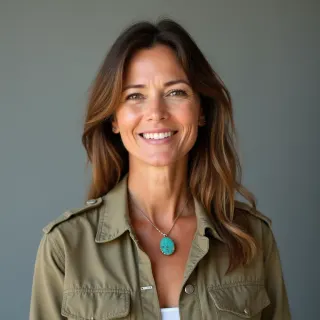

Julie Daoust, vice president of science and innovation at Monterey Nutra, has dedicated her career to exploring the biochemical properties of mushrooms. She notes that mushrooms share more biochemical similarities with humans than plants, increasing the likelihood of finding bioactive compounds that could benefit human health. Daoust's company focuses on cultivating medicinal mushrooms such as lion’s mane, reishi, and turkey tail, which are believed to have potential uses in improving cognition and immune health. These claims are supported by anecdotal evidence and traditional use in some Asian communities, though scientific validation remains limited (source ID 1). [1]
Abby Langer, a registered dietitian based in Toronto, cautions that robust clinical trials proving the safety and efficacy of medicinal mushrooms are largely lacking. While mushrooms have been used in traditional healing practices for generations, Langer emphasizes that long-term use does not necessarily equate to safety or effectiveness. She notes that mushrooms can accumulate both beneficial and harmful substances from their environment, making careful consideration essential before use (source ID 1). [1]
Research into the effects of medicinal mushrooms on cancer treatment has shown some promising results. A meta-analysis of eight randomized controlled trials involving 8,009 patients who had undergone gastric tumor surgery and chemotherapy found that those who received PSK, a purified extract from turkey tail mushrooms, had a 12% reduction in risk of death. However, the analysis also noted that only 39 studies were robust enough to be included, and the results were mixed, with six studies showing no benefit and two indicating worse outcomes (source ID 1). [1]
Santhosshi Narayanan, an integrative oncologist at the University of Texas MD Anderson Cancer Center, acknowledges the potential of PSK but stresses that more research is needed to understand its effects in different populations. She notes that while some studies have shown improved quality of life and reduced side effects in cancer patients, the evidence is not yet sufficient to support routine clinical use. Narayanan emphasizes the importance of further research to determine which patients may benefit most from medicinal mushrooms (source ID 1). [1]
Advertisement
Julie Daoust, vice president of science and innovation at Monterey Nutra, has dedicated her career to exploring the biochemical properties of mushrooms (source ID: 1). Daoust highlights that mushrooms share more biochemical similarities with humans than plants, making them a potentially rich source of bioactive compounds. Her work focuses on functional mushrooms, such as lion’s mane, reishi, and turkey tail, which are believed to support cognition and immune health. However, Daoust notes that these mushrooms are not typically poisonous or psychedelic, but rather contain a variety of potentially useful molecules (source ID: 1). [1]
Abby Langer, a registered dietitian based in Toronto, cautions that robust clinical trials proving the safety and efficacy of medicinal mushrooms are largely lacking (source ID: 1). Langer emphasizes that while mushrooms have been used in traditional healing practices, such as in parts of Asia, this does not necessarily confirm their safety or effectiveness. She points out that mushrooms can accumulate toxins from their environment, and without proper regulation, their use as supplements may pose risks (source ID: 1). [1]
Research into the effects of medicinal mushrooms on cancer treatment has shown some promising results, but more studies are needed (source ID: 1). A meta-analysis of eight randomized controlled trials found that PSK, a purified extract from turkey tail, reduced the risk of death in patients with gastric cancer by 12%. However, Santhosshi Narayanan, an integrative oncologist at the University of Texas MD Anderson Cancer Center, acknowledges that these findings do not mean that PSK or mushrooms alone can cure cancer. She stresses the need for further research to understand the effects of PSK on diverse populations (source ID: 1). [1]
Research into the effects of medicinal mushrooms on cancer treatment has shown some promising results. A study out of Japan examined the use of PSK, a purified extract from turkey tail, in improving immune response in cancer patients. The analysis considered 8,009 patients in eight randomized controlled trials who had undergone surgical removal of a gastric tumor and in almost all cases chemotherapy. Those who were also given PSK showed a 12% reduction in risk of death (source ID: 1). [1]
Advertisement
Santhosshi Narayanan, an integrative oncologist at the University of Texas MD Anderson Cancer Center, acknowledges the potential of PSK but stresses that more research is needed to understand its effects in different populations. She notes that while the evidence is encouraging, it does not mean that PSK or any mushrooms alone cures cancer. It just shows to us that we need to pay attention to these natural products (source ID: 1). [1]
Narayanan and her colleagues also surveyed 2,349 studies examining the relationship between medicinal mushrooms and cancer, but only 39 were robust enough to be included in their 2023 analysis. Of that subset, 31 studies showed beneficial effects of the mushrooms, resulting in improved quality of life, reduced side effect profiles of different chemotherapeutic drugs, improved anti-inflammatory and anti-metastatic effects, and improved disease-free survival as well as overall survival in a few trials (source ID: 1). [1]
Six studies didn’t reveal any advantage and two highlighted worse outcomes. Overall, the analysis was unable to make clear conclusions about the complex biological effects of mushrooms on the immune system in cancer (source ID: 1). [1]
Sources
Prepared with AI assistance from the cited sources.
The Cali Reporter newsletter
The stories worth your time.
California, the country, and what comes next. Join our free newsletter for reporting that keeps you informed.
More in West Coast
- COP31 Collapse Highlights Climate Negotiation Challenges
The collapse of COP31, the U.N. climate talks in Turkey, has underscored the difficulties in achieving global consensus on climate action, with experts emphasizing the need for reform and individual efforts moving…
- ScienceWorks Museum to Transition to Community Science Center
ScienceWorks Hands-On Museum in Ashland, Oregon, is pausing most activities and transitioning to a community science center with new resources for all ages, according to a report by Jefferson Public Radio.
- Seniors Embrace Tesla's Automated Driving Despite Safety Concerns
A growing number of older drivers are using Tesla's Full-Self Driving (Supervised) technology to maintain their independence, despite warnings from safety experts about potential risks.