Medicaid Work Requirements and Mental Health Exemptions
Starting in 2027, Medicaid work requirements will apply to many adults, but those with certain mental health conditions may qualify for exemptions. The process for determining eligibility is complex and evolving.

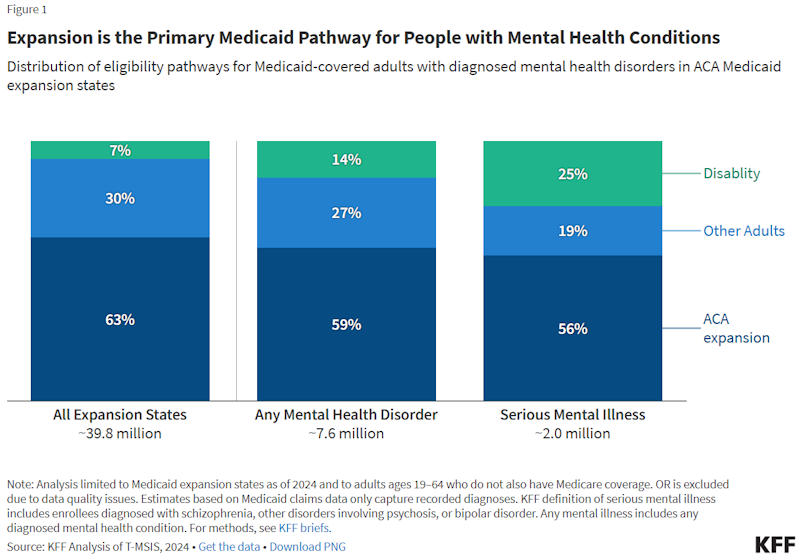
Starting January 1, 2027, the 2025 federal budget reconciliation law will require states to condition Medicaid eligibility for adults in the Affordable Care Act (ACA) expansion group on meeting work requirements, unless they qualify for an exclusion. In November 2026, the Centers for Medicare and Medicaid Services (CMS) granted states an optional six-month delay on enforcing these requirements (Sierra Sun Times, 2026). Adults with mental health conditions may qualify for an exclusion under the 'medical frailty' category, which explicitly includes those with 'disabling mental disorders.' Federal requirements for establishing medical frailty have shifted over the past year, and rules related to medically frail determinations continue to evolve (Sierra Sun Times, 2026). [1]
Federal guidelines for determining medical frailty require evidence that a qualifying condition impairs an individual's ability to meet work requirements. However, a district court in October 2026 struck down this additional requirement, though CMS may still appeal the decision (Sierra Sun Times, 2026). The ability to document a disabling mental disorder and qualify for a medical frailty exclusion depends on state definitions as well as verification processes. Challenges in qualifying for an exclusion could result in coverage loss for some adults with mental health conditions, potentially interrupting treatment (Sierra Sun Times, 2026). [1]
In North Carolina, the draft Clinical Coverage Policy outlines how Medicaid will decide who is medically frail. It uses two tiers of diagnosis and service codes to meet CMS requirements. Tier 1 includes diagnoses that indicate a person has a condition that would significantly limit their ability to meet the work and community engagement requirement. Beneficiaries identified in Tier 1 by NC Medicaid do not need to submit anything else and do not have to meet the work and community engagement requirement (medicaid.ncdhhs.gov, 2026). [4]
Starting January 1, 2027, most Medicaid beneficiaries in North Carolina between the ages of 19 and 64 who do not have a disability will need to show a monthly income of at least $580 or meet a work and community engagement requirement to maintain coverage. Beneficiaries who are identified as medically frail are exempt from these requirements. The draft Clinical Coverage Policy provides guidelines for determining who qualifies as medically frail. This policy is currently open for public comment through November 5, 2026 (Source ID: 4). [4]
Advertisement
To identify medically frail individuals, North Carolina Medicaid will use two tiers of diagnosis and service codes. Tier 1 includes diagnoses and services that indicate a serious health condition significantly limiting an individual's ability to meet work requirements. If NC Medicaid can confirm a Tier 1 diagnosis or service through claims or electronic health records, no additional provider documentation is required. Beneficiaries identified in Tier 1 will automatically be exempt from the work requirement, and their status will be reflected on the eligibility notice they receive from their local Department of Social Services (Source ID: 4). [4]
Tier 2 diagnosis and service codes require additional verification. If a beneficiary has a Tier 2 code, a provider must complete and sign a DSS-8209 Medical Report, which must also be signed by the beneficiary and submitted to their local DSS. NC Medicaid plans to automate the process of identifying Tier 2 cases, including combining diagnoses with qualifying services, medications, or durable medical equipment. This automation is expected to begin later in 2027 (Source ID: 4). [4]
Starting January 1, 2027, most Medicaid beneficiaries in North Carolina between the ages of 19 and 64 who do not have a disability will need to show a monthly income of at least $580 or meet a work and community engagement requirement to maintain coverage. Beneficiaries who are identified as medically frail will be exempt from these requirements (Source ID: 4). Medically frail is defined as having a serious health condition that significantly limits their ability to work. The draft Clinical Coverage Policy outlines how Medicaid will determine who qualifies as medically frail. [4]
North Carolina Medicaid will use two tiers of diagnosis and service codes to identify medically frail individuals. Tier 1 includes diagnoses, disease categories, and services that indicate a person has a condition that would significantly limit their ability to meet the work and community engagement requirement. If NC Medicaid can confirm a qualifying diagnosis or service through claims or electronic health records, no additional provider documentation is needed (Source ID: 4). [4]
Advertisement
Tier 2 diagnosis and service codes are not sufficient on their own to identify medical frailty. In these cases, a provider must complete and sign a DSS-8209 Medical Report, which must be signed by the beneficiary and submitted to the local Department of Social Services (DSS). If DSS cannot verify the medically frail status, a caseworker will contact the beneficiary. NC Medicaid plans to automate the process of identifying Tier 2 cases later in 2027 (Source ID: 4). [4]
Starting January 1, 2027, most Medicaid beneficiaries in North Carolina between the ages of 19 and 64 who do not have a disability will need to show a monthly income of at least $580 or meet a work and community engagement requirement to maintain coverage (Source ID: 4). To identify medically frail individuals, North Carolina Medicaid will use two tiers of diagnosis and service codes. Tier 1 includes diagnoses, disease categories, and services that indicate a person has a condition that would significantly limit their ability to meet the work and community engagement requirement. If NC Medicaid can confirm a qualifying diagnosis or service through claims or electronic health records, no additional provider documentation is needed (Source ID: 4). [4]
Tier 2 diagnosis and service codes are not sufficient on their own to identify medical frailty. NC Medicaid needs more information to determine if the condition significantly limits the person's ability to meet the work and community engagement requirement. If the beneficiary has a Tier 2 code, a provider should complete and sign a DSS-8209 Medical Report. The report must be signed by the beneficiary and submitted to the beneficiary's local Department of Social Services (DSS) (Source ID: 4). [4]
NC Medicaid plans to automate the process of finding Tier 2 cases, including combining diagnoses with qualifying services, medications, or durable medical equipment. This automation will begin later in 2027. A provider completes a DSS-8209 Medical Report when the beneficiary has a Tier 2 condition or NC Medicaid cannot confirm a Tier 1 condition from claims or health records (Source ID: 4). [4]
Advertisement
Sources
Prepared with AI assistance from the cited sources.
The Cali Reporter newsletter
The stories worth your time.
California, the country, and what comes next. Join our free newsletter for reporting that keeps you informed.
More in California
- Survivors Support Governor Newsom's Commutation of Death Sentences
Survivors of violent crime in California have expressed support for Governor Gavin Newsom's decision to commute all death sentences, emphasizing the need for healing and resources over state-sanctioned killing.
- Caltrans Announces Winter Closure of Mountain Passes
Caltrans has officially closed several mountain passes in California due to recent snowfall and adverse weather conditions, ensuring the safety of drivers and maintenance crews.
- Documentary Explores Indigenous History of California
A new documentary series, 'People of the West,' delves into the history of California's Indigenous communities through Native voices and perspectives, highlighting overlooked aspects of their past and ongoing struggles…