

LA Traffic Sign Hacked to Display 'Gravedigger' Website in Cyber Warfare Trial
Digital sabotage on the 405 exposes a divided Iranian American community

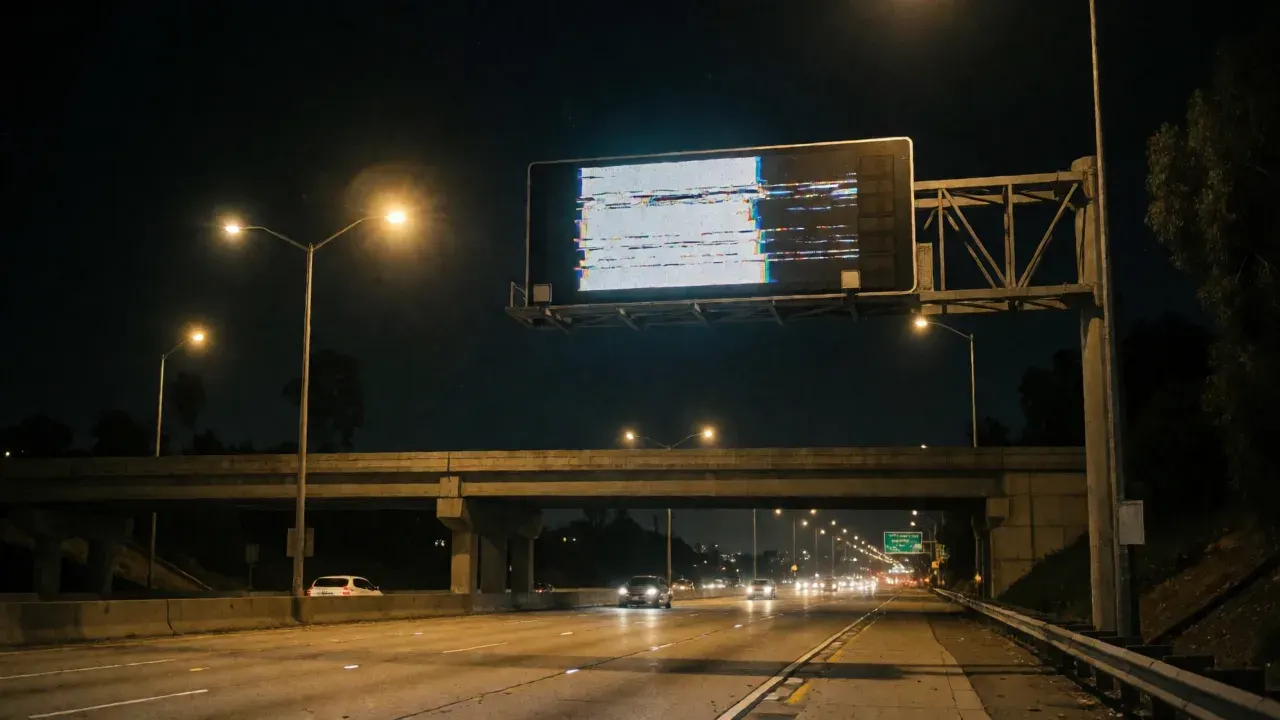
A temporary traffic sign on the 405 Freeway in Los Angeles became a digital billboard this month for a group with a grudge. Real estate broker Payam Shirazi noticed the glitch while driving north from his home in Irvine to L.A. for a business meeting. He spotted the sign by the Santa Monica Boulevard exit. He took a picture. The link on the screen pointed to "www.goorkan.info." Shirazi recognized the word "goorkan" in Farsi because it means "gravedigger." This was no accident. This was a message.
The website that appeared on the sign did not offer policy analysis. It offered a hit list. Screenshots reviewed by The Times show images of Iranians living in the U.S. and Canada. Some Shirazi knows personally. They had protested against the Iranian government. They supported the war the U.S. and Israel launched earlier this year. The website declared a campaign to "identify and punish traitors to the homeland." It called supporters of the conflict "traitors." It was a stark display of internal conflict within a diaspora community.
The California Department of Transportation has a different version of events. Spokesperson Colleen Park wrote in an email that the message sign was placed for a pavement rehabilitation project in the Sepulveda Pass. She says the agency was alerted about an "unauthorized message" on Sept. 15. At that point, a contractor removed the sign. Park insists a "field investigation of the message and access history is ongoing." Sacramento officials often use these phrases to buy time. It rarely leads to quick answers.

But the victims are paying the price. Emel Karsaz, an Iranian woman living in the Los Angeles area, told the California Post she was shocked. She saw her name her photograph and her personal information on the website. She filed a report with the FBI. As of now, the FBI’s Los Angeles office has not responded to a request for comment. The website changed tactics in recent days. The database of photos and names has been removed. It was replaced with language accusing activists of being a part of an "Israeli intelligence project." No evidence supports this claim. It is just another tactic to muddy the waters.
This incident highlights the growing polarization within the Iranian American community. The diaspora is increasingly divided by competing narratives. Persian-language online influence campaigns backed by Israel have stoked pro-war sentiment. They amplify the voice of Reza Pahlavi, the son of Iran’s deposed shah. This dynamic has led to online smear campaigns and political violence. It has even led to the detention and deportation of some Iranian families by the Trump administration. The community is fighting a proxy war in the streets and on the web.
And it is not limited to the 405. The period since the U.S. and Israel attacked Iran in February has been fraught with warnings of cyber interference. An Israel-based cybersecurity firm attributed a March cyberattack to an Iranian operation. That attack forced Los Angeles’ transit system to shut down parts of its network. Meanwhile, federal authorities investigating breaches of municipal water systems in Minnesota in July and cyberattacks on energy tankers bound for Texas in August have pointed to Iran-linked hackers as potential culprits. The state of California is a target. The 405 sign was just the latest reminder.
First reported by LA Times: California.
More in California
- UC Berkeley Lab Proposes New Civic Framework for California’s Next Governor
A research-driven agenda calls for institutionalizing 'co-governance' to address low public trust and lack of resident influence in state decision-making.
- Five Tax Measures on California’s Ballot Aim to Reshape State Finances
Propositions 3, 40–43 would alter income, wealth and local taxation rules—marking the highest number of tax measures on a general election ballot since 1994.
- Catalina Helicopter Crash Highlights Risks of Island Medevac Flights
A medical evacuation chopper carrying Catalina Romero, pilot, and nurse Jessica Devries crashed into the ocean shortly after takeoff, killing all three; federal investigators are assessing causes including night flying, spatial disorientation, and the island’s challenging Pebbly Beach heliport.