Kevin Murray, state legislator turned Skid Row housing chief, dies at 66
He wrote the Baldwin Hills conservancy and rooftop-solar subsidy into law, then ran the Weingart Center for 15 years. A 2024 federal property case named an intermediary, not him.
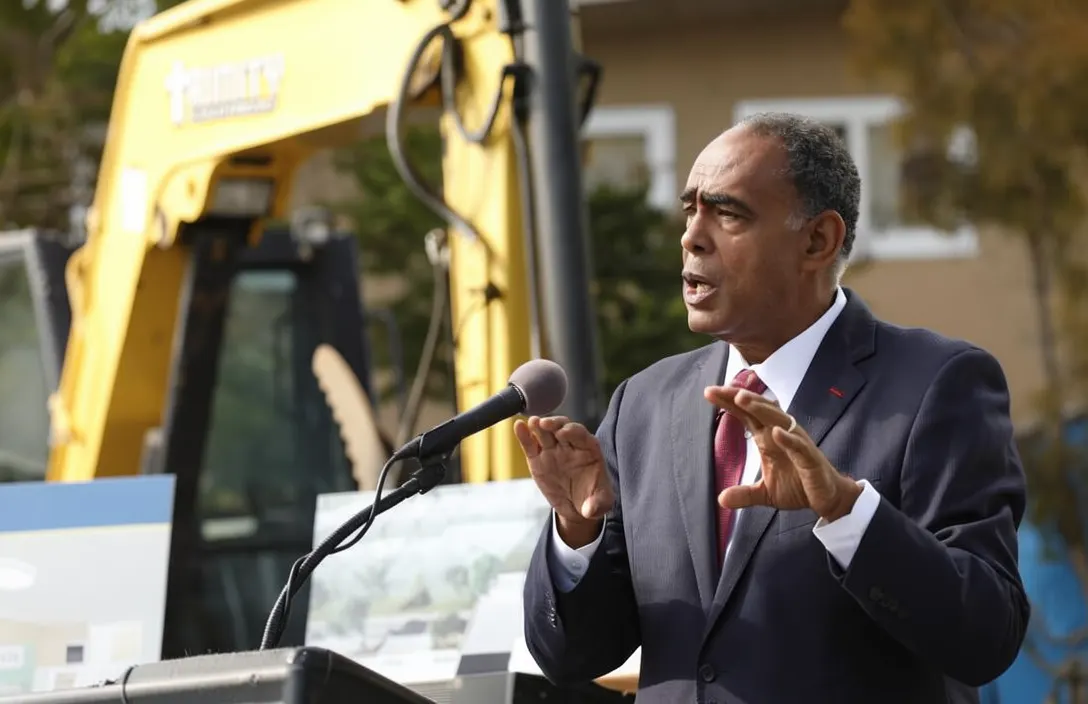

Kevin Murray, who represented Los Angeles in the Assembly and then the state Senate before leading one of the city's largest homeless services and housing nonprofits, died Nov. 10 at 66, the Weingart Center said in a message posted on its website. The note described his commitment to homelessness and his leadership of the organization as impossible to measure adequately. No cause of death was given; a colleague told the Los Angeles Times he had received treatment for cancer. [1]
Murray, a Los Angeles native, held the Skid Row-based center's presidency and chief executive post for the final 15 years of a public career that stretched across roughly three decades. That career included eight years in the state Senate and a prior Assembly tenure beginning with his 1994 election. [1]
The last years of that record were shadowed by a real estate transaction. In October 2024, federal prosecutors charged a real estate executive with using falsified records to acquire a 70-unit Cheviot Hills nursing home for $11.2 million in government funds and then resell it to Weingart at $27.3 million within a short span. Murray was not named as a suspect. The center put him on leave while it conducted an internal review, and he resigned the following year. The account does not report what the review found or whether it concluded, nor does it identify any defendant besides the real estate executive or describe the oversight of the government funds used in the purchase. [1]
The sequencing matters for how the record is read. The federal charges came in October 2024 against a middleman, not against Murray, and the leave and resignation that followed were the center's own personnel actions rather than court-ordered sanctions. The account presents his departure as tied to the review, but does not say what the review was examining, who conducted it, or what authority it had. Nor does it indicate whether the center, any government funder or prosecutors have drawn conclusions about Murray's own conduct in the purchase, beyond the absence of his name from the charges described. [1]
Advertisement
In the Senate, Murray built an unusual portfolio: urban parks, solar power and recording artists, a combination that set him apart from many in his party. He sponsored the legislation behind the Baldwin Hills & Urban Watersheds Conservancy and a program credited with a million rooftop solar installations statewide. The mix also made for friction with customary Democratic allies, including environmental groups and organized labor, and for occasional cooperation with a Republican governor. [1]
The characterization of Murray as a maverick appears in the account both for his legislative years and for his homelessness work, and the two periods share a pattern: he advanced priorities that his usual political allies did not always share, and he found partners outside the expected coalition. The account records specific frictions, with environmentalists over park spending and with labor over solar, but does not catalog votes or endorsements that would measure how often he broke with his party, nor does it detail the entertainment-industry legislation referenced only in general terms alongside parks and solar. [1]
Murray described parks and solar as his proudest work in a 2021 oral history recorded for the California State Archives' State Government Oral History Program. He recalled pressing for park money in low-income neighborhoods and encountering resistance from environmentalists, whom he characterized as treating the spending as zero-sum and as more concerned with protecting a desert bird than with giving Black children places to play. The account presents these as Murray's own recollections and characterizations, voiced in the interview, rather than as verified findings about the motives of the groups he described. [1]
He struck a deal with Tom Hayden, the former antiwar organizer turned environmental advocate, to direct money toward urban parks within a large parks bond. Beyond the conservancy bill, Murray pushed a state effort that blocked development on a 68-acre parcel, keeping it as the Baldwin Hills Scenic Overlook, a popular trail destination with sweeping views across Los Angeles. David McNeill, the conservancy's executive officer, credited Murray with working on the front lines of environmental justice and said his legislative work improved local parks, regional open space and alternative energy. [1]
Advertisement
The park legacy thus rests on three distinguishable pieces: a conservancy with an ongoing institutional role, a preserved parcel managed as a scenic overlook, and a share of a major bond directed at urban parks. The account establishes each was part of Murray's record but does not give the conservancy's budget, the bond's total size, the share steered to urban parks, or the current condition of the overlook property. McNeill's assessment is attributed to the conservancy's executive officer and reflects that institution's view; it is not presented as an independent evaluation of the programs' results. [1]
On energy, Murray treated solar as a comparatively straightforward response to climate change. His bill met Republican resistance because labor groups wanted a union-worker requirement. Gov. Arnold Schwarzenegger then moved a mandate through the Public Utilities Commission, after which Murray won passage of SB1, which supplied subsidies. The two men appeared together at a 2021 event marking the state's millionth solar roof. The account does not provide subsidy totals, program costs or a full implementation history, so the measures' long-run performance is not established. [1]
The sequence is notable for how the policy came together: a Democratic legislator's solar bill, a labor demand for union workers that drew Republican opposition, a Republican governor routing a mandate through the appointed utilities commission, and then the subsidy legislation. The account credits the program with a million rooftop systems statewide, a figure marked by the 2021 event, but does not say how much of that growth the subsidies caused versus other factors such as falling panel costs or the mandate itself. That attribution question is left open by the record, which does not present an evaluation separating the law's effect from broader market trends. [1]
At Weingart, Murray presided over a substantial buildout. The organization moved from its flagship Skid Row facility to five permanent supportive housing developments across Los Angeles, with additional projects in the pipeline. He drove the 19-story Weingart Tower on Skid Row, described as the biggest homeless housing development in city history, along with a second tower planned at 12 stories. The account does not identify the five projects, their bed counts or budgets, or the tower's financing and completion schedule, leaving the expansion's scale documented mainly through its geographic reach. [1]
Advertisement
In the homelessness field, Murray was as much a dissenter as he had been in the Legislature. He repeatedly challenged the prevailing view that permanent housing alone should anchor the response to homelessness. Writing in a 2019 Times op-ed, he called for expanding transitional housing, which he said supplies on-site mental health care, job training and life-skills instruction so that people leaving homelessness can be better neighbors once they enter permanent supportive housing. The account presents this as his advocacy rather than as evidence that transitional programs produce those results, and it does not specify how much of Weingart's portfolio followed the model he favored. [1]
He also staked out positions on policing and civil rights that set him apart in the sector, calling for more enforcement against drug dealers and gangs that target homeless people and endorsing a route to guardianship for people with severe mental illness or drug and alcohol addiction. Whether those views altered Weingart's operations or Los Angeles policy is not addressed, and the account offers no outcome data on whether heavier policing or guardianship arrangements reduced homelessness or improved individual lives. [1]
Taken together, the stances carry weight beyond a single career. Murray voiced them while his organization was adding permanent supportive housing, the model he criticized as the sole answer, which suggests his argument concerned emphasis and complements rather than rejection of that housing. How Weingart actually balanced permanent supportive housing, transitional beds, policing and guardianship is left unexplained, and the account gives no performance figures for the organization's projects. The op-ed argument and the buildout can both be accurate descriptions of his position while leaving the operational reality of Weingart's programs unmeasured in the record. [1]
Murray's path ran through Los Angeles institutions: a bachelor's degree from Cal State Northridge, a law degree from Loyola Law School and an MBA from Loyola Marymount University. He started the Murray Group, a legal and consulting practice focused on public policy and entertainment, and served as a senior vice president at the William Morris Agency. His 1994 Assembly election made him the first Assembly member to serve at the same time as his father, Willard H. Murray Jr. In 1998 he won the 26th Senate District, covering areas including Hancock Park, Hollywood and Silver Lake. He is survived by his wife, Janice, and their children, Jordan and Matthew. [1]
Advertisement
The biographical details place him in a particular Los Angeles political lineage: a family connection across generations in the Assembly, a district anchored in some of the city's central and historically significant neighborhoods, and a professional life that moved between law, entertainment representation and public policy before and around his elected service. The account does not describe his father's legislative record or the extent to which the two overlapped in office beyond the single session of simultaneous service, nor does it detail Murray's work at the William Morris Agency or the Murray Group's clientele. [1]
Several questions follow from the record. Who will lead Weingart next, and what approvals, financing and timetable govern the planned 12-story tower? Are the five supportive housing projects operating at the capacity expected, and how are they funded? The account does not say how far the planned tower had progressed when Murray resigned, whether the buildout continues on its previous course, or how his departure affected the development pipeline. Answers would have to come from the organization, court records and prosecutors rather than from the account itself. [1]
Later developments are possibilities, not forecasts. Whether Weingart completes the planned tower, how it would be financed and scheduled, and who takes over its leadership are all unknown. Whether Murray's positions on permanent housing, policing and guardianship will continue to shape Weingart's programs or Los Angeles policy is likewise unsettled. He was a prominent advocate for them, but the account does not show that the city or county adopted them as policy, or that they will outlast his tenure. Points to watch include any public statement from Weingart about leadership or the tower, a new filing in the federal case, and word of the internal review's status; no timetable is given, and confirmation would need to come from the organization, court records or prosecutors. [1]
The legislative legacy raises separate questions. Murray is credited with the Baldwin Hills conservancy, the effort to preserve the scenic overlook and the solar subsidy program, but the account does not gauge their long-term effects. It does not explain the structure of the parks-bond compromise, the administration of the solar mandate and subsidies, or the conservancy's management of the land since. Those are matters for further reporting rather than conclusions the obituary supports. What the record does establish is the outline of his legislative role, while leaving the scale and durability of those programs open to evidence. [1]
For now, the verified account is of a Los Angeles native who served in the Assembly and Senate, wrote a conservancy and a solar subsidy program into law, and then led a major homeless services provider through a period of expansion while pressing dissenting views on housing and policing. The internal review, the federal case's next steps, the planned tower, the organization's future leadership and the long-term results of his legislative programs remain questions rather than settled conclusions. The account's own framing is that his achievements were marred by the property matter, a judgment that itself depends on facts the account does not fully supply, including the review's status and later developments in the federal case. [1]
Editorial note: This article is sourced. Some claims are awaiting further verification.
Sources
Prepared with AI assistance from the cited sources.
The Cali Reporter newsletter
The stories worth your time.
California, the country, and what comes next. Join our free newsletter for reporting that keeps you informed.
More in Los Angeles
- Los Angeles Officials Reach Preliminary Agreement on Olympic Contracts
Los Angeles officials have reached an unprecedented preliminary agreement to ensure local businesses receive a meaningful share of the estimated $4 billion in contracts for the 2028 Summer Olympics.
- California's New Insurance Commissioner Proposes Government-Run Wildfire Program
California's new insurance commissioner, Jane Kim, has introduced a plan to create a government-run wildfire insurance program aimed at addressing the state's growing home insurance crisis.
- Surfing Legend's Murder Investigation Expands
New evidence has emerged in the murder case of Kurt Van Dyke, a renowned California surfer, revealing a broader involvement of individuals beyond his girlfriend.