Kenya Opens Ebola Countdown While Congo's Outbreak Meets Armed Attacks
Kenya's last Ebola patient went home on 11 November, starting a 42-day surveillance window that could end with an all-clear on 23 December 2026. In the Democratic Republic of the Congo, where the Bundibugyo outbreak was detected in May, UN responders say armed attacks are obstructing transmission control.

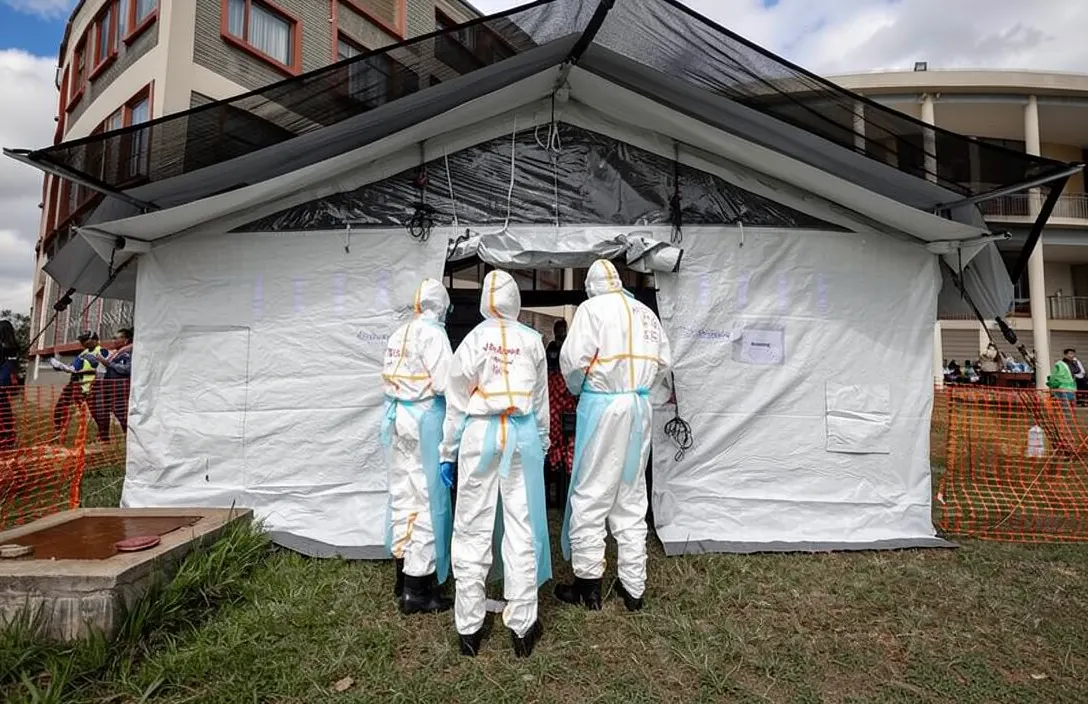
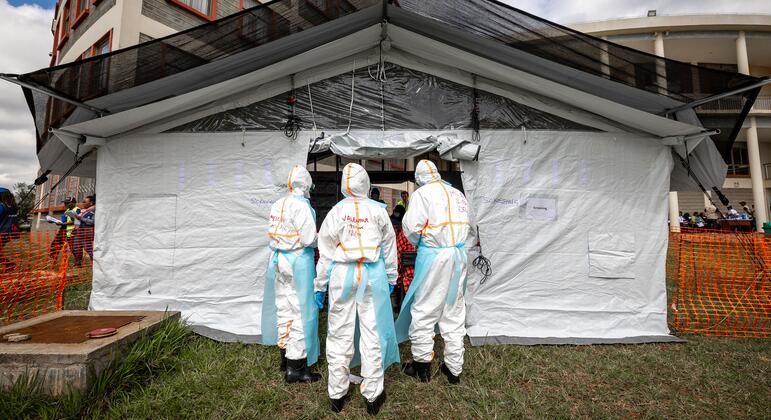
Kenya's 42-day countdown to the close of its Ebola outbreak got under way on Thursday 12 November 2026, a day after the final patient being treated for the disease was discharged and 11 people were released from quarantine, according to UN News. The country can be officially declared free of Ebola disease caused by the Bundibugyo species once that period passes, the report states. [1]
Aden Duale, Kenya's Cabinet Secretary for Health, told a briefing in Nairobi that 42 days is twice the longest incubation period of the virus, UN News reported. On that basis, he said, Kenya would be declared free of Ebola on 23 December 2026 if no new case is recorded in the interval. [1]
Duale described the countdown as a phase of continued work rather than a conclusion. He said rapid response teams would stay on guard, that every alert would be investigated, and that survivors would receive follow-up care and support, according to UN News. [1]
Kenya confirmed its first case on 6 October 2026, UN News said. The patient was a Kenyan man who had travelled home from the DRC via Uganda and who died at a Nairobi hospital; the infection was linked to the ongoing outbreak in the DRC. [1]
Advertisement
Contact tracing quickly located all 135 people who had been in close contact with him, both in Kenya and abroad, and those at risk stayed in quarantine under daily monitoring by health workers, according to UN News. Eight more people tested positive: four family members of the first patient and four health workers who had cared for him before Ebola was suspected, the report states. [1]
UN News reported that because all eight were already in quarantine, the virus never spread to the community. The last case was confirmed on 19 October and no new case has been recorded since, and the World Health Organization counted seven recoveries and two deaths, according to the same account. [1]
The WHO congratulated Kenya on the milestone but stressed the need to remain vigilant, UN News reported. Dr. Abdourahmane Diallo, Director for Programme Management at the WHO Regional Office for Africa, said authorities should keep up disease surveillance, screen patients in health facilities and strengthen laboratory capacity and health worker preparedness so that any new cases are identified and controlled quickly. [1]
The shape of the Kenyan cluster gives that advice a concrete basis in the cited record: four of the nine confirmed infections were health workers who fell ill while caring for the first patient before Ebola was suspected, according to UN News. That places the period before diagnosis among the points of exposure risk set out in the reporting. [1]
Advertisement
The WHO's Ebola disease topic page identifies the Congolese outbreak as a Bundibugyo virus disease outbreak detected in May 2026 and states that it has expanded rapidly since detection. The same page places the 2026 DRC event in a sequence that includes Mubende district, Uganda in 2022; Mbandaka in Equateur Province, DRC, in 2022; North Kivu, DRC, in October to December 2021 and again from February to May 2021; N'Zerekore, Guinea, from February to June 2021; Equateur, DRC, from June to November 2020; the North Kivu/Ituri outbreak from August 2018 to June 2020; Equateur in May to July 2018; Bas-Uele in May to July 2017; and West Africa in 2014-2016. [3]
The Congolese outbreak's scale is reflected in recent UN reporting. A UN News headline dated 28 October 2026 records the WHO urging sustained efforts as Ebola cases in the DRC surpassed the 10,000 mark. On 10 November, the International Organization for Migration said 71 confirmed Ebola cases had been detected along transit routes in the DRC since the outbreak began almost six months earlier, according to the UN News health index. [2]
The WHO has issued operational guidance aimed at helping countries detect filovirus disease outbreaks early, find all cases, interrupt transmission and use data to guide the response, its Ebola topic page shows. The page also lists public health advice on preventing and controlling the spread of Bundibugyo virus among people living in affected communities, and updated emergency guidance on the potential use of Ervebo, described there as the only licensed Ebola vaccine, during outbreaks. [3]
Kenya's first patient reached home from the DRC through Uganda, according to UN News, a route that crossed a third country before arrival. IOM's statement that 71 confirmed cases had been found along DRC transit routes since the outbreak began almost six months earlier, together with its call for wider surveillance beyond formal routes as summarized by UN News, places population movement at the centre of the regional picture. [1] [2]
Advertisement
In Kenya, the response reached beyond national borders: UN News states that close contacts were traced both inside the country and abroad, with those at risk quarantined and monitored every day. [1]
On Friday 13 November, UN responders said the DRC outbreak was continuing to spread amid repeated and ongoing deadly attacks on civilians and frontline health workers by armed groups that are obstructing efforts to stop transmission, UN News reported. That assessment is attributed to the responders. [2]
A separate UN News item dated 6 November recorded that at least 30 civilians were killed overnight on Thursday in Beni Territory, North Kivu, according to local sources cited by the UN aid coordination office OCHA. The WHO's Ebola topic page carries a World Bank Group photograph of community representatives visiting a family on the outskirts of Beni to raise awareness about Ebola, illustrating the kind of local outreach that insecurity can disrupt. The cited material documents that insecurity and the outbreak are occurring in the same region; it does not establish a direct causal link between that specific attack and transmission. [2] [3]
UN News reported on 5 November 2026 that two new Ebola vaccine candidates would join a clinical trial in the DRC as the country continues to battle the Bundibugyo outbreak. The WHO's topic page separately references its emergency guidance on Ervebo, which it describes as the only licensed Ebola vaccine, for use during outbreaks. [2] [3]
Advertisement
The cited excerpts do not name the two new candidates, specify their trial phase or enrolment, or indicate when results might emerge. They also do not state how the licensed-vaccine guidance bears on a Bundibugyo outbreak specifically. [2] [3]
Kenya's official status turns on the 42-day window. Under the schedule Duale described, the absence of a confirmed case through 23 December 2026 would bring a declaration that Kenya is free of Ebola. [1]
The wider regional picture is less settled. The Congolese outbreak passed 10,000 cases as of late October, 71 confirmed infections had been detected along DRC transit routes as of 10 November, and responders reported on 13 November that armed attacks were hampering transmission control, per UN News. Kenya's first patient had travelled from the DRC via Uganda, the route through which any future importation would most plausibly arrive, according to the UN News account. [1] [2]
The WHO paired its congratulations to Kenya with a regional official's call for continued surveillance, facility screening, laboratory strengthening and health worker preparedness, as UN News reported. The same account notes that health authorities themselves stressed that the fight against Ebola is not over. [1]
The next fixed date is 23 December 2026, when Kenya would be declared free of Ebola absent a new case, under the timetable Duale announced. Between now and then, the question raised by Diallo's remarks is whether surveillance, patient screening and laboratory capacity are sustained; the cited sources do not detail monitoring arrangements for that period. [1]
For the DRC, the reporting leaves several matters open. Whether surveillance will extend beyond formal border crossings, as IOM urged after counting 71 confirmed cases along transit routes, is one. Whether response teams can operate where armed groups are attacking civilians and health workers, as UN responders described on 13 November, is another. A third is whether the two vaccine candidates added to the DRC trial on 5 November yield findings that can be used in this outbreak. The sources frame these as open questions without forecasting answers. [2] [3]
In Kenya, survivors remain part of the response after the countdown: Duale said they would receive follow-up care and support, and Diallo called for continued health worker preparedness. Whether those commitments extend past a formal all-clear is not addressed in the cited material. [1]
One further unknown is how quickly Kenya would respond to a case appearing after 23 December. The country went from first confirmation on 6 October to a last confirmed infection on 19 October, a span of under two weeks that the UN account attributes to contacts already being held in quarantine. Whether comparable speed would hold for an unmonitored case arriving after a declaration is not addressed in the sources. [1]
This article was written with the assistance of AI and draws solely on the cited UN News and WHO sources, dated as reported in those sources. Figures and characterizations of the outbreaks are attributed to those sources and were not independently verified. [1] [2] [3]
Editorial note: This article is sourced. Some claims are awaiting further verification.
Sources
Prepared with AI assistance from the cited sources.
The Cali Reporter newsletter
The stories worth your time.
California, the country, and what comes next. Join our free newsletter for reporting that keeps you informed.
More in World
- Former Hamas Bodyguard Convicted in UK Knife Attack
A former Hamas bodyguard, Mohammed Alfatih, has been found guilty of a knife attack on a bailiff outside his UK home, according to a report by the BBC.
- Woman Survives Near-Fatal Reaction to Unlicensed Weight-Loss Injection
A woman from Birkenhead narrowly avoided death after suffering severe hypoglycaemia from an unlicensed weight-loss injection, highlighting the dangers of black market drugs.
- US Air Force Responds to Drone Activity at UK Base
The US Air Force has confirmed it responded to suspected unauthorized drone activity at RAF Lakenheath in Suffolk, though no damage or injuries were reported. The incident has raised concerns about security at US…