

JD Vance Calls It a 'Struggle' Not a War While Trump Demands Iran's Total Destruction
VP Vance avoids using the word war but critics claim the six-month campaign is costly and illegal. Trump threatens nuclear annihilation at the UN.

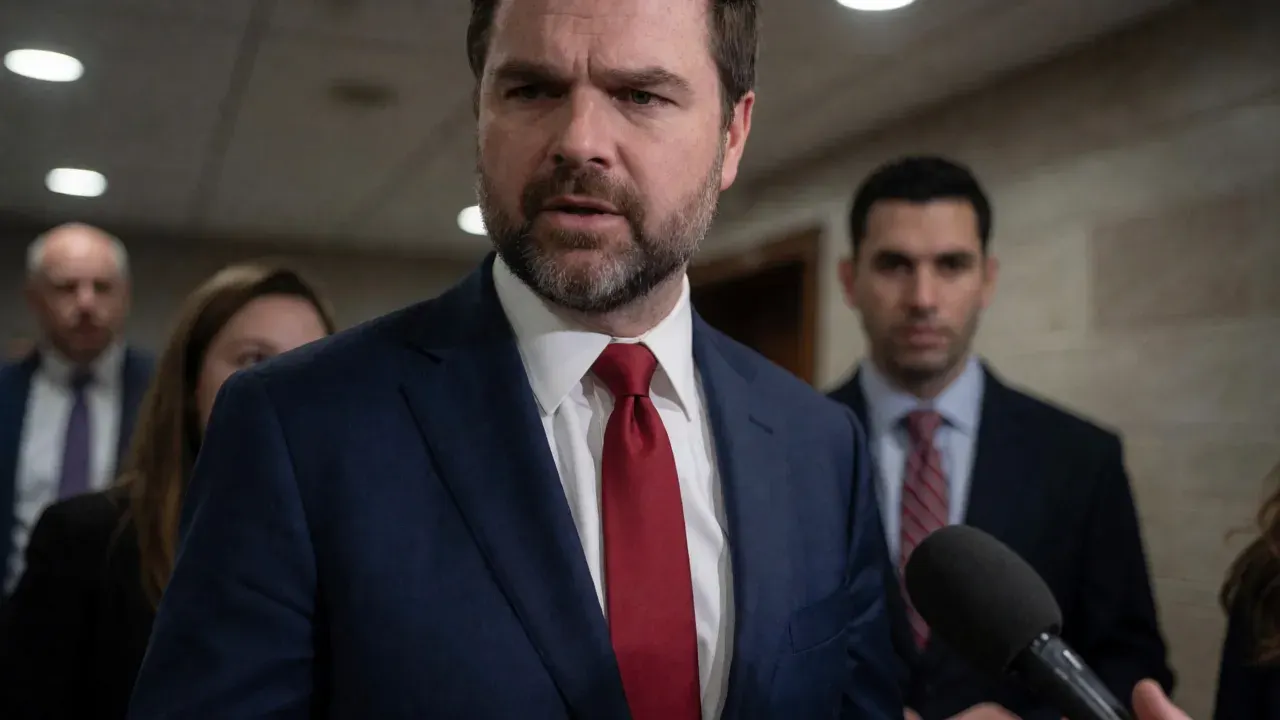
Time has a way of stretching out in a war, much like a long summer day in the fields when the work is hard and the heat is relentless. Six months have now passed since the first shots rang out in the conflict between the United States and Iran, and the dust is still settling in a way that nobody quite anticipated. Over on the political front, the rhetoric has shifted from the battlefield to the halls of power, creating a divide that is as sharp as a plowshare. Vice President JD Vance recently found himself in the middle of this conversation, offering a perspective that tries to walk a fine line between military reality and political optics. He stated that he would not call the ongoing engagement a war, a distinction that carries weight with those who watch these conflicts unfold from a distance. This comes after a period where the airwaves have been filled with the sounds of tension and the specter of a larger confrontation looms large on the horizon. The situation is complex, layered with the history of the region and the immediate pressures of international relations. [1]
While the Vice President navigates the semantics of the conflict, the President has taken a different path, one that is far more direct and steeped in personal rhetoric. At the recent United Nations General Assembly, the President laid out a choice that was as dramatic as it was terrifying. He spoke of a very big decision that he is currently facing, a choice that will determine the future trajectory of the Middle East. He presented two distinct paths for the nation of Iran. One path involves allowing the country to rebuild, to create a far greater nation than it has ever been in the past, perhaps becoming a beacon or a leader among the nations of the world. The other path was far more severe. He asked if he should simply annihilate the Islamic Republic, erasing their ability to harm others or to destroy other countries in the future. He described the alternative as driving them into hell with no chance of survival and no hope of future greatness for the generations to come. This was not subtle diplomacy. This was a declaration of intent. [2]
The President suggested that this decision is not one he will make immediately. He implied that the waiting period would extend until after the midterms, a timing that hints at political maneuvering amidst a global crisis. This leaves the leadership of Iran in a state of limbo, waiting to see if they will be offered a hand of peace or a hand of destruction. It creates a precarious atmosphere where negotiations hang in the balance, dependent on a calendar rather than the immediate needs of the people on the ground. Critics of the administration have been quick to weigh in on this period of extreme rhetoric. They describe the last six months as a failed, costly, and illegal military campaign. The financial cost is one thing, but the human cost is another, a reality that weighs heavy on the minds of those who understand the true price of engagement. [3]

The United Nations, an organization founded in the aftermath of World War II with the solemn purpose of saving succeeding generations from the scourge of war, has also been watching these events with a critical eye. The charter of the UN stipulates that all member states have an obligation to resolve their disputes peacefully and to refrain from the threat or use of force against one another. It is a foundational principle of international law. Yet, there is a growing consensus among observers that the United States is currently violating this agreement. The threat of annihilation, delivered in such a public and aggressive manner at the world's foremost forum for peaceful settlement of disputes, stands in stark contrast to the organization's original mission. Most nations have chosen to ignore this violation, while a few have tried to excuse it, suggesting it is merely a negotiating tactic. [4]
This threat is not isolated to the speech at the UN. It seems to be a pattern that has emerged over the last seven months of the conflict, surfacing during moments of extreme personal frustration. Take, for example, the occasion of Easter morning earlier this year. The President used profanity in a public address, demanding that the Strait of Hormuz be opened. He warned of a night where a whole civilization would die, never to be brought back again. He expressed a desire to avoid that outcome but admitted that it was likely to happen, painting a picture of the world being on the brink of a catastrophic event. These moments of volatility are concerning to those who study leadership and the stability of governments. [1]
The nature of this volatility has been the subject of scrutiny by experts in the field of mental health. On April 30, a group of 36 senior mental health professionals, experienced in the diagnosis of cognitive impairment and the evaluation of dangerousness, released a statement regarding the President's behavior. Their assessment was blunt and clear. They argued that his actions are neither momentary lapses nor political theater. Instead, they stated that it is their professional opinion that his condition reflects a rapidly worsening, reality-untethered, and increasingly dangerous decline. They emphasized that he presents a clear and present danger to the country and the world, and that steps to remove him from office must be undertaken with the greatest urgency. It is a sobering evaluation from individuals tasked with the highest level of diagnostic precision. [2]
The military operations themselves have been precise and devastating. On February 28, Israel and the United States launched attacks on Iran. These strikes were not merely symbolic. They resulted in the assassination of the supreme leader, Ayatollah Ali Khamenei, the killing of four of his family members, and the elimination of a number of other senior Iranian leaders. This was a surgical strike on the highest levels of the Iranian government, a move that has sent shockwaves through the political establishment in Tehran. The implications of such a strike are far-reaching, altering the balance of power and the stability of the region in ways that are still being calculated. [3]
Pundits and observers have also turned their attention to the potential use of nuclear weapons in this conflict. The President has previously claimed to empathize with the people of Iran. Nuclear weapons would unleash an exponential level of destruction compared to the horrors of Hiroshima and Nagasaki. The sheer numbers and increased power of modern warheads mean that the results could be more monstrous than any war crime in human history. Even the use of tactical nuclear weapons would be appalling beyond comprehension. A full-fledged nuclear attack that would annihilate the country would undoubtedly lead to one of the darkest periods in world history. The death, destruction, and suffering would be beyond parallel. [4]
There is also the matter of international reputation to consider. A nuclear strike would make the leader the worst war criminal in history. It would instantly convert the United States into a state pariah, a global outcast. It would be a terrible blight on humanity that would have unforeseen consequences. Iran might feel compelled to respond in kind, and the resulting escalation could spiral out of control, leading to World War III and nuclear Armageddon. The stakes could not be higher, and the margin for error seems to be vanishingly small. The world watches as the rhetoric heats up and the reality of the conflict inches closer to a breaking point. [1]
First reported by Headtopics.
More in National
- HBO's 'War' Offers Classy-Trashy Divorce Drama with West and Miller
Anthology series debuts with a sharp, well-cast first season centered on a bitter London divorce between two lawyers.
- Putin Claims Baltic Rights Violations But Denies War Plans in Europe
Kremlin leader claims response strategy relies on humanitarian grounds and international law.
- Canadian Potash Giant Drops $500M on Vancouver Port Upgrade to Secure Global Food Supply
The massive investment aims to boost exports to non-U.S. markets.