Israeli Coalition Talks and Netanyahu's Unity Government Bid
Israel’s caretaker Prime Minister Benjamin Netanyahu is pushing for a unity government with opposition leader Gadi Eisenkot, but the prospects for such a coalition remain uncertain as both sides negotiate their…

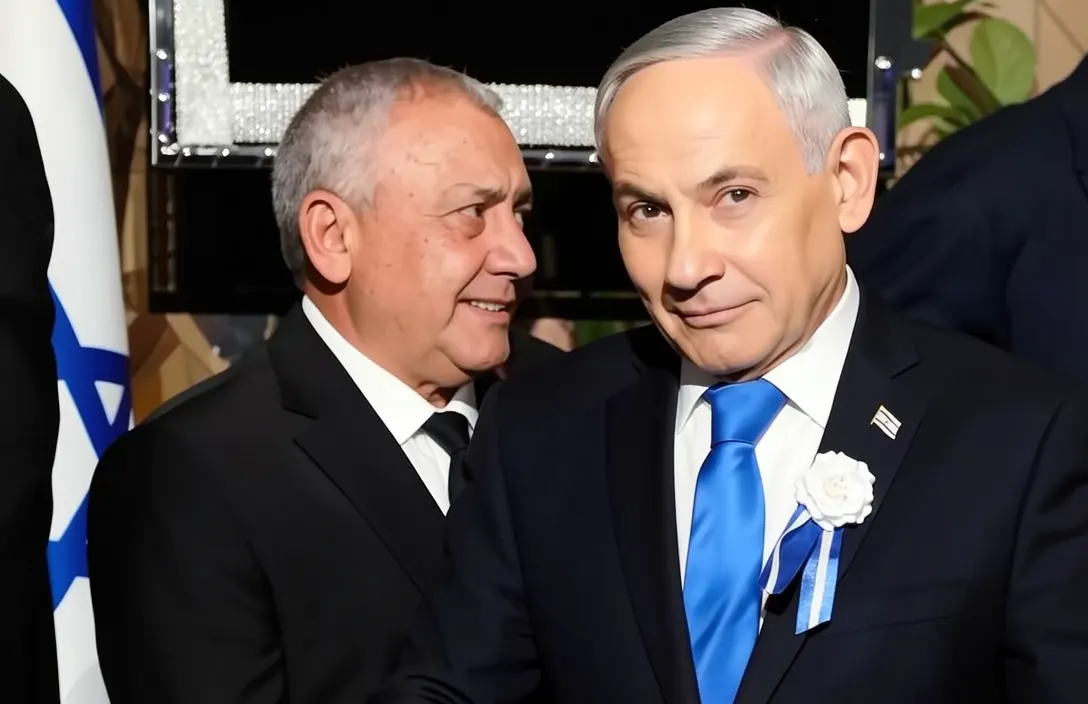

Israel’s caretaker Prime Minister Benjamin Netanyahu has renewed his appeal for a unity government with opposition leader Gadi Eisenkot, claiming such a coalition would be essential for Israel’s national security (Al Jazeera (All)). In a video statement, Netanyahu said his meeting with Eisenkot on Thursday 'only strengthened the conviction that it is essential to form a national unity government' (Al Jazeera (All)). He argued that a unity government could 'eliminate the Iranian threat once and for all' and suggested that Tehran would 'not hesitate to use nuclear weapons against us' (Al Jazeera (All)). [1]
Eisenkot, the leader of the Yashar party and the man given the first shot to form Israel’s next government by President Isaac Herzog, called Netanyahu’s appeal a 'bluff' (Al Jazeera (All)). However, he confirmed that Yashar and Netanyahu’s Likud Party were talking about the proposal for a shared government (Al Jazeera (All)). In Israel’s October 27 election, the four-party bloc led by Eisenkot won 48 of the 120 seats in the Knesset, while Netanyahu’s right-wing and religious bloc secured 53 (Al Jazeera (All)). [1]
Eisenkot’s bloc and the two Arab-led factions hold 67 seats combined, six more than needed for an outright majority (Al Jazeera (All)). Another possibility is a minority government backed by Ra’am’s eight lawmakers. Their support would give Eisenkot 56 votes against Netanyahu’s 53 if the Joint List’s 11 lawmakers abstained or stayed away from the confidence vote (Al Jazeera (All)). However, getting Eisenkot’s allies to agree to such a deal is another matter (Al Jazeera (All)). [1]
One of Eisenkot’s main difficulties is the opposition of Avigdor Lieberman and Naftali Bennett [leaders of parties in his alliance] to relying on Arab parties (Al Jazeera (All)). This position restricts Eisenkot’s coalition options, but it does not automatically make a unity government with Netanyahu more likely. Instead, it increases the importance of negotiations with other parties, particularly the ultra-Orthodox parties (Al Jazeera (All)). [1]
Advertisement
Israel’s caretaker Prime Minister Benjamin Netanyahu has renewed his appeal for a unity government with opposition leader Gadi Eisenkot, casting a coalition that would keep him in power as integral to Israel’s national security (Al Jazeera (All)). In a video statement on Saturday, Netanyahu said his meeting with Eisenkot on Thursday 'only strengthened the conviction that it is essential to form a national unity government'. He said such a government could 'eliminate the Iranian threat once and for all' and claimed Tehran would 'not hesitate to use nuclear weapons against us'. [1]
Eisenkot, the leader of the Yashar party and the man given the first shot to form Israel’s next government by President Isaac Herzog, called Netanyahu’s appeal a 'bluff' (Al Jazeera (All)). 'Nice try, but these tricks don't work on me. Nor on Israel’s citizens,' Eisenkot said. But Eisenkot confirmed that Yashar and Netanyahu’s Likud Party were talking about the proposal for a shared government. [1]
Eisenkot’s bloc and the two Arab-led factions hold 67 seats combined, six more than needed for an outright majority (Al Jazeera (All)). Another possibility is a minority government backed by Ra’am’s eight lawmakers. Their support would give Eisenkot 56 votes against Netanyahu’s 53 if the Joint List’s 11 lawmakers abstained or stayed away from the confidence vote. That would allow a government to take office with fewer than 61 votes in favour, but it would depend on how all three groups voted. [1]
One of Eisenkot’s main difficulties is the opposition of Avigdor Lieberman and Naftali Bennett [leaders of parties in his alliance] to relying on Arab parties (Al Jazeera (All)). This position restricts Eisenkot’s coalition options, but it does not automatically make a unity government with Netanyahu more likely. Instead, it increases the importance of negotiations with other parties, particularly the ultra-Orthodox parties. [1]
Advertisement
Israel’s caretaker Prime Minister Benjamin Netanyahu has renewed his appeal for a unity government with opposition leader Gadi Eisenkot, casting a coalition that would keep him in power as integral to Israel’s national security (Al Jazeera (All)). In a video statement, Netanyahu claimed that such a government could 'eliminate the Iranian threat once and for all' and argued that Tehran would 'not hesitate to use nuclear weapons against us'. This appeal comes as Eisenkot, the leader of the Yashar party and the man given the first shot to form Israel’s next government by President Isaac Herzog, called Netanyahu’s appeal a 'bluff' (Al Jazeera (All)). Despite this, Eisenkot confirmed that Yashar and Netanyahu’s Likud Party were talking about the proposal for a shared government. [1]
Eisenkot’s bloc and the two Arab-led factions hold 67 seats combined, six more than needed for an outright majority (Al Jazeera (All)). This numerical advantage could allow Eisenkot to form a government with a majority, either through a coalition with Arab-led factions or through a minority government backed by Ra’am’s eight lawmakers. However, getting Eisenkot’s allies to agree to such a deal is another matter, as Yair Golan, who leads the Democrats, is open to working with the Palestinian-led factions, while Yisrael Beiteinu leader Avigdor Lieberman and Together leader Naftali Bennett have rejected a coalition with Palestinians (Al Jazeera (All)). [1]
One of Eisenkot’s main difficulties is the opposition of Avigdor Lieberman and Naftali Bennett [leaders of parties in his alliance] to relying on Arab parties (Al Jazeera (All)). According to Yasser Manna, a researcher at the Jerusalem Center for Studies on Israeli Affairs, this position restricts Eisenkot’s coalition options, but it does not automatically make a unity government with Netanyahu more likely. Instead, it increases the importance of negotiations with other parties, particularly the ultra-Orthodox parties. The other main option, which experts say is the most likely scenario, is the Eisenkot bloc going into a coalition with both ultra-Orthodox parties in Netanyahu’s bloc, Shas and United Torah Judaism, which would take the Eisenkot bloc to 61. [1]
Sources
Prepared with AI assistance from the cited sources.
The Cali Reporter newsletter
The stories worth your time.
California, the country, and what comes next. Join our free newsletter for reporting that keeps you informed.
More in World
- Irish Man Charged with Destroying U.S. Military Aircraft at Shannon Airport
A man from Ireland has been indicted for allegedly destroying a U.S. military aircraft at Shannon Airport, according to prosecutors in New York.
- Trump's APEC Summit and Strategic Meetings
President Donald Trump is set to attend the APEC summit in Shenzhen, China, where he is expected to meet with Chinese President Xi Jinping and participate in a trilateral meeting with Russian President Vladimir Putin,…
- Early Snowfall in Northern England and Scotland
Snowfall occurred in parts of Northern England and southern Scotland, with subsequent melting due to milder temperatures, according to the BBC.