Iraqi Environmentalist Returns to Marshes After Kidnapping and Torture
Environmentalist Jassim al-Asadi has returned to the southern Iraqi marshes after being kidnapped, tortured, and accused by an Iran-backed militia of being an Israeli agent. Despite the trauma, Asadi continues his work…

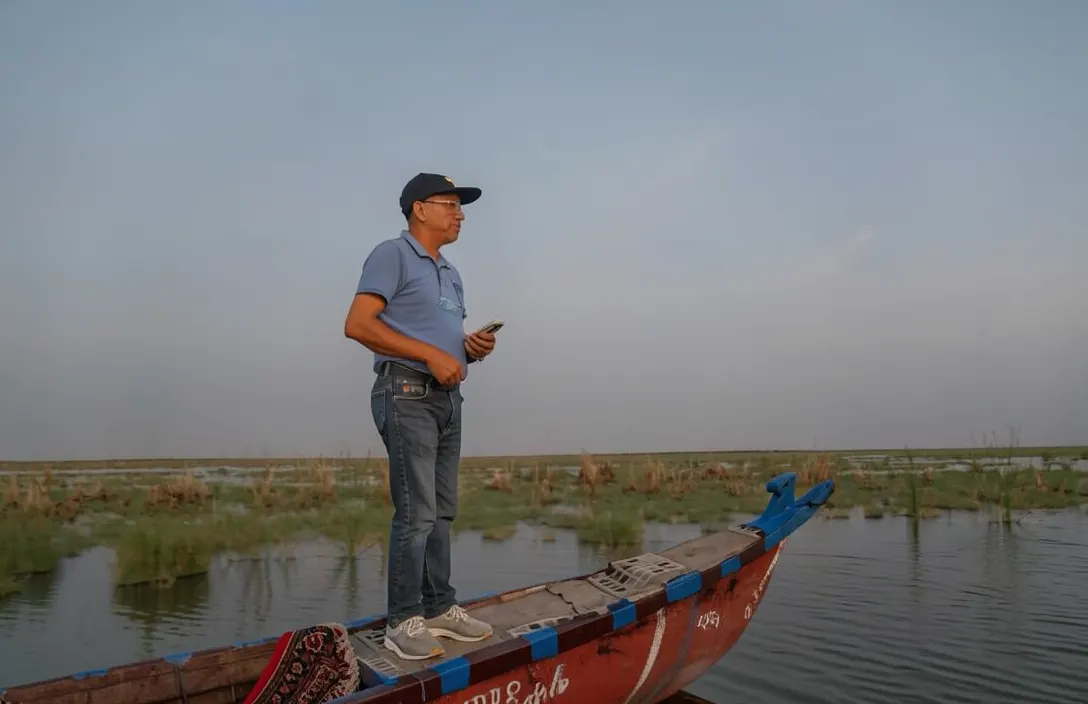

Environmentalist Jassim al-Asadi has returned to the marshes of southern Iraq, where he was born, despite having been kidnapped, tortured, and accused by an Iran-backed militia of being an Israeli agent (OPB: West Coast). He continues to monitor water levels and engage with local communities, reflecting on the ecological changes brought about by years of drought. The marshes, a UNESCO World Heritage Site, have faced significant environmental degradation, with some areas drying up and brackish water stunting the growth of reeds and grass. Al-Asadi’s return is a testament to his unwavering commitment to the region’s environmental and cultural preservation. [1]
Al-Asadi was kidnapped in February 2023 while returning from Baghdad to his hometown of Chibayish after a meeting with the Iraqi president. He was blindfolded and subjected to brutal torture, including suffocation with a plastic bag, electric shocks, and beatings with metal chains (OPB: West Coast). During his captivity, he was offered the option to confess to being a spy or to write a will. He chose the latter, expressing his love for Iraq and his desire for the country’s independence and unity. His captors eventually released him, reportedly under pressure from his powerful Bani Asad tribe, which mobilized hundreds of armed members to demand his freedom. [1]
Despite the trauma of his kidnapping, Al-Asadi remains dedicated to his environmental work, which includes restoring the marshes and raising awareness about the region’s ecological importance. He co-founded Nature Iraq in 2004 with Azzam Alwash, an Iraqi-American environmentalist, to help revive the marshes after Saddam Hussein’s destruction in the 1990s (OPB: West Coast). The organization has faced challenges, including the freezing of its bank accounts in 2018 due to allegations of misusing public funds. However, Al-Asadi and his team continue to advocate for the marshes, constructing natural water treatment systems and lobbying for policies that support the region’s recovery. [1]
Environmentalist Jassim al-Asadi has returned to the marshes of southern Iraq, where he was born, despite having been kidnapped, tortured, and accused by an Iran-backed militia of being an Israeli agent (OPB: West Coast). Al-Asadi was kidnapped in February 2023 while returning from Baghdad to his hometown of Chibayish after a meeting with the Iraqi president. Despite the trauma of his kidnapping, Al-Asadi remains dedicated to his environmental work, which includes restoring the marshes and raising awareness about the region’s ecological importance. [1]
Advertisement
Al-Asadi was kidnapped by an Iran-backed Iraqi militia, which accused him and the journalists he met of being Israeli spies who had fomented anti-government protests that had rocked Iran a few months earlier. He was returning from Baghdad to his southern hometown of Chibayish after a meeting with the Iraqi president to discuss help for destitute families in the marshes when gunmen in pickup trucks and SUVs cut off his car on the road south. They blindfolded him and threw him onto the floor of a vehicle, and with their feet on top of him drove him to what he believed to be farmland. There he was beaten and told to confess to being a spy. [1]
During his captivity, Al-Asadi was subjected to severe torture, including being held underwater until he thought he would suffocate and receiving electric shocks across his body. His captors gave him an hour to either sign a confession that he ran spy networks and smuggled journalists into Iran or write a will. Al-Asadi wrote his will, stating his love for Iraq and his wish for the country to be independent and strong. After two weeks of captivity, he was released and returned to the marshes, where he continues his environmental work. [1]
Despite the trauma of his kidnapping, Al-Asadi remains committed to his environmental work. He has been a leading figure in restoring the marshes, which were drained by Saddam Hussein in the 1990s. After Saddam was toppled in 2003, Al-Asadi and Iraqi-American environmentalist Azzam Alwash helped residents tear down embankments and restore the water flow. Al-Asadi has also been instrumental in lobbying for the marshes to be recognized as a UNESCO world heritage site in 2016, highlighting their biodiversity and their legacy as the site of one of the world's oldest civilizations. [1]
Environmental activist Jassim al-Asadi has returned to the marshes of southern Iraq, where he was born, despite having been kidnapped, tortured, and accused by an Iran-backed militia of being an Israeli agent (OPB: West Coast). Al-Asadi was kidnapped in February 2023 while returning from Baghdad to his hometown of Chibayish after a meeting with the Iraqi president. During his captivity, he was subjected to severe torture, including being held underwater until he thought he would suffocate and receiving electric shocks across his body. Despite the trauma of his kidnapping, Al-Asadi remains dedicated to his environmental work, which includes restoring the marshes and raising awareness about the region’s ecological importance. [1]
Advertisement
Al-Asadi was kidnapped by an Iran-backed Iraqi militia, which accused him and the journalists he met of being Israeli spies who had fomented anti-government protests that had rocked Iran a few months earlier (OPB: West Coast). During his captivity, Al-Asadi was subjected to severe torture, including being held underwater until he thought he would suffocate and receiving electric shocks across his body. Despite the trauma of his kidnapping, Al-Asadi remained committed to his environmental work, which has focused on restoring the marshes and advocating for the region’s ecological heritage. [1]
Al-Asadi was born in the marshes, literally in a boat when his mother went into labor two months early while she was collecting reeds and grass (OPB: West Coast). He has been a leading environmental figure in Iraq, working with embassies and government ministries to garner support for the marshes and helping successfully lobby for inclusion as a UNESCO world heritage site in 2016. The inscription recognized the marshlands’ biodiversity and their legacy as the site of one of the world’s oldest civilizations. [1]
Sources
Prepared with AI assistance from the cited sources.
The Cali Reporter newsletter
The stories worth your time.
California, the country, and what comes next. Join our free newsletter for reporting that keeps you informed.
More in West Coast
- COP31 Collapse Highlights Climate Negotiation Challenges
The collapse of COP31, the U.N. climate talks in Turkey, has underscored the difficulties in achieving global consensus on climate action, with experts emphasizing the need for reform and individual efforts moving…
- ScienceWorks Museum to Transition to Community Science Center
ScienceWorks Hands-On Museum in Ashland, Oregon, is pausing most activities and transitioning to a community science center with new resources for all ages, according to a report by Jefferson Public Radio.
- Seniors Embrace Tesla's Automated Driving Despite Safety Concerns
A growing number of older drivers are using Tesla's Full-Self Driving (Supervised) technology to maintain their independence, despite warnings from safety experts about potential risks.