Iraq's Prime Minister to Explore Alternative Oil Export Routes via Lebanon
Iraq’s Prime Minister Ali al-Zaidi is set to visit Lebanon to discuss potential oil export routes that could bypass the Strait of Hormuz amid the ongoing US-Israel war on Iran.

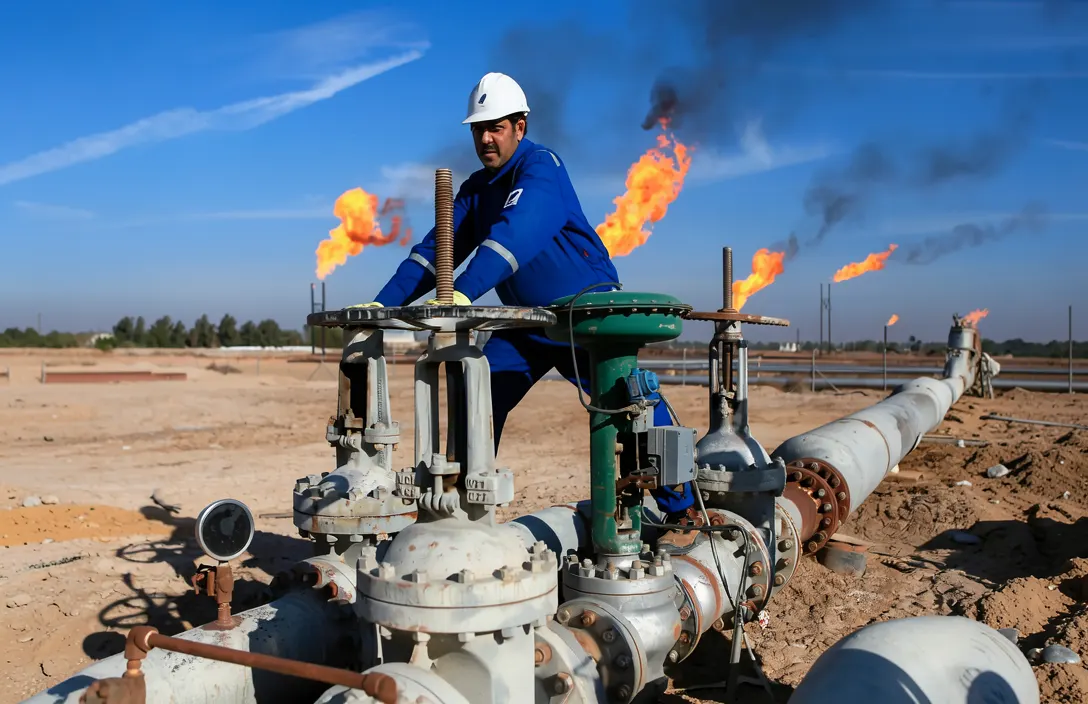

Iraq’s Prime Minister Ali al-Zaidi is set to visit Lebanon on his latest regional visit aimed at boosting economic cooperation amid the fallout from the US-Israel war on Iran. Al-Zaidi will hold a series of high-level meetings in Beirut, including with Lebanese President Joseph Aoun, Prime Minister Nawaf Salam and Parliament Speaker Nabih Berri. High on the agenda of Wednesday’s talks will be strengthening bilateral trade, customs exemption deals and coordination on security and countering drug trafficking (1). [1]
Diversifying oil export routes via a pipeline linking the Iraqi city of Kirkuk, through Syria’s Mediterranean port of Baniyas, to Tripoli in northern Lebanon, is also expected to be discussed. The proposed project is aimed at potentially bypassing the Strait of Hormuz, a key energy waterway that has been severely disrupted since the start of the US-Israel war on Iran in late February (1). [1]
Iraq’s crude oil exports were badly hit following the start of the Iran war and the effective closure of the Strait of Hormuz, through which one-fifth of the world’s energy passes in peacetime. Last month, Iraq’s Ministry of Oil said crude oil exports reached about 2.7 million barrels per day (bpd), up from some 200,000 bpd in May. Before the war, Iraq was exporting about 3.5 million bpd (1). [1]
One of the potential proposed alternatives is Tripoli, in northern Lebanon. The impoverished city has emerged as an option because of the long-defunct pipeline from Kirkuk and a local refinery that in 1940 filtered 21,000 bpd of crude oil from Iraq, according to the Lebanese Directorate General of Oil. The refinery shut down in 1992, shortly after the end of the 15-year Lebanese Civil War in 1990 (1). [1]
Advertisement
Iraq’s Prime Minister Ali al-Zaidi is set to visit Lebanon on his latest regional visit aimed at boosting economic cooperation amid the fallout from the US-Israel war on Iran. Al-Zaidi will hold a series of high-level meetings in Beirut, including with Lebanese President Joseph Aoun, Prime Minister Nawaf Salam and Parliament Speaker Nabih Berri. High on the agenda of the talks will be strengthening bilateral trade, customs exemption deals and coordination on security and countering drug trafficking. Diversifying oil export routes via a pipeline linking the Iraqi city of Kirkuk, through Syria’s Mediterranean port of Baniyas, to Tripoli in northern Lebanon, is also expected to be discussed (1). [1]
Diversifying oil export routes via a pipeline linking the Iraqi city of Kirkuk, through Syria’s Mediterranean port of Baniyas, to Tripoli in northern Lebanon, is also expected to be discussed. The proposed project is aimed at potentially bypassing the Strait of Hormuz, a key energy waterway that has been severely disrupted since the start of the US-Israel war on Iran in late February. Iraq’s crude oil exports were badly hit following the start of the Iran war and the effective closure of the Strait of Hormuz, through which one-fifth of the world’s energy passes in peacetime (1). [1]
One of the potential proposed alternatives is Tripoli, in northern Lebanon. The impoverished city has emerged as an option because of the long-defunct pipeline from Kirkuk and a local refinery that in 1940 filtered 21,000 bpd of crude oil from Iraq, according to the Lebanese Directorate General of Oil. The refinery shut down in 1992, shortly after the end of the 15-year Lebanese Civil War in 1990. Industry insiders say Tripoli’s oil infrastructure has three legacy lines with a historical peak capacity of 900,000 bpd (1). [1]
A report this year by the Basil Fuleihan Institute of Finance (BFIF), an autonomous agency under the tutelage of Lebanon’s Finance Ministry, said “the terminal infrastructure remains a goldmine of latent capacity” with a moderate flow scenario of 300,000 to 500,000 bpd that could gain Lebanon annual revenues in the region of $80m to $275m. The revenues could be a boon to the Lebanese economy, which has been beset by a complex economic and banking crisis since 2019 (1). [1]
Advertisement
The Cali Reporter newsletter
The stories worth your time.
California, the country, and what comes next. Join our free newsletter for reporting that keeps you informed.
More in World
- Irish Man Charged with Destroying U.S. Military Aircraft at Shannon Airport
A man from Ireland has been indicted for allegedly destroying a U.S. military aircraft at Shannon Airport, according to prosecutors in New York.
- Trump's APEC Summit and Strategic Meetings
President Donald Trump is set to attend the APEC summit in Shenzhen, China, where he is expected to meet with Chinese President Xi Jinping and participate in a trilateral meeting with Russian President Vladimir Putin,…
- Early Snowfall in Northern England and Scotland
Snowfall occurred in parts of Northern England and southern Scotland, with subsequent melting due to milder temperatures, according to the BBC.