

In Irony-Soaked Incident, Amazon Data Center Shuts Down Due to High Temperatures
Amazon's AI-powered data centers are supposed to run at 99.99% uptime. One just melted down from its own heat, exposing the dirty secret of the green-tech boom.
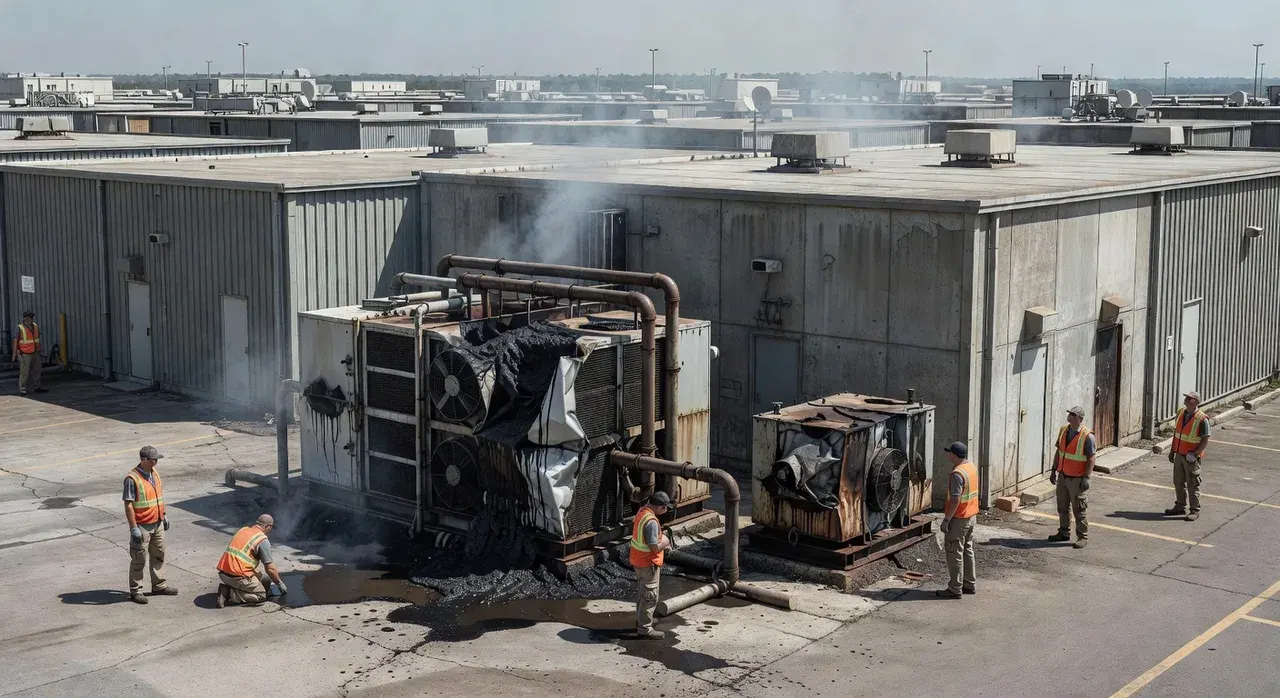
Amazon Web Services had to throttle and reroute traffic from a major data center in northern Virginia last Thursday because the facility was literally overheating. Customers including Coinbase suffered extended outages of core trading services, and by Friday morning the company still could not say when the problem would be fixed.
AWS told users it was “actively working to bring additional cooling system capacity online” to recover the remaining hardware. Even after the company claimed resolution at 11:30 a.m. Friday, timeouts persisted in the region more than an hour later. The episode is especially uncomfortable because full data-center outages are, in the words of energy infrastructure expert Daniel Mewton of Slaughter and May, “extremely uncommon,” while cooling-system failures are “even rarer.”
Mewton noted the industry standard: “You need to be up more than 99.99 percent of the time sometimes.” Yet the very infrastructure built to power the artificial-intelligence surge is proving unable to keep itself cool. Data centers already produce 0.5 percent of global carbon emissions. Cornell researchers project that, at current AI growth rates, those facilities will emit between 24 and 44 million metric tons of CO₂ by 2030, the equivalent of putting 5 to 10 million more cars on American roads.

One study even links data centers to measurably higher temperatures for miles around them. The contradiction is brutal: the same operations that accelerate global warming are now shutting themselves down because they cannot handle the heat they help create. While tech giants race to construct ever more of these facilities to meet AI demand, the physical limits of cooling and emissions keep asserting themselves in the most literal way.
The incident should temper the breathless narrative that artificial intelligence is an unalloyed environmental good. Every large language model and image generator requires racks of power-hungry servers that, in aggregate, superheat both the local data-center floor and the planet. Amazon’s embarrassment is a reminder that the carbon ledger of the AI boom is still being written in real time, and the climate is keeping its own score.
What happens when the next generation of even larger models comes online and the cooling systems fail again? The industry’s answer so far has been to build more, faster. The Virginia outage suggests that strategy may be running into thermodynamic reality.
Original reporting: Futurism.
More in Business
- IMF Chief Warns of Economic Divergence and Debt Risks Amid Artificial Intelligence Boom
Kristalina Georgieva suggests that while AI could significantly boost global growth, it simultaneously threatens to widen inequality and exacerbate inflationary pressures and public debt burdens.
- California Limits Utility Profits and Expands Home Energy Role
Gov. Gavin Newsom signed laws capping utility returns on lower-risk projects and accelerating virtual power plant development.
- Lyft to Pay $272.5 Million in Record California Wage-Theft Settlement
Largest such settlement in state history resolves claims that Lyft misclassified drivers as independent contractors from 2016 to 2020, denying them core wage protections.