Historic Trilateral Summit Ends with Symbolic Commitments
The first trilateral meeting between U.S. President Donald Trump, Russian President Vladimir Putin, and Chinese President Xi Jinping concluded with a joint declaration emphasizing peace, though no concrete agreements…

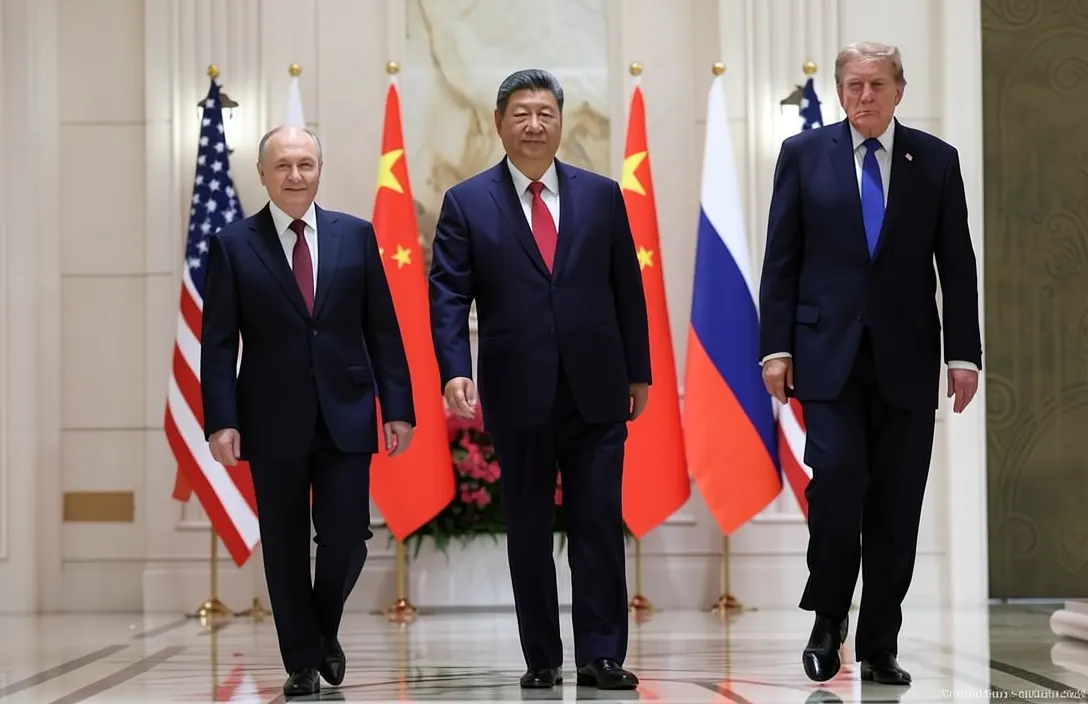
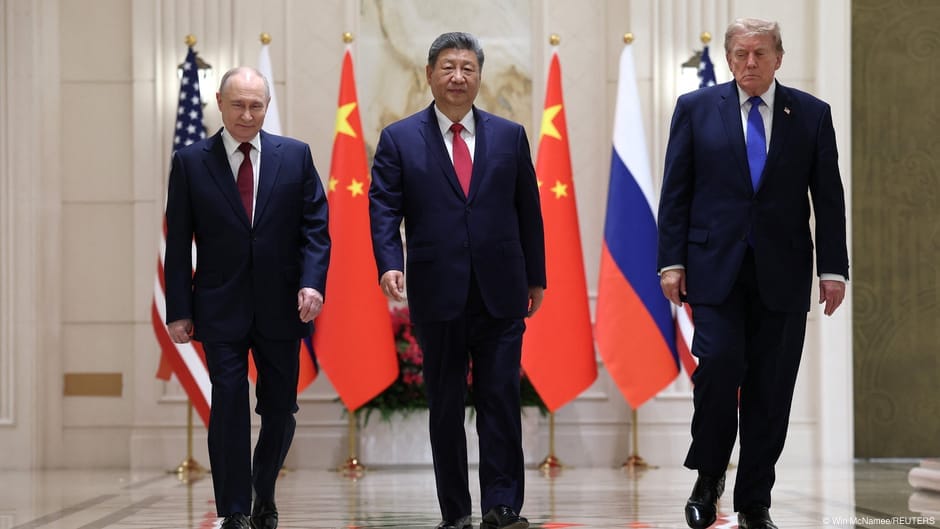
The APEC trilateral summit between the leaders of the United States, Russia, and China, the first of its kind, ended with much talk about the shared responsibility of maintaining peace, but without concrete agreements. The 'historic peace declaration' released after the meeting did not mention the ongoing wars in Ukraine and Iran. The declaration emphasized that differences must be resolved through dialogue rather than conflict, and that the three nations are committed to reducing nuclear risks and reforming the United Nations (Source ID: 1). [1]
Despite Trump's emphasis on 'denuclearization' during the summit, there were no signs that the three nations would take concrete steps toward reducing nuclear weapons. China, Russia, and the United States are all signatories of the Nonproliferation Treaty and are committed to nuclear disarmament, but the final 'Heads of State Declaration toward Peace' failed to indicate any steps toward that goal. China is expanding its nuclear arsenal, Russia has threatened to use nuclear weapons in Ukraine, and the United States is developing new theater missiles (Source ID: 1). [1]
The leaders agreed that the International Criminal Court (ICC) should not 'abuse its jurisdiction,' a reference to the ICC's arrest warrant for Putin over war crimes in Ukraine. However, the declaration did not mention the conflicts in Ukraine or Iran, which were expected to be key discussion points. The summit did, however, reaffirm the principle that 'a nuclear war can never be won and must never be fought,' a statement last made in January 2022, just before Russia's invasion of Ukraine (Source ID: 1). [1]
The APEC trilateral summit between the leaders of the United States, Russia, and China, the first of its kind, ended with much talk about the shared responsibility of maintaining peace, but without concrete agreements (Evidence 1). The summit's final declaration, described as a 'historic peace declaration,' did not mention the ongoing wars in Ukraine and Iran, which were expected to be central topics of discussion (Evidence 1). Despite Trump's emphasis on 'denuclearization' during the summit, there were no signs that the three nations would take concrete steps toward reducing nuclear weapons (Evidence 1). [1]
Advertisement
The leaders agreed that the International Criminal Court (ICC) should not 'abuse its jurisdiction,' a reference to the ICC's arrest warrant for Putin over war crimes in Ukraine (Evidence 1). The summit leaders also emphasized the importance of maintaining global strategic stability and adhering to the Treaty on the Non-Proliferation of Nuclear Weapons, but did not commit to any specific actions toward disarmament (Evidence 1). The final 'Heads of State Declaration toward Peace' did not indicate any steps towards reducing the number of nuclear weapons, despite Trump's claims that the three nations were 'uniquely positioned' to discuss such issues (Evidence 1). [1]
China, Russia, and the United States are all signatories of the Nonproliferation Treaty, which commits them to pursuing nuclear disarmament (Evidence 1). However, the summit did not produce any new commitments or mechanisms to achieve this goal. The declaration did mention a commitment to 'conduct a dialogue on reducing nuclear risks,' but this was described as a low-hanging fruit and not a significant step forward (Evidence 1). The absence of concrete measures to reduce nuclear risks, combined with the ongoing buildup of nuclear forces by all three nations, has raised concerns among analysts about the effectiveness of the summit (Evidence 1). [1]
The first-ever trilateral summit between U.S. President Donald Trump, Russian President Vladimir Putin, and Chinese President Xi Jinping ended with much discussion about the shared responsibility of maintaining peace, but no concrete agreements were reached on reducing nuclear weapons or addressing the wars in Ukraine and Iran (Evidence 1). The joint declaration released after the meeting emphasized the need for dialogue and stability but did not specifically mention the ongoing conflicts in Ukraine or Iran, despite both being expected topics of discussion (Evidence 1). [1]
The leaders reaffirmed the principle that 'a nuclear war cannot be won and must never be fought,' but there were no clear steps outlined to reduce nuclear arsenals or address the growing nuclear capabilities of all three nations (Evidence 1). Trump emphasized the importance of 'denuclearization,' but China and Russia have shown no immediate willingness to engage in concrete arms control talks, despite being signatories of the Nonproliferation Treaty (Evidence 1). [1]
Advertisement
The summit also included a joint statement calling on the International Criminal Court (ICC) to avoid 'abusing its jurisdiction,' a reference to the ICC's arrest warrant for Putin over war crimes in Ukraine (Evidence 1). However, the declaration did not address the ICC's role in holding any of the three leaders accountable for potential violations of international law (Evidence 1). [1]
Sources
Prepared with AI assistance from the cited sources.
The Cali Reporter newsletter
The stories worth your time.
California, the country, and what comes next. Join our free newsletter for reporting that keeps you informed.
More in World
- Irish Man Charged with Destroying U.S. Military Aircraft at Shannon Airport
A man from Ireland has been indicted for allegedly destroying a U.S. military aircraft at Shannon Airport, according to prosecutors in New York.
- Trump's APEC Summit and Strategic Meetings
President Donald Trump is set to attend the APEC summit in Shenzhen, China, where he is expected to meet with Chinese President Xi Jinping and participate in a trilateral meeting with Russian President Vladimir Putin,…
- Early Snowfall in Northern England and Scotland
Snowfall occurred in parts of Northern England and southern Scotland, with subsequent melting due to milder temperatures, according to the BBC.