Historic Summit Between Trump, Xi, and Putin Focuses on Peace and Global Governance
A summit between U.S. President Donald Trump, Chinese President Xi Jinping, and Russian President Vladimir Putin marked a historic first meeting among the three leaders, emphasizing shared responsibilities for global…
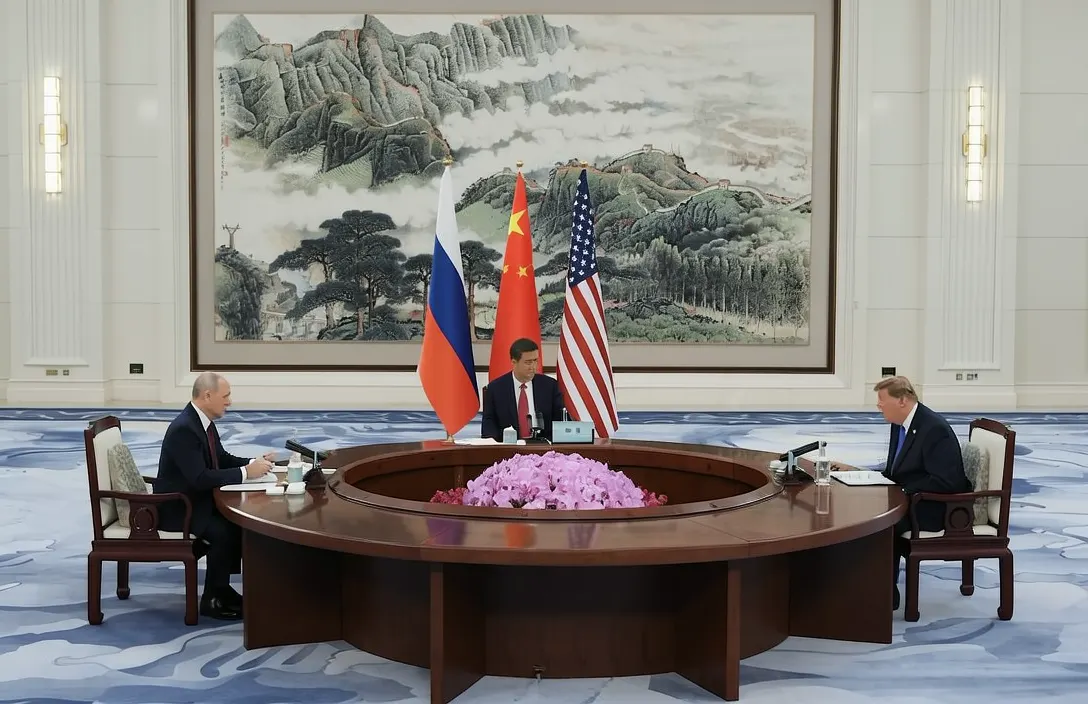

The meeting among U.S. President Donald Trump, China’s Xi Jinping, and Russia’s Vladimir Putin on Thursday was the first-ever sit-down for the leaders of the three countries. The leaders began with discussions on shared responsibilities for keeping peace as the victors of World War II and as global powers. However, the post-meeting statements released by the three nations reflected more symbolism than concrete agreements (source ID: 1). [1]
The 'peace declaration' issued after the meeting did not address Russia’s war in Ukraine or the U.S.-led war in Iran. Instead, the leaders focused on reforms to the United Nations, increasing oil supplies, and reducing nuclear risks. The statement did not specify the nature or extent of the U.N. reforms the leaders agreed to (source ID: 1). [1]
The three leaders also agreed that state officials should enjoy immunity from prosecution, opposing what they called 'jurisdiction abuse' by the International Criminal Court. This position aligns with their shared concerns about international legal institutions and their influence on global governance (source ID: 1). [1]
The meeting among U.S. President Donald Trump, China’s Xi Jinping, and Russia’s Vladimir Putin on Thursday was the first-ever sit-down for the leaders of the three countries. They started with talk of a shared responsibility for keeping peace as the victors of World War II and as global powers. However, the 'peace declaration' issued after the meeting did not address Russia’s war in Ukraine or the U.S.-led war in Iran. Instead, the statement focused on reforms to the United Nations, increasing oil supplies, and reducing nuclear risks (Source ID: 1). [1]
Advertisement
The three leaders also agreed that state officials should enjoy immunity from prosecution, opposing what they called 'jurisdiction abuse' by the International Criminal Court. This agreement was highlighted in post-meeting reports by the three nations, which emphasized more symbolism than substance in the talks. The leaders did not specify the type or extent of U.N. reforms they agreed to, leaving many details vague (Source ID: 1). [1]
China’s Xi Jinping presided over the summit and emphasized that the three nations had aligned views on safeguarding world peace. He stated that major powers should take the legitimate security concerns of all countries seriously and believe differences should be resolved through negotiation and cooperation. However, China’s insistence on its right to recover Taiwan was not addressed in the leaders’ broadly worded agreement (Source ID: 1). [1]
The meeting among U.S. President Donald Trump, China’s Xi Jinping, and Russia’s Vladimir Putin on November 19, 2026, marked the first-ever sit-down for the leaders of the three countries (1). The leaders began their discussions by emphasizing shared responsibilities for maintaining global peace, referencing their status as victors of World War II and global powers (1). However, the 'peace declaration' issued following the meeting did not address Russia’s war in Ukraine or the U.S.-led war in Iran (1). The statement focused instead on reforms to the United Nations, increasing oil supplies, and reducing nuclear risks (1). [1]
The three leaders agreed that state officials should enjoy immunity from prosecution, opposing what they described as 'jurisdiction abuse' by the International Criminal Court (1). This agreement was highlighted in post-meeting reports by the three nations, which reflected more symbolism than substance (1). China’s Xi Jinping presided over the summit and emphasized that the three nations had aligned views on safeguarding world peace (1). According to China’s Xinhua official news agency, Xi stated that major powers should take the legitimate security concerns of all countries seriously and that differences should be resolved through negotiation and cooperation (1). [1]
Advertisement
China’s insistence on its right to recover the democratically governed island of Taiwan, possibly by force, was not addressed in the leaders’ broadly worded agreement (1). China considers Taiwan a domestic issue, and the summit did not delve into specifics regarding this matter (1). The summit was viewed as a diplomatic breakthrough for Russia, with Putin being honored as a guest at the APEC summit and demonstrating Russia’s status as a top global power (1). Putin underscored the global weight of Russia, China, and the U.S., emphasizing their shared responsibility for maintaining international peace and security (1). [1]
The meeting among U.S. President Donald Trump, China’s Xi Jinping and Russia’s Vladimir Putin on Thursday was the first-ever sit-down for the leaders of the three countries. They started with talk of a shared responsibility for keeping peace as the victors of World War II and as global powers. However, the post-meeting readouts by the three nations reflected more symbolism than substance. The 'peace declaration' released after their meeting made no mention of Russia’s war in Ukraine or the U.S.-led war in Iran (1). [1]
The three sides also agreed that state officials should enjoy immunity from prosecution, opposing what they called 'jurisdiction abuse' by the International Criminal Court, the reports said. China’s Xi Jinping presided over the summit and emphasized that the three nations had aligned views on safeguarding world peace. He said the talks with Trump and Putin were positive and fruitful, and that the three nations had aligned views on safeguarding world peace, according to China’s Xinhua official news agency (1). [1]
China’s insistence on its right to recover the democratically governed island of Taiwan, possibly by force, was not addressed in the leaders’ broadly worded agreement. China considers that a domestic issue. China likes to position itself as a different kind of superpower from the U.S. and Russia — one that doesn’t get involved in wars and advocates for smaller states, said Ruby Osman, a senior policy adviser at London’s Tony Blair Institute for Global Change. Beijing’s priority was steering the meeting away from specifics, she said (1). [1]
Advertisement
The Cali Reporter newsletter
The stories worth your time.
California, the country, and what comes next. Join our free newsletter for reporting that keeps you informed.
More in West Coast
- COP31 Collapse Highlights Climate Negotiation Challenges
The collapse of COP31, the U.N. climate talks in Turkey, has underscored the difficulties in achieving global consensus on climate action, with experts emphasizing the need for reform and individual efforts moving…
- ScienceWorks Museum to Transition to Community Science Center
ScienceWorks Hands-On Museum in Ashland, Oregon, is pausing most activities and transitioning to a community science center with new resources for all ages, according to a report by Jefferson Public Radio.
- Seniors Embrace Tesla's Automated Driving Despite Safety Concerns
A growing number of older drivers are using Tesla's Full-Self Driving (Supervised) technology to maintain their independence, despite warnings from safety experts about potential risks.