

He Rides a Bike, He Has $4 Million, and He Wants to Fix LA Streets
Hedge fund manager Aaron Sosnick bankrolls Nithya Raman's campaign with millions for bike lanes and safe streets.
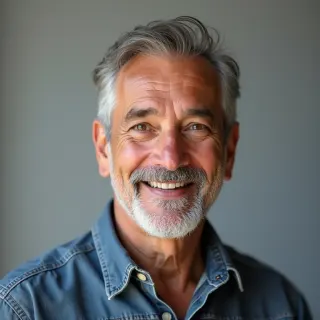

When you look at how a city spends its money, you can tell a lot about what its leaders value. In the Los Angeles mayor's race, that math is getting very loud. A hedge fund manager named Aaron Sosnick is now the biggest single donor, dropping a cool $4 million into the political machine. He is backing City Councilmember Nithya Raman, and his investment is specifically targeted at changing how the city moves. Sosnick, who manages the hedge fund A.R.T Advisors, is an avid bicyclist. He put $3 million into an independent expenditure committee called Estamos Con Nithya for Mayor 2026, which is sponsored by the Western States Regional Council of Carpenters. He also kicked in another $1 million to a pro-Raman committee run by a group called Streets for All. This group is all about redesigning streets to separate bikes and buses from cars and trucks, a mission that has produced dozens of digital ads attacking Mayor Karen Bass and promoting Raman.
The money comes from a place where the wind blows differently than in the rest of California. Campaign contribution records show Sosnick is based in Reno. He splits his time between Reno, New York City, and Los Angeles's Los Feliz neighborhood. Michael Schneider, who heads Streets for All’s political action committee, explained the donor's motive plainly. He said Sosnick “wants to see change” at City Hall. Schneider added that Sosnick likes to ride his bike in L.A. and “doesn’t want to die.” He believes the city should be run better and be more multimodal. The idea is simple enough that a neighbor on a tractor could understand it. You should be able to ride a bike or walk down the street without risking your life on a piece of asphalt that was built for cars.
This isn't just about throwing money at a candidate. The money is about a coalition. Streets for All’s political action committee is working closely with the Estamos Con Nithya campaign set up by the carpenters union. They are conferring on strategy and holding “regular check-in calls.” Schneider said they are looking at where each other’s gaps are and that they are coordinating. This kind of coordination often happens in big ag operations where different departments align their schedules. Here, it means the political strategy is synchronized. Sosnick has also been a major donor to Streets for All. In 2024, he provided $686,000 to the group's campaign for Measure HLA. That measure passed by a wide margin and requires the city to implement its decade-old plan for bike lanes and safety measures every time repair crews fix at least one-eighth of a mile of street. Schneider drew a direct link between the slow progress on Measure HLA and the number of traffic deaths in LA. Today, those deaths outpace homicides on an annual basis.

Estamos Con Nithya is not the only game in town. The carpenters council has put $3 million of its own money into the effort to support Raman. But the mayor’s camp is fighting back with cash of their own. The Los Angeles Police Protective League, which represents rank-and-file officers, has committed nearly $2.8 million to the effort to reelect Mayor Bass. They plan to spend considerably more in the coming weeks. Airbnb has also been active. The company, which has been seeking to loosen restrictions on the city’s home sharing rules, sent nearly $1.8 million last spring to a pro-Bass committee run by the Central City Assn. That group is planning to spend more during the runoff, said Ryan Aubrey, a spokesperson for the downtown-based business group. It is a crowded field of investors, but Sosnick has made the biggest single splash so far.
Raman’s team is trying to present Sosnick as a constituent and a board member with the Oaks Neighborhood Assn. Appearing at a news conference, she said she has spoken to him about “the need for safe streets here in the city of Los Angeles.” In a statement, her spokesperson Liz Garcia said the candidate has also talked to Sosnick about proposed hillside development projects, concerns about party houses, and other quality-of-life issues impacting Los Feliz residents. This paints a picture of a man who cares about his immediate turf. However, Bass’s spokesperson Alex Stack took aim at the hedge fund manager’s spending, saying Raman’s wealthy backers are “trying to buy the election.” Stack also issued a statement from David Huerta, president of the Service Employees International Union-United Service Workers West, which is supporting the mayor. Huerta said, “One out-of-state billionaire who is bankrolling Nithya Raman’s campaign has no idea what our communities deserve.” It is a classic divide between the local union guy and the out-of-state investor.
Sosnick has a history of betting on L.A. candidates and ballot proposals. State contribution reports show that he gave $350,000 to the effort to pass Measure M, the countywide half-cent sales tax backed by Mayor Eric Garcetti in 2016. Measure M helped pay for new subway extensions, light rail lines and other large-scale transportation projects. Joe Linton, editor of Streetsblog, which covers transportation issues and has received funding from Sosnick’s nonprofit group, noted that Sosnick “wants to see L.A. transportation look more like a world-class city and less like a car-centric suburb.” That is a specific vision. It is the difference between a city that accommodates cars and a city that accommodates people.
He applied this vision to other races too. The following year, Sosnick sent $100,000 to a committee fighting an attempt to recall then-City Councilmember Mike Bonin on the Westside. At that time, Bonin was facing a backlash over the installation of several “road diets.” These are projects that removed vehicle lanes from Vista Del Mar in Playa del Rey and other major corridors. The recall effort fizzled out. But Venice resident Mark Ryavec, who ran unsuccessfully against Bonin that year, voiced concern over Sosnick’s latest burst of spending. He said the hedge fund manager is using his largesse to “tell the rest of his neighbors how to live.” Ryavec predicted that Raman, if elected, would follow Sosnick’s lead and install bike lanes that “very few people will use.” He called it “disgusting that our elections are being bought and sold at the whim of the wealthy.” He noted, “We see it more on the Republican side, but this is a clear instance of it on the left.”
Sosnick has also waded into politics in the San Fernando Valley. In 2019, he put $250,000 into a campaign committee called “I Love LA.” That committee was set up to support council candidate Loraine Lundquist in her race against onetime council aide John Lee. During that campaign, Lee had come out against a proposal for a dedicated bus lane on Nordhoff Street. This spurring pushback from residents in Northridge. The Sosnick-funded committee blasted Lee in campaign mailers, calling him a tool of “Big Oil and their lobbyists.” Lee won his race after portraying Sosnick as a wealthy outsider with investments in fossil fuel companies like Chevron and Valero. Lee later took a call from Sosnick, not about transportation, but about Measure ULA, the tax on high-end property sales. In the run-up to the 2022 election, Sosnick expressed worries that the measure would have a negative effect on housing production. They both agreed that they thought it would be problematic.
Two years later, Sosnick helped Streets for All pass Measure HLA and put $25,000 into a committee that backed attorney Ysabel Jurado, who unseated Councilmember Kevin de León. The landscape of Los Angeles politics is shaped by these large checks. It is a reality that candidates have to navigate. The influx of money puts Raman’s coalition in a strong position during the campaign’s final six weeks. But the question remains whether a hedge fund manager from Reno can truly understand the needs of every neighborhood in the basin. The streets of Los Angeles are complex, much like the central valley itself. Road diets are not just paint on pavement. They represent a shift in how a city allocates its most valuable resource.
Now, Sosnick may not remain the top donor in the mayor's race for long. The carpenters council has shown they can match him. The Los Angeles Police Protective League is already in the game with nearly $2.8 million for Mayor Bass. Airbnb is preparing to spend more. The money coming into this race is substantial. It is changing the conversation about who decides how the city grows and how it moves. For the residents of the Oaks Neighborhood Assn. and others watching from the sidelines, the math is simple. When someone writes a check for $4 million, they expect something in return. That something is the future of Los Angeles streets.
First reported by LA Times: California.
More in California
- UC Berkeley Lab Proposes New Civic Framework for California’s Next Governor
A research-driven agenda calls for institutionalizing 'co-governance' to address low public trust and lack of resident influence in state decision-making.
- Five Tax Measures on California’s Ballot Aim to Reshape State Finances
Propositions 3, 40–43 would alter income, wealth and local taxation rules—marking the highest number of tax measures on a general election ballot since 1994.
- Catalina Helicopter Crash Highlights Risks of Island Medevac Flights
A medical evacuation chopper carrying Catalina Romero, pilot, and nurse Jessica Devries crashed into the ocean shortly after takeoff, killing all three; federal investigators are assessing causes including night flying, spatial disorientation, and the island’s challenging Pebbly Beach heliport.