Gut Microbiome Regulates Nutrient Absorption Through Feeding Rhythms
New research suggests that gut microbes play a crucial role in aligning nutrient absorption with feeding times, influencing metabolism and health outcomes.

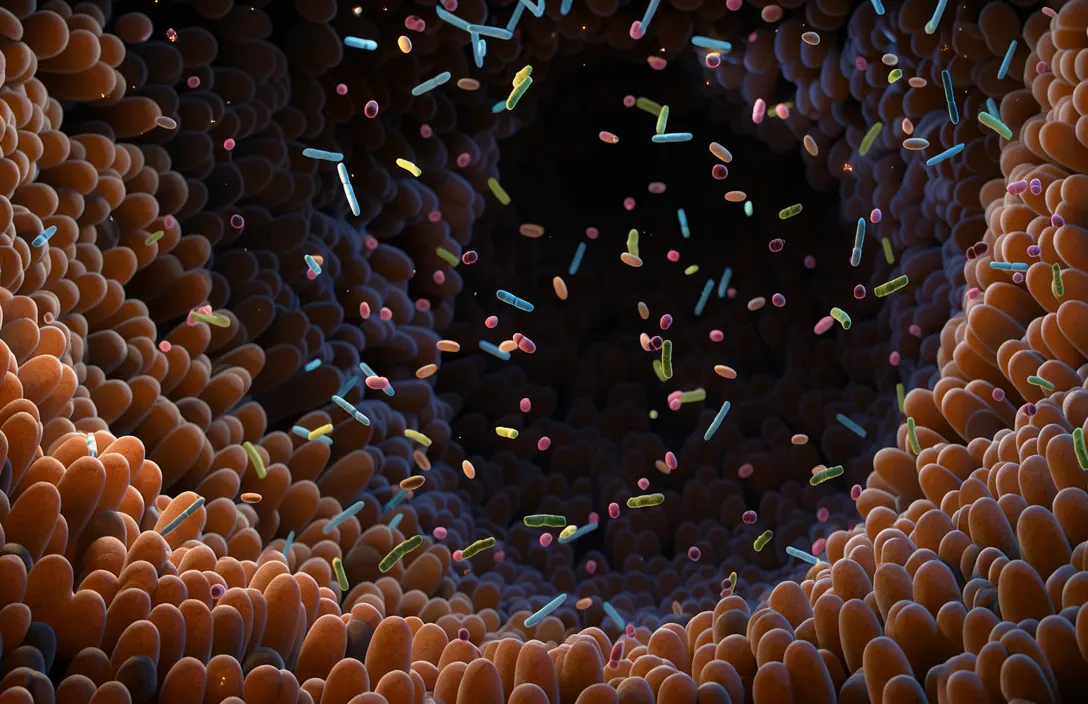

Recent studies published in the scientific journal Cell Host & Microbe indicate that gut microbes help regulate nutrient absorption by converting dietary signals into molecules that synchronize intestinal cells with feeding times. These microbes metabolize phytate, a food component found in grains, beans, nuts, and seeds, into molecules that activate specific proteins in intestinal cells. This process turns on genes involved in transporting nutrients, aligning absorption with when food is consumed (1). [1]
The research highlights that the gut microbiome influences daily biological rhythms, similar to how light signals regulate circadian rhythms. Disruptions in this microbial timing mechanism, such as through irregular eating patterns, can affect nutrient absorption and may contribute to metabolic disorders like obesity (1). [1]
Bacteroides thetaiotaomicron, a common gut bacterium, was observed in a photomicrograph cultivated on blood agar. This bacterium is typically found in the intestine as part of the normal flora but can become opportunistic under certain conditions (2). [2]
The study suggests that the same microbial pathway that aids in nutrient absorption under scarcity can contribute to obesity when exposed to high-calorie diets. This evolutionary mismatch may explain why modern dietary patterns lead to metabolic health challenges (1). [1]
Advertisement
The bacterium Bacteroides thetaiotaomicron was cultivated on blood agar, a type of growth medium commonly used in microbiology laboratories for the isolation and identification of bacterial species. The image was taken after a 48-hour incubation period, which is a standard duration for observing the growth of many bacterial cultures. This particular strain was previously classified under the genus Bacillus but has since been reclassified into the genus Bacteroides, reflecting advancements in taxonomic understanding and microbial classification. The photograph is part of the Public Health Image Library (PHIL), maintained by the Centers for Disease Control and Prevention (CDC), and is available for public use with proper attribution. The CDC provides these images free of charge for educational and professional purposes, emphasizing their commitment to public health education and resource sharing. [2]
Bacteroides thetaiotaomicron is an anaerobic, Gram-negative bacterium that is typically found in the human intestinal tract as part of the normal microbiota. These bacteria play a crucial role in the digestion of complex carbohydrates and the synthesis of various vitamins. However, under certain predisposing conditions such as immunosuppression, tissue damage, or malignancy, Bacteroides species can become opportunistic pathogens, leading to infections such as abscesses, sepsis, and other types of bacterial infections. The presence of this bacterium in the intestinal tract is a well-documented fact, and its transition from a commensal organism to a pathogen is a subject of ongoing research in the field of microbiology and infectious diseases. [2]
Recent studies published in the scientific journal Cell Host & Microbe indicate that gut microbes help regulate nutrient absorption by converting dietary signals into molecules that synchronize intestinal cells with feeding times. The research highlights that the gut microbiome influences daily biological rhythms, similar to how light signals regulate circadian rhythms. This microbial activity aligns intestinal absorption with when an individual typically eats, maximizing the efficiency of nutrient uptake (1). [1]
Bacteroides thetaiotaomicron, a common gut bacterium, was observed in a photomicrograph cultivated on blood agar. This bacterium is part of the gut microbiome and is typically found in the human intestine as normal flora. However, it can become opportunistic under certain conditions, such as immunosuppression or tissue damage (2). [2]
Advertisement
The study suggests that the same microbial pathway that aids in nutrient absorption under scarcity can contribute to obesity when exposed to high-calorie diets. This finding underscores the dual role of the gut microbiome in promoting metabolic health during food scarcity while potentially exacerbating obesity in environments of nutritional abundance (1). [1]
The research was conducted primarily in laboratory settings using mice as the primary subject, with findings that may be extrapolated to humans. The project scope involved studying the interaction between gut microbiota and circadian rhythms, particularly focusing on how nutrient absorption is synchronized with feeding times. The study was published in the scientific journal *Cell Host & Microbe*, indicating a rigorous peer-reviewed process. The research team included scientists from various institutions, though specific locations were not detailed in the source. The study's documented limits include the use of mice as a model organism, which may not fully reflect human responses, and the focus on specific dietary components such as phytate, which may not account for all nutritional variables in human diets. The research also acknowledged that the evolutionary mismatch described applies to environments with abundant food, which is a modern condition not typically encountered in human history. [1]
The experiment involved feeding mice a nutrient-poor diet and introducing either a common gut microbe, *Bacteroides thetaiotaomicron*, or a molecule it produces linked to circadian regulation. This was done to test the hypothesis that the microbial pathway could help undernourished mice grow healthier. The study also included a high-calorie diet group to observe the effects of the same microbial pathway under conditions of excess nutrition. The documented limits of the study include the inability to directly observe human gut microbiome responses and the reliance on controlled laboratory conditions that may not reflect real-world dietary and environmental variations. The research was conducted with the understanding that while the findings are significant, they are based on animal models and may require further validation in human trials. [1]
Sources
The Conversation – Articles (US)
Prepared with AI assistance from the cited sources.
The Cali Reporter newsletter
The stories worth your time.
California, the country, and what comes next. Join our free newsletter for reporting that keeps you informed.
More in Explainers
- NATO Confronts Escalating Russian Airspace Violations
NATO has faced a sharp increase in Russian airspace violations, with incidents rising sharply in 2025 and continuing into 2026, according to a systematic review of data and events.
- Target-Date Funds and Market Volatility in Retirement Savings
Market fluctuations, particularly in tech stocks like Nvidia, are prompting concerns about the impact on retirement savings held in target-date funds. These funds automatically adjust their asset allocation as…
- Understanding Polyglotism: What It Really Means to Speak Multiple Languages
The term 'polyglot' is often used to describe individuals who speak multiple languages, but determining the exact criteria for such a label remains a complex and debated topic. This section explores historical and…