Governors' Diverging Stances on AI and Data Center Regulations
As the AI boom continues to shape political discourse, US governors are taking varied approaches to the regulation of artificial intelligence and the expansion of data centers. Some advocate for moratoriums and strict…

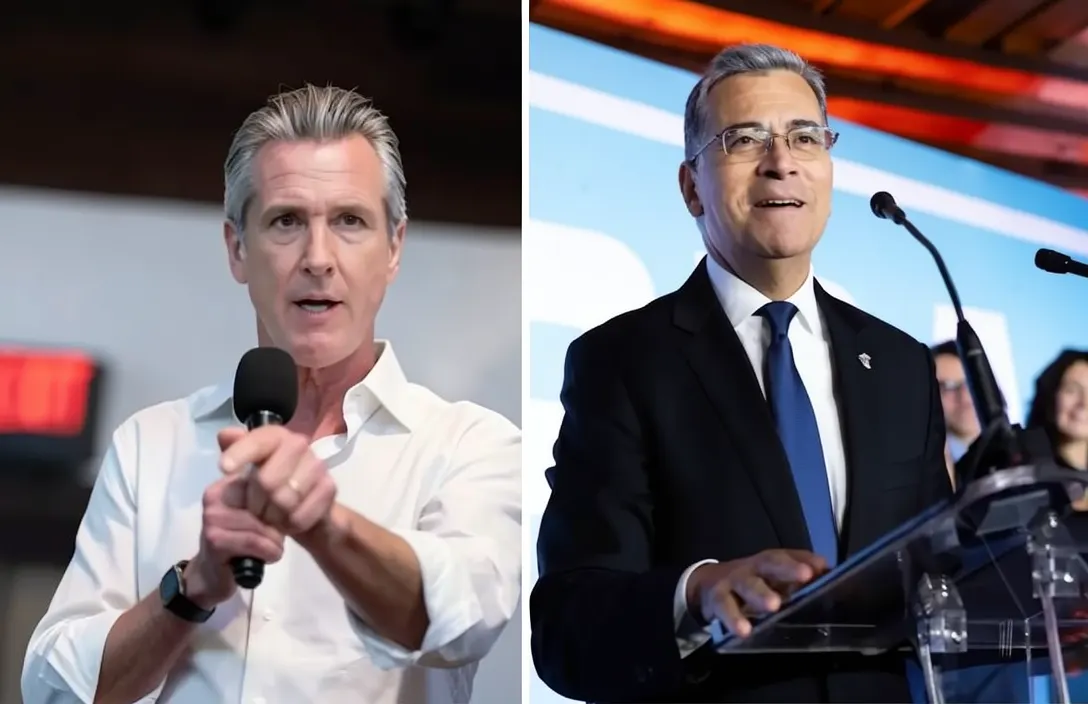
The AI boom and the infrastructure needed to support it have become a significant political issue in the US, with varying opinions among governors across the political spectrum. Some, like outgoing California Gov. Gavin Newsom (D) and New York’s Kathy Hochul (D), have proposed an AI 'kill switch' to disable advanced AI systems in case of an out-of-control situation, while others, including Republican governors of Nevada and North Dakota, view data centers as an economic opportunity (1). [1]
Governors such as outgoing Alabama Gov. Kay Ivey (R) have taken a more cautious approach to AI, emphasizing the need for transparency, privacy, and public safety while also supporting the responsible use of AI in government. In 2025, she issued a ban on Chinese-affiliated AI platforms DeepSeek and Manus from state-owned devices and networks, showing a stronger stance against foreign AI tools (1). [1]
In contrast, Alaska's incoming Democratic governor, Jonathan Kreiss-Tomkins, has supported a temporary moratorium on new data center facilities until the state legislature creates rules requiring developers to cover energy and infrastructure costs. He has also called for guardrails around AI surveillance, deepfakes, and fraud, while outgoing Gov. Mike Dunleavy (R) has pitched Alaska as a potential hub for the AI boom due to its cold climate, which could reduce cooling costs for data centers (1). [1]
Arizona's Gov. Katie Hobbs (D) has largely framed AI as an economic opportunity that the state should prepare for, rather than turn away from. She has not supported a moratorium on new data-center development but has pushed for more structure around AI, including the creation of the state's first AI steering committee in 2025 and the launch of an AI government tool in 2026 (1). [1]
Advertisement
The AI boom and the infrastructure needed to support it have become a significant political issue in the US, with varying opinions among governors across the political spectrum. Outgoing Alabama Gov. Kay Ivey (R) has approached AI as an opportunity to improve government, but one that needs guardrails. In 2024, she created a statewide generative AI task force to examine how it could be used within the state government, emphasizing AI use while prioritizing transparency, privacy, and public safety (source ID: 1). [1]
In contrast, Alaska's incoming Democratic governor, Jonathan Kreiss-Tomkins, has supported a temporary moratorium on new data center facilities until the state legislature creates rules requiring developers to cover energy and infrastructure costs. He has also called for guardrails around AI surveillance, deepfakes, and fraud (source ID: 1). [1]
Arizona's Gov. Katie Hobbs (D), who is up for reelection, has largely framed AI as an economic opportunity that the state needs to prepare for, rather than turn away from. Hobbs has said she does not support a moratorium on new data-center development. At the same time, she has pushed for more structure around AI, including the creation of the state's first AI steering committee in 2025 (source ID: 1). [1]
The AI boom and the infrastructure needed to support it have become a significant political issue in the US, with varying opinions among governors across the political spectrum. Outgoing California Gov. Gavin Newsom (D) has moved from a more cautious approach to AI regulation toward some of the most aggressive AI-safety proposals in the country. He has signed legislation creating independent oversight and auditing requirements on AI systems and is backing the idea of an AI "kill switch," which would be an emergency shutoff for frontier AI models (Source ID: 1). [1]
Advertisement
In contrast, Alaska's incoming Democratic governor, Jonathan Kreiss-Tomkins, has supported a temporary moratorium on new data center facilities until the state legislature creates rules requiring developers to cover energy and infrastructure costs. He has also called for guardrails around AI surveillance, deepfakes, and fraud. Outgoing, term-limited Gov. Mike Dunleavy (R) has pitched the state as a potential hub for the AI boom and the computing infrastructure it requires, arguing that Alaska has an "arctic advantage" (Source ID: 1). [1]
Arizona's Gov. Katie Hobbs (D), who is up for reelection, has largely framed AI as an economic opportunity that the state needs to prepare for, rather than turn away from. She has said she does not support a moratorium on new data-center development. At the same time, she has pushed for more structure around AI. Her administration created the state's first AI steering committee in 2025 and launched an AI government tool in 2026 (Source ID: 1). [1]
Sources
Prepared with AI assistance from the cited sources.
The Cali Reporter newsletter
The stories worth your time.
California, the country, and what comes next. Join our free newsletter for reporting that keeps you informed.
More in Business
- Kirkland Signature Meals: A Family's Take on Taste and Value
A family's review of Kirkland Signature meals highlights a mix of flavors, textures, and value at Costco, with some dishes standing out while others fall short of expectations.
- Ex-OpenAI Engineer Donates Equity to AI Safety
Jacob Coxon, a former engineer at OpenAI and Anthropic, has pledged to donate his equity in OpenAI to AI safety research, citing concerns over the risks of uncontrolled AI development.
- Scottish Hacker Sentenced for Crypto Theft Scheme
A Scottish hacker has been sentenced to six years in U.S. federal prison for orchestrating a large-scale cryptocurrency theft operation, according to a report from the U.S. Attorney’s Office for the Central District of…