Google Arts & Culture's AI-Assisted Esther Mahlangu Archive Fills a Pre-1980 Gap
The retrospective, published on Mahlangu's 91st birthday, pairs interviews and archival material with generated stills and Veo videos. The source documents the method and partners but leaves disclosure, consent and review questions open.

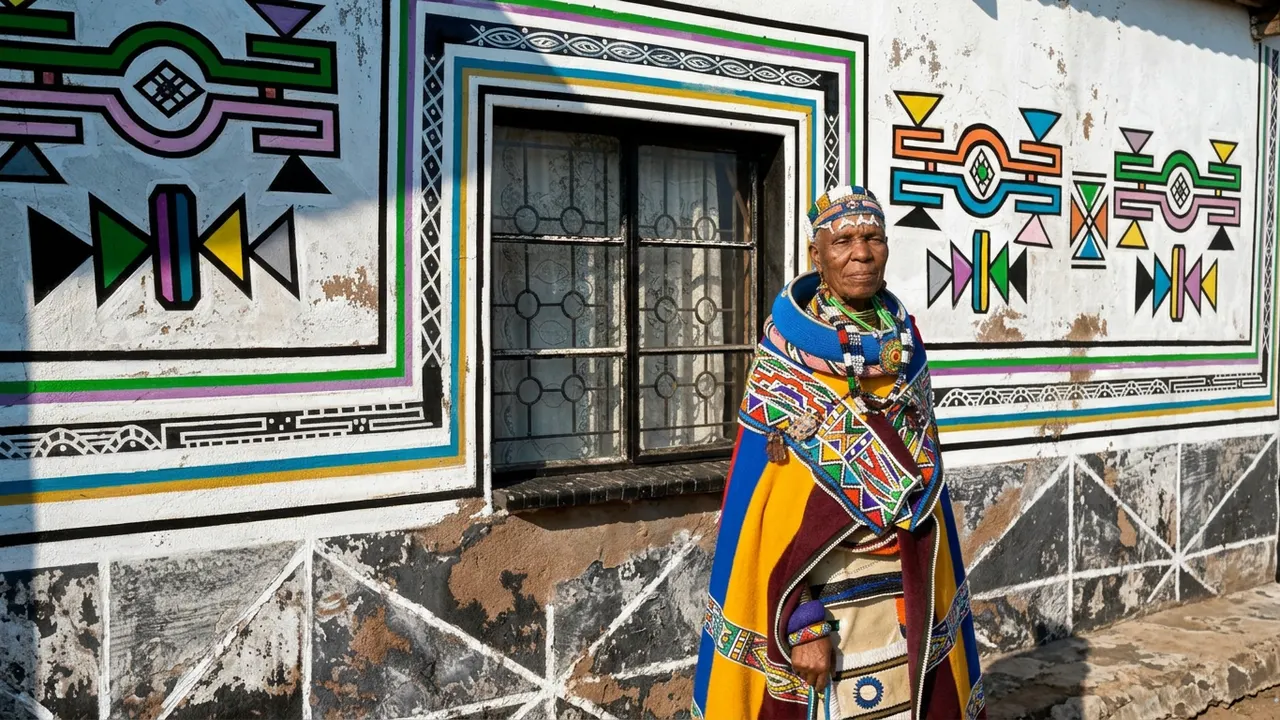
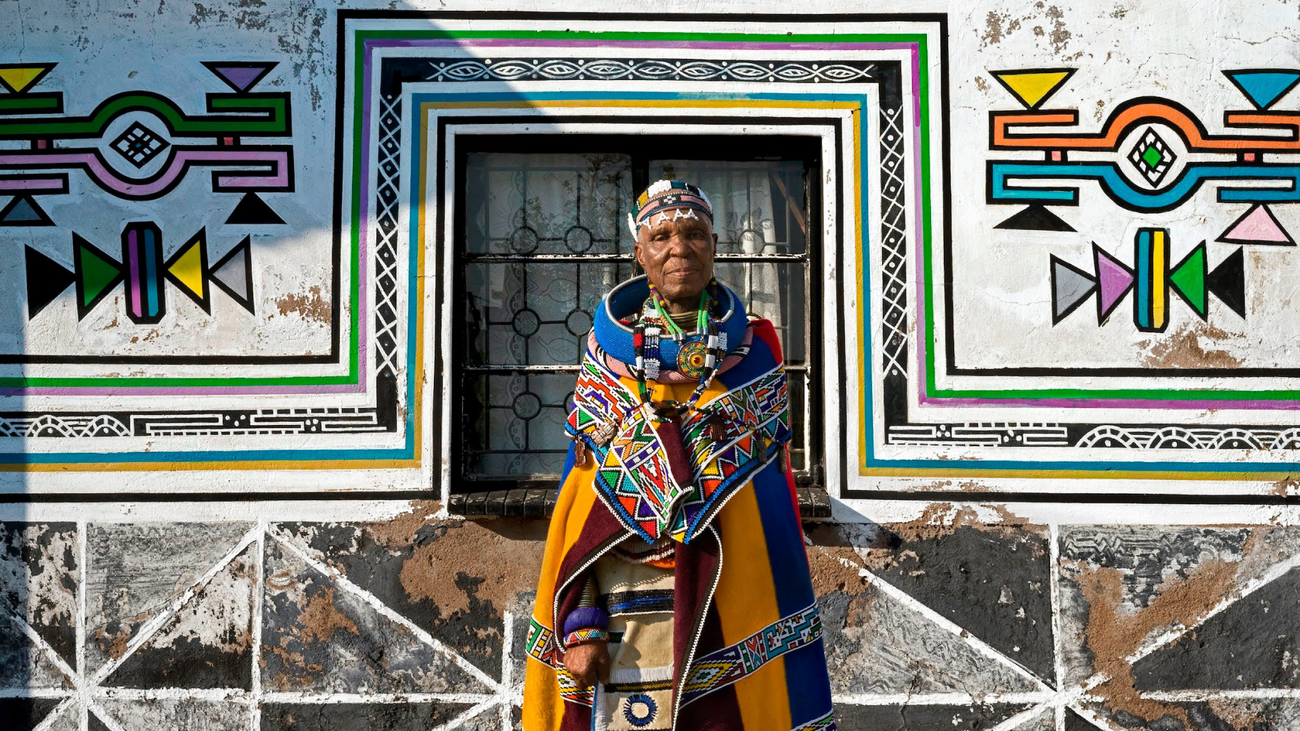
On Nov. 11, 2026, Google Arts & Culture released the first online retrospective of South African artist Dr. Esther Mahlangu, timed to her 91st birthday. Google says the site contains over 45 narratives and an extensive record of her artwork, life and legacy, available to a worldwide audience. [1]
Google lists several components: curated narratives, virtual tours and early recollections visualized with artificial intelligence. The retrospective also includes artwork, archives and Street View, and its exhibitions trace how Mahlangu became internationally recognized. [1]
The project responds to a documented gap. According to the source, the archives held no material from Mahlangu's life before 1980, so important parts of her history were absent. Curator Dr. Nontobeko Ntombela says the collaboration used AI to recreate undocumented recollections covering the period from when Mahlangu began painting at 10 to her first documented works in 1980. [1]
Ntombela writes that she had worked closely with Mahlangu and her family for years, a relationship grounded in research and admiration. The project combined curatorial and archival work with technical support from Google DeepMind and the Google Arts & Culture Lab, plus the synthetic memories initiative of research and design studio Domestic Data Streamers. The source does not list Mahlangu's family as a project collaborator. [1]
Advertisement
Ntombela says she assembled a substantial collection of Mahlangu's work, including large murals, smaller pieces and rare archival items. Because the archives lacked pre-1980 material, the team had to find another way to account for the missing period. [1]
Workshops and interviews were used to document that gap. Ntombela's first-person account gives one example: Mahlangu discovering her painting talent at age 10 while using feathers rather than a brush. Those recollections became the source material for the AI-assisted work, according to her account. Ntombela also says the process brought the team closer to Mahlangu's work and prompted further recollections from her. [1]
The generation process had two stages. Following the synthetic memories method and drawing on archival material, the team produced still images based on Mahlangu's recollections. Veo then converted those images into video intended to depict her early years. The source does not specify model versions, review checkpoints or labeling conventions for the outputs. [1]
The verified basics are narrow but clear. Mahlangu is a South African artist whose pioneering spirit the retrospective honors; she began painting at 10; her first documented works date to 1980; and Google presents her work as having global reach. The source does not provide a full birth date, a complete exhibition history or an independent chronology of her training. [1]
Advertisement
The pre-1980 archive gap explains why the project took this form. The source states that the archives contained nothing from her life before 1980, leaving crucial pieces missing. The collaborators responded by documenting recollections through interviews and workshops, then visualizing them with AI. [1]
Several institutions are named as partners. Google says the exhibitions were curated with Art of Contemporary Africa, Iziko Museums of South Africa, the British Museum, the Jean Pigozzi Collection, the National Museum of Women in the Arts and Serpentine. The source lists those partners but does not verify every reconstructed scene or independently assess the project's overall positioning. [1]
The supplied Google blog page displays a notice that its content is generated by Google AI and that generative AI is experimental. That notice appears on the article page, not necessarily inside the exhibition, and the source does not say whether the retrospective carries an equivalent disclosure for generated scenes. [1]
Ntombela's account is first-person curatorial testimony. She describes a relationship built on years of research and deep admiration, and says the project grew from that connection. Readers should treat that as attributed context from the curator, not as an independently reported biography of Mahlangu. [1]
Advertisement
Ntombela writes that the project demonstrates a new approach to preserving cultural heritage, with technology guided at every step by respect for personal memory and historical accuracy. That is her characterization, not an independent finding in the supplied evidence. The source documents the method and partners; it does not report visitor response or external evaluation. [1]
The method described in the source begins with human documentation. Workshops and interviews captured a missing period of Mahlangu's history, and those stories became source material for generated stills and video. The source describes this workflow but does not assess its accuracy or effectiveness. [1]
The outputs are reconstructions, not archival footage. The source says the team generated still images based on Mahlangu's memories and used Veo to turn the images into video. That distinction matters because the generated media depicts a period for which Google says the archives had no material. The source separates documentation from depiction: interviews supplied the memories, and generated media supplied the visuals. It does not claim the videos are records. [1]
For museums, archives and arts organizations, the source documents a collaboration among a curator, named cultural institutions and Google technical teams. It does not report adoption by other institutions, budgets, rights terms or independent review. Those remain open questions rather than established implications. [1]
Advertisement
The source does not offer a business lesson; it documents a cultural heritage project. For a business considering similar work, one question is whether generated media should depict undocumented history at all, and how any such output would be disclosed. Ntombela says the project was guided by respect for personal memory and historical accuracy, but the source does not specify disclosure rules. [1]
Another question concerns consent and rights. The source says the project was done with Google Arts & Culture, that Ntombela worked closely with Mahlangu and her family, and that the team used archival material. It does not disclose agreements, rights clearances, revenue terms or how the generated assets may be reused. [1]
A third question concerns review and labeling. The source describes workshops, interviews, generated still images and Veo videos, but it does not detail a per-scene review process or say whether the generated assets are marked as reconstructions inside the exhibition. Without that detail, observers cannot know how each generated image was validated or presented. [1]
A fourth question concerns scale. The Mahlangu project involved direct access to the artist, a curator, named institutions and Google technical teams. The source does not show whether the same approach would work for less-documented artists, smaller archives or organizations with thinner budgets. [1]
Separately, Google's blog homepage lists other AI and technology announcements, including Gemini 4 Hydrogen, TPU 8tx and 8i Max, Gemini in Chrome, a sketch-to-app tool, intelligent eyewear, a Pixel Drop and NASA robotics testing. Those items are separate from the Mahlangu retrospective; the supplied text does not connect them to the project or establish their effects on museums or businesses. [2]
How are the AI-generated stills and videos labeled inside the exhibition? The source says the project was guided by respect for personal memory and historical accuracy, but it does not describe on-screen disclosures, watermarks or viewer guidance. That is a central question for any public-facing reconstruction. [1]
What consent, licensing and revenue terms govern the reconstructed memories and the archive? The source names Ntombela's relationship with Mahlangu and her family and lists the institutional partners, but it does not disclose agreements, rights clearances or how the generated assets may be reused. These are questions, not established facts. [1]
How was accuracy evaluated? The source describes workshops, interviews and the use of archival material, but it does not detail a per-scene review process or an independent historical check. Without that detail, observers cannot know how each generated image was validated. [1]
Will the generated assets remain accessible and preservable? The source describes an online retrospective with virtual tours and videos, but it does not say how long the AI-generated components will remain online, how they will be archived, or whether they can be exported. Those are open operational questions. [1]
Can the method scale to less-documented artists or ordinary businesses? The Mahlangu project relied on direct access to the artist, a curator and named institutions. The source does not show whether the same approach would work with thinner archives or smaller budgets. [1]
The first thing to watch is the exhibition itself, at the link Google provides. Viewers can assess whether the reconstructions are clearly distinguished from archival material, whether the virtual tours provide context, and whether the curated narratives explain the limits of AI-assisted memory. [1]
The second is whether the partners publish curatorial notes or methodology. The source names the institutions and the technical collaborators, but it does not yet provide a detailed public account of how decisions were made. Such documentation would help other organizations evaluate the approach. [1]
The third is Google's wider AI rollout. The same blog homepage promotes Gemini 4 Hydrogen, new TPUs, Gemini in Chrome, sketch-to-app coding, intelligent eyewear, Pixel updates and NASA robotics testing. Those products are separate from the Mahlangu retrospective, and the supplied text does not establish how they will affect museums or businesses. [2]
A plausible scenario is that cultural institutions adopt synthetic memory reconstruction only with strict disclosure standards; another is that they treat it as a specialized curatorial tool rather than a default. Neither outcome is asserted by the source. The project's value will depend on choices that the source leaves open, including how clearly generated scenes are separated from documented material and how the method is explained to audiences. [1]
Sources
Prepared with AI assistance from the cited sources.
The Cali Reporter newsletter
The stories worth your time.
California, the country, and what comes next. Join our free newsletter for reporting that keeps you informed.
More in Artificial Intelligence
- Mellanox Deal Terms, Israel-1 and NVIDIA’s Interim Leadership
NVIDIA agreed to buy Mellanox in March 2019 at a $6.9 billion enterprise value and completed the deal in April 2020 at a $7 billion transaction value. Eyal Waldman led Mellanox; Colette Kress, a finance executive, is NVIDIA’s interim CEO in 2026.
- Reuters Reports Second Unnamed Employee Relationship Involving Former NVIDIA CEO Huang
Reuters reported Nov. 12, citing two people familiar with the matter, that Jensen Huang, now NVIDIA's former CEO, had an intimate relationship with a second unnamed employee. The account is attributed, not adjudicated; Huang's Nov. 8 message admitted infidelity without naming anyone, and the board's stated investigation concerns reported foreign-intelligence concerns.
- House-Passed Remote Access Bill Awaits Senate Committee Action as Chip Licensing Rules Set Conditions
H.R.2683 remains a proposal, not law; Commerce’s January rule allows conditional case-by-case review for some exports and IaaS use, while senators seek records on diversion allegations.