

Germany’s Bold New Plan to Phase Out Fossil Fuels by 2045
Europe's largest economy sets a deadline for a cleaner energy future

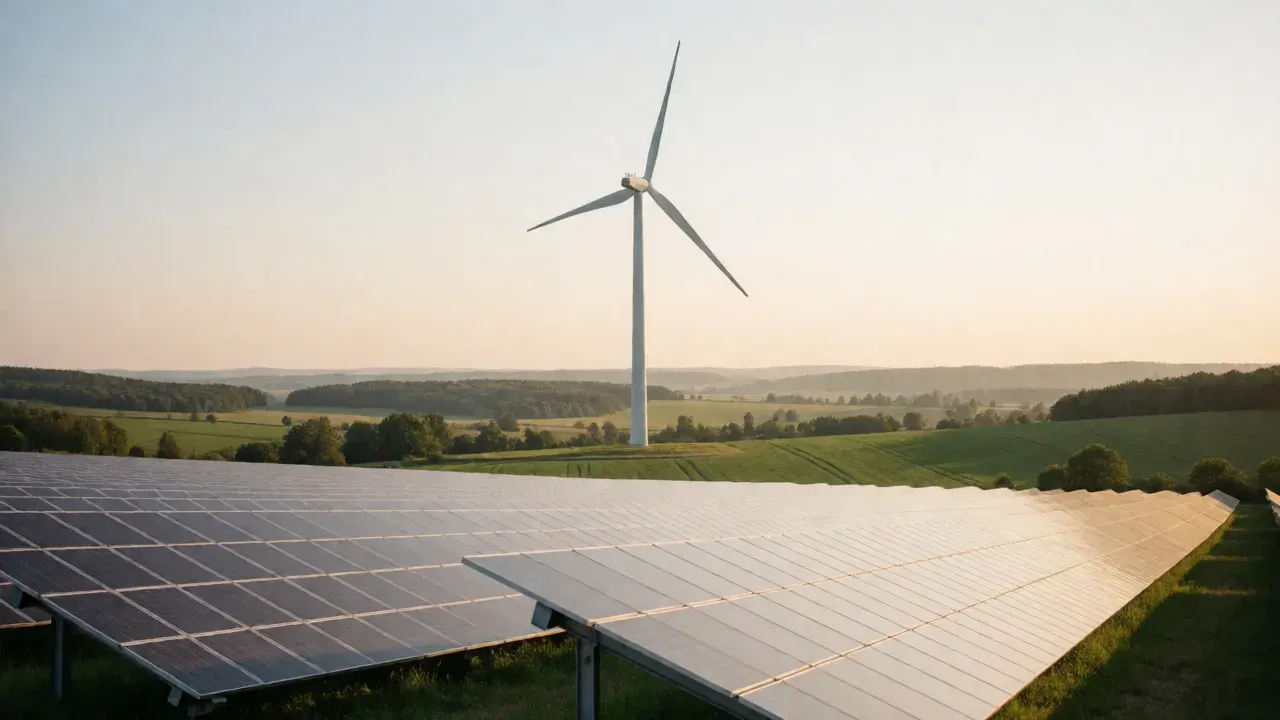
Germany is making a decisive turn toward its future. The country has officially committed to phasing out fossil fuels by 2045. This marks the first time the nation has set an explicit promise to "transition away" from these energy sources. For years, official rhetoric focused on "carbon neutrality." Now, the roadmap published on Wednesday outlines a concrete path forward.
The plan focuses heavily on the electricity grid. Officials aim to ramp up renewable energy from 55 percent to 80 percent of electricity generation by 2030. To achieve this, the government targets an additional 12 gigawatts of onshore wind. They also set a goal of 215 gigawatts of solar energy. These figures represent the backbone of the new strategy.
Coal remains a significant part of the current landscape, but it is slowly fading. The roadmap reaffirms the previous target of winding down coal use in the next decade. The government views a complete exit from coal by 2038 as the baseline expectation. However, there is potential to accelerate that exit. Officials now see a target of 2035 as a realistic possibility. This change in timeline reflects a growing urgency to leave coal behind.

The plan also addresses specific greenhouse gases. Emissions of methane, which is 80 times more powerful than carbon dioxide, must be cut by 30 percent by 2030. This requirement is part of a global methane pledge signed back in 2021. The strategy connects local policy with global agreements.
Andreas Sieber, who leads global political strategy at 350.org, sees this as a notable shift. He noted that making the phaseout of fossil fuels an explicit policy goal is a change from previous approaches. However, Sieber highlights a tension within the government. He pointed out that the Ministry of Economic Affairs and Energy is pushing intensely for greater use of gas. "The economic ministry keeps sabotaging the transition away from fossil fuels," he said. He added that 2024 has shown that fossil-fuel dependence creates risks for households and businesses through price shocks and volatility.
Former climate envoy Jennifer Morgan agrees that a roadmap is just the starting line. She emphasized that the government must put more effort into electrifying transport and heating. "Accelerating the shift from coal, oil and gas to clean renewables will bolster energy independence and insulate consumers from price shocks," she stated. She also warned that a strategy is only useful if paired with a faster rollout of green electrification.
One of the most contentious battles has been over home heating. A heating law passed in 2023 aimed to ban the installation of most oil and gas heating systems. This would have paved the way for heat pumps. However, the far-right-wing party Alternative für Deutschland (AfD) made this issue a key campaigning point. They forced a watering down of the rules earlier this year. AfD co-leader Alice Weidel even went so far as to describe wind turbines as "windmills of shame." Despite the political pushback, heat pumps currently make up about half of all new domestic heating systems.
Germany is not the only developed economy taking these steps. The country follows France and the Netherlands, which have also published such roadmaps. This trend began after a major international conference in Colombia in April, where participants promised to set out plans for a full phaseout of fossil fuels. The timeline comes as nations debated how to expand their efforts to tackle the climate crisis at the UN General Assembly in New York. The end of António Guterres’s term as UN secretary-general this December has raised concerns about the future of climate leadership.
Looking ahead, the UK has still not published its pledge to phase out fossil fuels. This will be a major topic when the UK takes up the presidency of the G20 group of developed and developing economies in December. With climate concerns and soaring costs of oil and gas on the agenda, the world is watching to see how these promises translate into action.
First reported by r/UpliftingNews.
More in Good News
- Historical Milestones: From Scientific Breakthroughs to Civil Rights Advancements
A retrospective look at significant global events occurring on October 7, spanning musical achievements, scientific discoveries, and social progress.
- October 3: Korean Foundation Day, Lincoln’s Thanksgiving, and TV Classics
Marking mythic descent, national unity, and cultural milestones across centuries.
- The Secret Sauce of the Best Food Pantries is Dignity
Why the best food banks treat hunger like a temporary pause not a permanent state