Germany's Economic Growth Amid Persistent Industry Concerns
Despite recent economic growth projections, Germany's industrial sector remains troubled, with ongoing challenges in employment, production, and government reform.


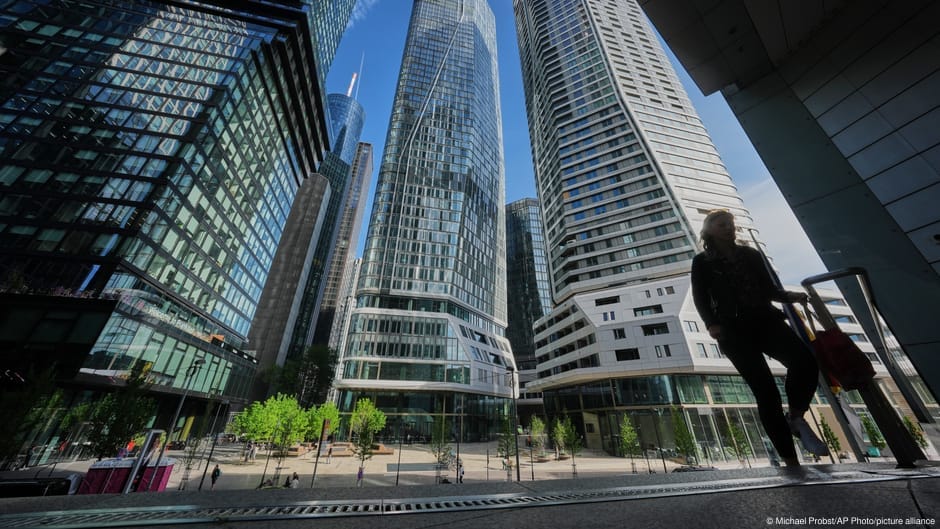
Germany's economy is showing signs of growth, with the Council of Economic Experts predicting economic growth of 1.3% for 2026 and 1% for 2027. This comes after the energy price shock from the war in Iran, which initially posed significant challenges to the German economy. However, the recovery has been driven by strong exports and increased government spending, according to Monika Schnitzer, chair of the expert advisory board (source ID: 1). [1]
Despite these positive economic indicators, the mechanical and plant engineering sector, a backbone of German industry, is facing significant challenges. Production has shrunk by about 20% since 2018, and 15,000 positions are being cut every month. Bertram Kawlath, president of the Mechanical Engineering Industry Association (VDMA), expressed frustration over the government's lack of reform and continued high bureaucracy and tax burden (source ID: 1). [1]
The German government is currently in final deliberations over its 2027 budget, which plans to spend upwards of €555 billion. Due to insufficient revenue, the government is planning to take on more than €118 billion in new debt. This would bring the total new borrowing to almost €204 billion, raising concerns about Germany's long-term fiscal sustainability (source ID: 1). [1]
Economic researchers highlight the need for increased productivity and innovation to drive long-term growth. The Council of Economic Experts noted that the most productive German companies are up to five times as productive as the least productive ones. If the less productive companies caught up, economic growth could increase significantly (source ID: 1). [1]
Advertisement
The mechanical and plant engineering sector in Germany, once a cornerstone of the country's industrial strength, is currently facing a severe decline. Bertram Kawlath, president of the Mechanical Engineering Industry Association (VDMA), noted at the 2026 Mechanical Engineering Summit in Berlin that the sector has lost over 15,000 jobs per month and experienced a 20% reduction in production since 2018 (source ID: 1). This downturn has left many industry leaders feeling 'stunned' by the government's lack of reform and the increasing bureaucratic and tax burdens on businesses (source ID: 1). [1]
Despite these challenges, Germany's overall economy is showing signs of recovery. The Council of Economic Experts predicted economic growth of 1.3% for 2026 and 1% for 2027. Chancellor Friedrich Merz acknowledged the 'encouraging signals' in his address following the release of the experts' report, which highlighted a significant economic recovery driven by strong exports and high government spending (source ID: 1). However, these positive indicators do not resolve the long-term issues facing the sector, including an aging population and rising public expenditure (source ID: 1). [1]
The German government is currently in final deliberations over its 2027 budget, which plans to spend upwards of €555 billion. Economic researchers emphasize the need for increased productivity and innovation to drive long-term growth. The Council of Economic Experts warned that without significant reforms, Germany may face a debt-to-GDP ratio of 100% by 2040, which would challenge its current AAA credit rating (source ID: 1). These challenges underscore the complex economic landscape Germany faces as it seeks to balance growth with fiscal responsibility (source ID: 1). [1]
The mechanical and plant engineering sector, once a cornerstone of German industry, is currently facing a severe decline. According to Bertram Kawlath, president of the Mechanical Engineering Industry Association (VDMA), the sector has seen a reduction of 15,000 positions every month, with production shrinking about 20% since 2018 (source ID: 1). This decline has led to a sullen mood at the 2026 Mechanical Engineering Summit in Berlin, where Kawlath expressed frustration with the federal government's infighting and lack of reform (source ID: 1). [1]
Advertisement
Despite these challenges, Germany's overall economy is showing signs of recovery. Economic experts have predicted growth of 1.3% for 2026 and 1% for 2027, a slight improvement from earlier pessimistic forecasts (source ID: 1). However, these projections do not address the long-term problems facing the German economy, including an aging population and rising public spending on pensions, health, and caregiving (source ID: 1). [1]
The German government is currently in final deliberations over its 2027 budget, which plans to spend upwards of €555 billion. To cover this spending, the government is planning to take on more than €118 billion in new debt, with additional borrowing for infrastructure and military needs bringing total new borrowing to almost €204 billion (source ID: 1). This level of debt could push Germany's debt-to-GDP ratio to 100% by 2040, according to the Council of Economic Experts (source ID: 1). [1]
The mechanical and plant engineering sector, once a cornerstone of German industry, is currently facing a severe decline. According to the Mechanical Engineering Industry Association (VDMA), the sector has seen a reduction in employment, with 15,000 positions being cut every month. Production has shrunk about 20% since 2018. Bertram Kawlath, president of the VDMA, expressed frustration with the federal government's infighting and lack of reform, as well as continued high bureaucracy and tax burdens. He criticized the government for its 'whitewashing' of the sector's decline and the lack of support for industry growth (ID:1). [1]
Despite the challenges in the mechanical engineering sector, Germany's economy is showing signs of recovery. Economic experts predict growth of 1.3% for 2026 and 1% for 2027. Chancellor Friedrich Merz acknowledged the 'encouraging signals' in the economic report but emphasized the need for continued reforms. The report highlighted that the German economy has recovered quicker than expected from the energy price shock, driven by strong exports and high government spending (ID:1). [1]
Advertisement
The German government is currently in final deliberations over its 2027 budget, which plans to spend upwards of €555 billion. However, economic researchers warn that the growth rates are far below what is needed to secure the same level of prosperity as previous decades. The government is planning to take on more than €118 billion in new debt, with additional borrowing for infrastructure and military reaching almost €204 billion. This could lead to a debt-to-GDP ratio of 100% by 2040, according to the Council of Economic Experts (ID:1). [1]
Sources
Prepared with AI assistance from the cited sources.
The Cali Reporter newsletter
The stories worth your time.
California, the country, and what comes next. Join our free newsletter for reporting that keeps you informed.
More in World
- Irish Man Charged with Destroying U.S. Military Aircraft at Shannon Airport
A man from Ireland has been indicted for allegedly destroying a U.S. military aircraft at Shannon Airport, according to prosecutors in New York.
- Trump's APEC Summit and Strategic Meetings
President Donald Trump is set to attend the APEC summit in Shenzhen, China, where he is expected to meet with Chinese President Xi Jinping and participate in a trilateral meeting with Russian President Vladimir Putin,…
- Early Snowfall in Northern England and Scotland
Snowfall occurred in parts of Northern England and southern Scotland, with subsequent melting due to milder temperatures, according to the BBC.