Galley Kitchens: A Shift in Perception
This section explores how perceptions of galley kitchens have evolved, focusing on the functional benefits and personal adaptation highlighted by a homeowner and interior designer.

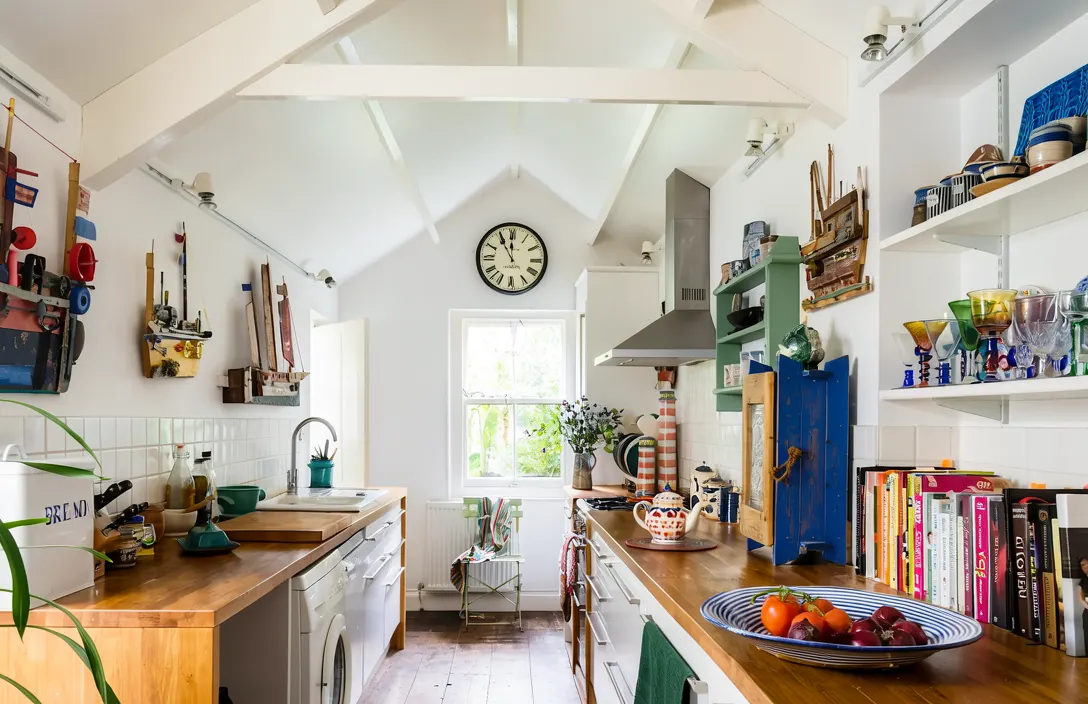
A homeowner initially hesitant about a galley kitchen found that its layout offered unexpected benefits, including efficiency and a sense of calm. According to the source, the kitchen’s narrow design allowed for quick access to all necessary tools and ingredients, reducing the need for unnecessary movement. The homeowner noted that the kitchen’s enclosed nature created a separation from the rest of the home, making it easier to focus on cooking without the pressure of being on display. This shift in perception is supported by the homeowner’s experience, which highlights how a galley kitchen can become a space of comfort and functionality over time (source ID 1). [1]
Interior designer Madalyn McNeil explains that the resistance to galley kitchens often stems from the perception that they are outdated or claustrophobic. However, she argues that the efficiency and contained environment of a galley kitchen can be advantageous, especially in high-density urban areas. McNeil emphasizes that the success of a galley kitchen depends on thoughtful design and placement of appliances and storage. She notes that when these elements are well-integrated, a galley kitchen can feel like a choreographed workspace, enhancing the cooking experience rather than limiting it (source ID 1). [1]
Despite the benefits, the homeowner acknowledges that galley kitchens are not ideal for everyone. The layout works best for single cooks who can maintain a clear boundary during meal preparation. When multiple people are in the kitchen, it can become a challenge to navigate without interference. The homeowner describes how they have adapted by keeping the space minimal and intentional, ensuring that every item in the kitchen has a purpose. This approach aligns with McNeil’s observation that galley kitchens force homeowners to be selective with their storage and appliances, leading to a more organized and efficient kitchen environment (source ID 1). [1]
A homeowner initially hesitant about a galley kitchen found that its layout offered unexpected benefits, including efficiency and a sense of calm. According to the homeowner, the initial resistance to galley kitchens often stemmed from the perception that they are outdated or claustrophobic. However, after living with a galley kitchen for nine years, the homeowner acknowledges that while it may not be ideal for everyone, it has proven to be highly functional in their daily life (source ID: 1). [1]
Advertisement
Interior designer Madalyn McNeil explains that the resistance to galley kitchens often stems from how some people can feel 'trapped' in them. She notes that the perception of galley kitchens can vary based on location, with what feels claustrophobic in one area potentially feeling charmingly efficient in another. McNeil also points out that much of the aversion to galley kitchens comes from people's inability to 'see what's not there' (source ID: 1). [1]
The homeowner describes how the efficiency of the galley kitchen became apparent over time, with everything needed for cooking within easy reach. They note that the enclosed nature of the galley kitchen created a sense of calm, allowing them to cook without the pressure of being observed by others. McNeil agrees, stating that the enclosed layout naturally creates zones that help cooks focus (source ID: 1). [1]
A homeowner initially hesitant about a galley kitchen found that its layout offered unexpected benefits, including efficiency and a sense of calm. According to the homeowner, the initial resistance to galley kitchens often stems from the perception that they are outdated or claustrophobic. However, over time, the homeowner discovered that the galley kitchen's design provided a level of functionality that was previously unanticipated (source ID: 1). [1]
Interior designer Madalyn McNeil explains that the resistance to galley kitchens often stems from how some people can feel 'trapped' in them. The homeowner describes how the efficiency of the galley kitchen became apparent over time, with everything needed for cooking within easy reach. McNeil notes that location often determines perception: What feels claustrophobic in one area can feel charmingly efficient in another (source ID: 1). [1]
Advertisement
The homeowner acknowledges that galley kitchens are not ideal for everyone. Despite the benefits, there are still drawbacks to the galley kitchen, such as the fact that it is really a one-person kitchen. When the homeowner is in there cooking, it is necessary for everyone else to clear the room. This aspect of the galley kitchen is a trade-off for the efficiency and calm it provides (source ID: 1). [1]
Sources
Prepared with AI assistance from the cited sources.
The Cali Reporter newsletter
The stories worth your time.
California, the country, and what comes next. Join our free newsletter for reporting that keeps you informed.
More in Food, Travel & Lifestyle
- Rocco's Mini Mini Fridge Launches with Black Friday Discount
Rocco, a viral fridge brand, has released a new Mini Mini Fridge, offering a compact design with full refrigeration capabilities, available at a Black Friday discount.
- Designing Functional Zones in an Open-Plan Great Room
A San Diego-based designer transformed a vast, open great room into three distinct and functional zones without major renovations, using strategic design choices.
- Board Games as Decorative Gifts Gain Popularity
Board games are increasingly being marketed as stylish home decor items, according to a recent article from Apartment Therapy.