French Students Challenge Inequality in Education System
Students in under-resourced schools across France are protesting against systemic inequalities in education, highlighting the gap between constitutional promises of equality and the reality of their lived experiences.

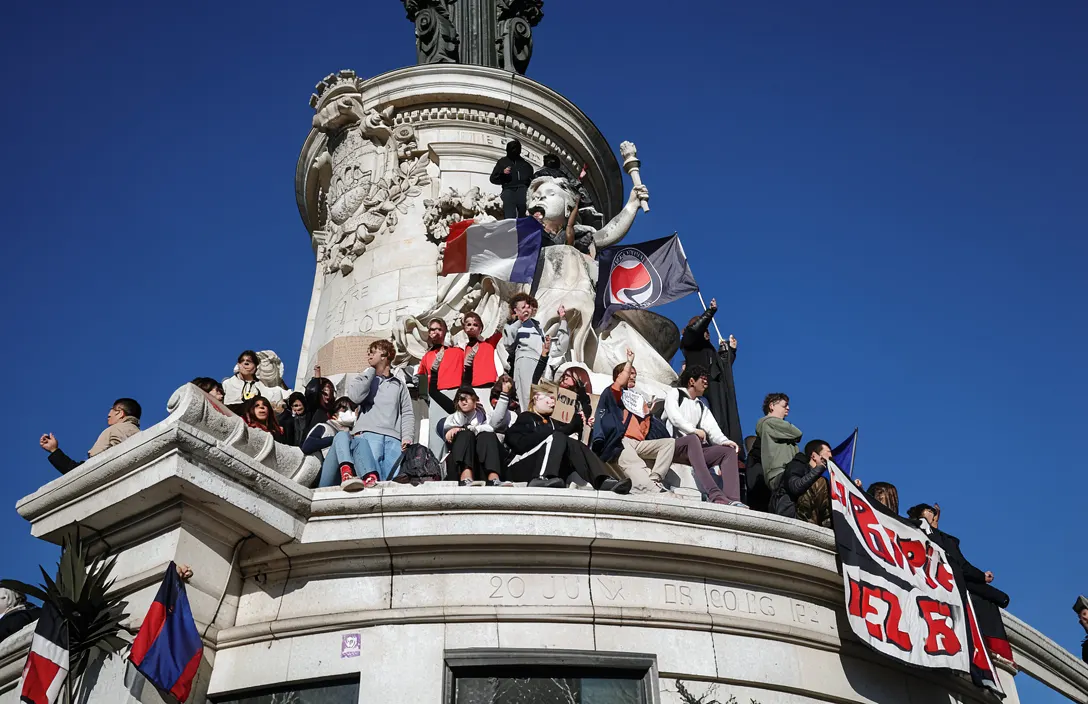

French students from under-resourced schools in Parisian suburbs and rural areas are protesting against missing teachers, deteriorating school conditions, and years of neglect. These grievances extend beyond the classroom, as they challenge a system that promises equal opportunity but often fails to deliver it due to uneven resource distribution (1). The constitutional promise of equality is clear, with the 1789 Declaration of the Rights of Man and of the Citizen establishing equality in rights and the Preamble to the 1946 French Constitution making public education a state duty (1). [1]
The movement has attracted support from workers, unions, and other protesters, evolving into a broader confrontation over the cost of living, the dismantlement of public services, and the state’s retreat from its social responsibilities (1). Historically, France has struggled to fulfill the revolutionary ideals of liberty, equality, and fraternity, with social privilege continuing to reproduce itself through family wealth, geography, and access to quality education (1). [1]
Public schools are central to the current movement because they are meant to form citizens and enable social mobility. When students protest due to inadequate resources, they highlight the failure of an institution that is supposed to make equality real (1). The use of cultural symbols such as anime, manga, memes, and references to fictional worlds in demonstrations allows young protesters to express solidarity and defiance, reinforcing a collective identity beyond traditional political organizations (1). [1]
French students from under-resourced schools in Parisian suburbs and rural areas are protesting against missing teachers, deteriorating school conditions, and years of neglect (1). These grievances extend beyond the classroom, as they challenge a system that promises equal opportunity while leaving many young people to pursue it with fewer resources than others (1). Public schools are central to the current movement because they are meant to form citizens and enable social mobility (1). [1]
Advertisement
The constitutional promise of equality in France is explicit. The 1789 Declaration of the Rights of Man and of the Citizen establishes equality in rights, while the Preamble to the 1946 French Constitution makes public education at every level a duty of the state (1). A republic cannot indefinitely tolerate schools whose quality depends on where children live and what their families can afford (1). [1]
There is a historical reason this contradiction carries particular weight in France. The Revolution of 1789 challenged a social order in which privilege was attached to birth. The Third Estate, encompassing the vast majority of the population, carried much of the country’s economic burden while the nobility and clergy enjoyed advantages denied to ordinary people (1). [1]
Today, while voicing their demands, student protesters have developed a distinct cultural language during protests. Anime, manga, memes and social media have become ways of expressing solidarity and defiance. References to One Piece, Dragon Ball, the Avengers, Batman and other fictional worlds have also appeared in demonstrations (1). [1]
French students from under-resourced schools in Parisian suburbs and rural areas are protesting against missing teachers, deteriorating school conditions, and years of neglect (1). Their grievances extend beyond the classroom, as they challenge a system that promises equal opportunity while leaving many young people to pursue it with fewer resources than others. The constitutional promise of equality in France is explicit, with the 1789 Declaration of the Rights of Man and of the Citizen establishing equality in rights and the Preamble to the 1946 French Constitution making public education a duty of the state (1). [1]
Advertisement
There is a historical reason this contradiction carries particular weight in France. The Revolution of 1789 challenged a social order in which privilege was attached to birth, and the French Republic has spent more than two centuries struggling to fulfill its founding principles of equality, liberty, and fraternity (1). Today, while voicing their demands, student protesters have developed a distinct cultural language during protests, using anime, manga, memes, and social media to express solidarity and defiance (1). [1]
Public schools are central to the current movement because they are meant to form citizens and enable social mobility. When students protest because their schools lack teachers and adequate facilities, they are confronting the failure of an institution supposedly designed to make equality real (1). A system that tells young people their future depends on their effort cannot reasonably hold them responsible for failing to succeed in schools it has failed to equip (1). [1]
French students from under-resourced schools in Parisian suburbs and rural areas are protesting against missing teachers, deteriorating school conditions, and years of neglect (1). These students are not only demanding better resources for their schools but are also questioning the broader failure of the state to uphold its constitutional promise of equality. The French Republic’s founding principles of liberty, equality, and fraternity have long been central to the nation’s identity, yet many young people feel these ideals are being unmet in practice (1). [1]
The constitutional promise of equality in France is explicit. The 1789 Declaration of the Rights of Man and of the Citizen establishes equality in rights, while the Preamble to the 1946 French Constitution makes public education at every level a duty of the state (1). This historical commitment to education as a tool for social mobility has made the current protests particularly resonant. Students are pointing out the contradiction between the legal framework and the lived reality of many young people, who face systemic disadvantages in schools that are poorly funded and understaffed (1). [1]
Advertisement
There is a historical reason this contradiction carries particular weight in France. The Revolution of 1789 challenged a social order in which privilege was attached to birth (1). Today, while voicing their demands, student protesters have developed a distinct cultural language during protests, using symbols from anime, manga, and social media to express solidarity and defiance (1). This cultural expression is not a sign of political shallowness but a means of communicating complex ideas about justice and freedom in a way that resonates with younger generations (1). [1]
Sources
Prepared with AI assistance from the cited sources.
The Cali Reporter newsletter
The stories worth your time.
California, the country, and what comes next. Join our free newsletter for reporting that keeps you informed.
More in World
- Irish Man Charged with Destroying U.S. Military Aircraft at Shannon Airport
A man from Ireland has been indicted for allegedly destroying a U.S. military aircraft at Shannon Airport, according to prosecutors in New York.
- Trump's APEC Summit and Strategic Meetings
President Donald Trump is set to attend the APEC summit in Shenzhen, China, where he is expected to meet with Chinese President Xi Jinping and participate in a trilateral meeting with Russian President Vladimir Putin,…
- Early Snowfall in Northern England and Scotland
Snowfall occurred in parts of Northern England and southern Scotland, with subsequent melting due to milder temperatures, according to the BBC.