Former Kosovo President Convicted of Obstructing Justice in The Hague
A court in The Hague has convicted former Kosovo President Hashim Thaci of obstructing justice, adding to his existing 25-year war crimes sentence, reigniting debates about justice and judicial independence in Kosovo.

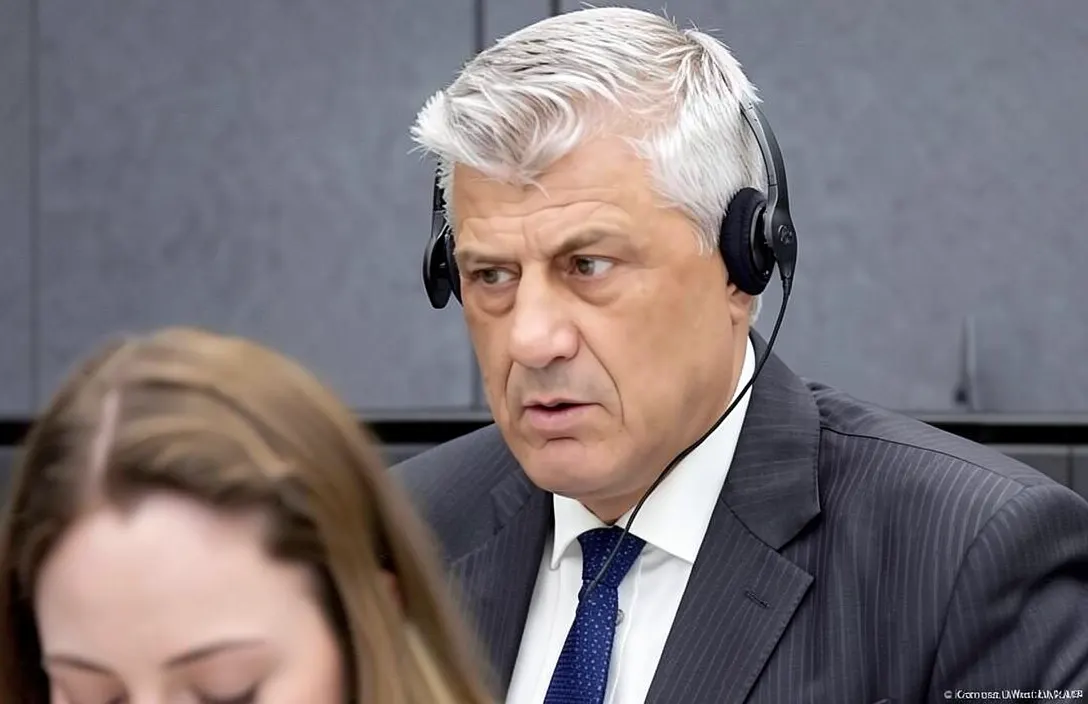
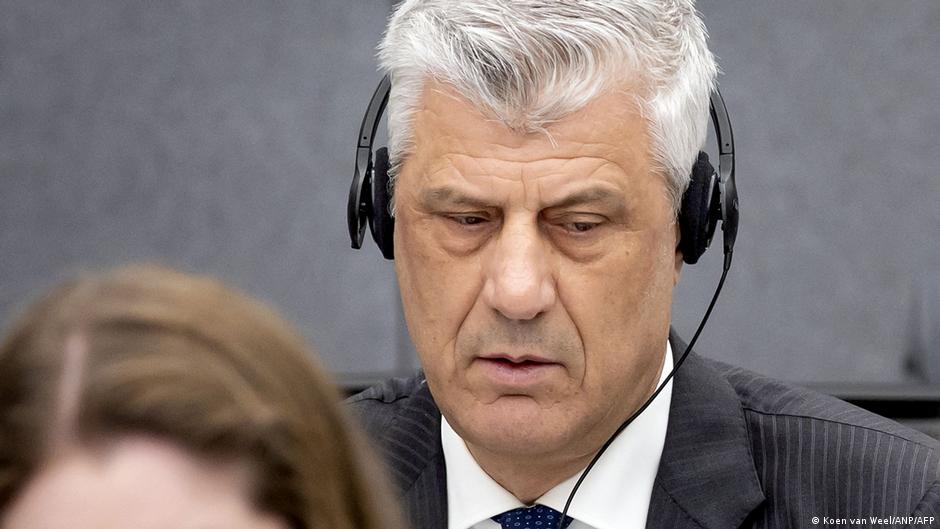
A court in The Hague on Tuesday convicted former Kosovo President Hashim Thaci of obstructing justice and attempting to influence witnesses during his recent war crimes trial and sentenced him to 17 months in prison (1). This term will be added to his 25-year sentence for war crimes, which was handed down by the same court, the Kosovo Specialist Chambers, on September 16. According to the indictment of the Specialist Prosecutor's Office, Thaci had provided visitors at the detention facility in The Hague with confidential information about witnesses in his war crimes trial and had instructed them on how to influence their testimony. [1]
Three other men — former head of the Kosovo Intelligence Agency Bashkim Smakaj, former Minister of Justice Hajredin Kuci, and Fadil Fazliu — were also convicted (1). Swift response from government Thaci, who was the former political leader of the Kosovo Liberation Army (KLA) during the 1998-1999 Kosovo War, is viewed by many in his home country as a hero. His war crimes conviction in September was greeted in Kosovo with anger and dismay. [1]
The conviction in September of Hashim Thaci and three former Kosovo Liberation Army leaders was greeted with shock, disappointment and anger in Kosovo (1). His two convictions touch deep sensitivities in Kosovo society. Tuesday's ruling brings renewed attention to the war that ended 27 years ago, the role played by its former leaders, and the continuing debate over justice, individual or collective responsibility for the KLA's war to liberate Kosovo from Serbia, and trust in judicial institutions. [1]
The government of Kosovo issued a statement following the conviction of former President Hashim Thaci and three others, emphasizing that trust in justice is built not only on the decisions made but also on how they are reached (1). The statement highlighted the government's commitment to the rule of law and the full respect of rights and procedural guarantees, asserting that justice must be fair, transparent, and credible (1). [1]
Advertisement
In response to the September conviction of Hashim Thaci and three former Kosovo Liberation Army leaders, Kosovo's state authorities established a working group to draft a strategy regarding the appeal proceedings before the Kosovo Specialist Chambers (1). The group is chaired by Foreign Minister Glauk Konjufca and includes members of Kosovo's parliament (1). [1]
Prime Minister Albin Kurti has stated that the working group continues to believe that the first-instance judgment of the Specialist Chambers is unjust, both legally and morally, and that the government is working to secure a correction at the appeals level before the Specialist Chambers (1). Additionally, the parliament of Kosovo is currently considering amendments to the law governing the Kosovo Specialist Chambers (1). [1]
The government of Kosovo issued a statement following the conviction of former President Hashim Thaci and three others, emphasizing that trust in justice is built not only on the decisions made but also on how they are reached (1). This statement was made in response to the September conviction of Hashim Thaci and three former Kosovo Liberation Army leaders, which was met with strong reactions in Kosovo (1). The government's statement highlights the importance of the rule of law and the need for full respect of rights and procedural guarantees (1). [1]
In response to the September conviction of Hashim Thaci and three former Kosovo Liberation Army leaders, Kosovo's state authorities established a working group to draft a strategy regarding the appeal proceedings before the Kosovo Specialist Chambers (1). This working group is chaired by Foreign Minister Glauk Konjufca and includes members of Kosovo's parliament (1). Prime Minister Albin Kurti has stated that the working group continues to believe that the first-instance judgment of the Specialist Chambers is unjust, both legally and morally (1). [1]
Advertisement
The parliament of Kosovo is currently considering amendments to the law governing the Kosovo Specialist Chambers. The draft law, which is expected to be adopted, envisages narrowing the court's mandate in several areas, including the time period covered by its jurisdiction, limiting the maximum prison sentence to 15 years, allowing sentences to be served in Kosovo, and introducing the possibility of presidential pardons for persons convicted by final court decisions (1). [1]
The government of Kosovo issued a statement following the conviction of former President Hashim Thaci and three others, emphasizing that trust in justice is built not only on the decisions made but also on how they are reached (1). The statement underscores the government's commitment to the rule of law and the need for full respect of rights and procedural guarantees in judicial proceedings (1). [1]
In response to the September conviction of Hashim Thaci and three former Kosovo Liberation Army leaders, Kosovo's state authorities established a working group to draft a strategy regarding the appeal proceedings before the Kosovo Specialist Chambers (1). Prime Minister Albin Kurti has stated that the working group continues to believe that the first-instance judgment of the Specialist Chambers is unjust, both legally and morally (1). [1]
The parliament of Kosovo is currently considering amendments to the law governing the Kosovo Specialist Chambers (1). The draft law, which is expected to be adopted, envisages narrowing the court's mandate in several areas, including the time period covered by its jurisdiction, limiting the maximum prison sentence to 15 years, allowing sentences to be served in Kosovo, and introducing the possibility of presidential pardons for persons convicted by final court decisions (1). [1]
Advertisement
The Cali Reporter newsletter
The stories worth your time.
California, the country, and what comes next. Join our free newsletter for reporting that keeps you informed.
More in World
- Irish Man Charged with Destroying U.S. Military Aircraft at Shannon Airport
A man from Ireland has been indicted for allegedly destroying a U.S. military aircraft at Shannon Airport, according to prosecutors in New York.
- Trump's APEC Summit and Strategic Meetings
President Donald Trump is set to attend the APEC summit in Shenzhen, China, where he is expected to meet with Chinese President Xi Jinping and participate in a trilateral meeting with Russian President Vladimir Putin,…
- Early Snowfall in Northern England and Scotland
Snowfall occurred in parts of Northern England and southern Scotland, with subsequent melting due to milder temperatures, according to the BBC.