Flight Attendant Shares Tips for Navigating Flight Delays and Cancellations
A flight attendant discusses strategies for handling flight disruptions, emphasizing the importance of having backup plans and maintaining patience with airport staff.

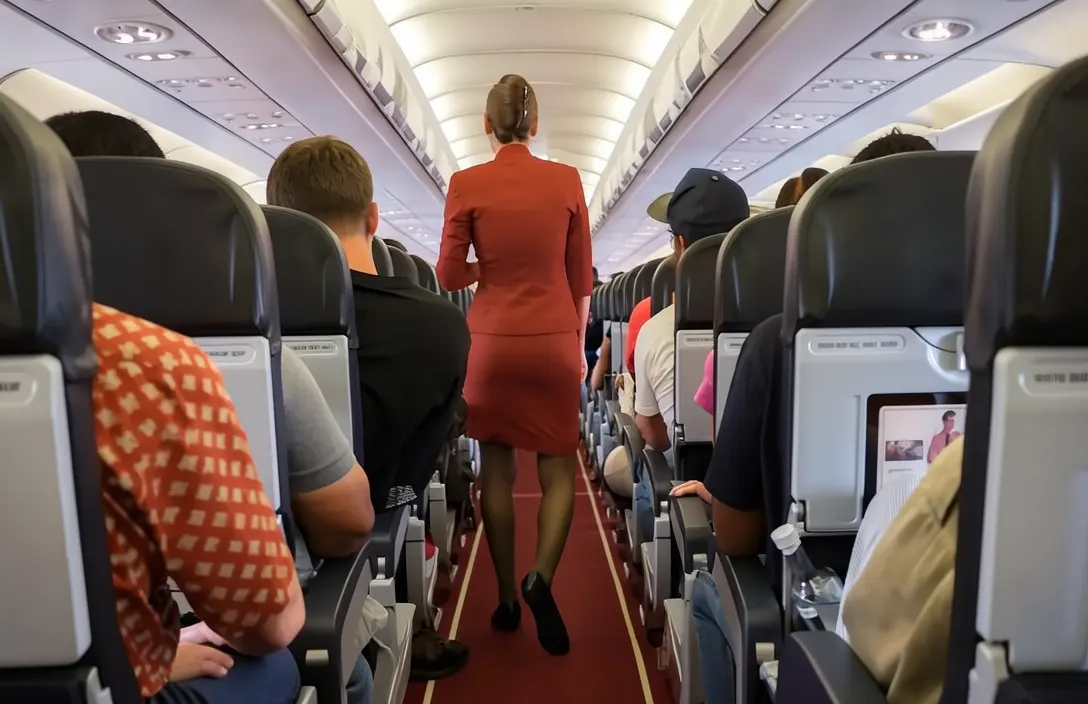
A flight attendant with seven years of experience shared tips for managing flight delays and cancellations, highlighting the importance of having a backup plan. When a national ground stop was implemented by the FAA, she found herself stranded in Fort Lauderdale, Florida, after her flight was canceled. She immediately booked a hotel room for the night, recognizing that having a plan B could ease the stress of unexpected disruptions. This decision proved valuable as her flight was ultimately canceled, and she had a place to stay. The cost of the hotel was a personal expense, but she emphasized that the investment was worth it for peace of mind (source ID: 1). [1]
The flight attendant also advised travelers to consider booking a rental car in advance if they are within driving distance of their destination. She explained that rental cars can be obtained without upfront payment and serve as a form of insurance in case of further delays. In her case, she and a neighbor decided to book a rental car in Orlando to ensure they had a way to reach Pensacola if their flight was delayed. This proactive approach helped them manage their stress and make informed decisions during the disruption (source ID: 1). [1]
She also emphasized the importance of maintaining perspective and avoiding frustration with airport workers. She noted that airport staff, including pilots and crew members, are working to get passengers to their destinations but are subject to federally mandated rest periods. She encouraged travelers to understand that airport workers are not intentionally causing delays and that taking out frustration on them is unproductive. She advised travelers to focus on managing their stress through techniques like square breathing, which involves inhaling, holding, exhaling, and holding for five seconds each, to help remain calm and make better decisions (source ID: 1). [1]
The FAA's national ground stop occurred on Friday, affecting flights nationwide, with Aimee Allenback experiencing the impact while traveling from Myrtle Beach, South Carolina, to Pensacola, Florida. The original flight path was from Myrtle Beach to Fort Lauderdale, with a connecting flight to Pensacola. However, after landing in Fort Lauderdale, the pilot informed passengers of the ground stop due to extraordinary circumstances, which was distinct from events like 9/11. This event highlights the logistical challenges faced by travelers during large-scale flight disruptions. [1]
Advertisement
Aimee Allenback, a flight attendant with seven years of experience, emphasized the importance of having a backup plan during travel disruptions. Upon learning of the flight delay, she immediately booked a hotel room in Fort Lauderdale for $170, which she considered a necessary investment for peace of mind. This decision proved valuable when her connecting flight was canceled, as hotel availability was limited due to the high number of stranded travelers. Her approach illustrates the practical steps individuals can take to mitigate the impact of unexpected travel issues. [1]
During the ground stop, Allenback collaborated with a neighbor from Pensacola who was also on the same flight. Together, they opted to fly out of Orlando instead of Fort Lauderdale, which required a three-hour train ride from Fort Lauderdale to Orlando at 6 a.m. to catch a noon flight on Saturday. They also booked a rental car in Orlando as a contingency plan, demonstrating the value of flexibility and preparation in the face of travel disruptions. This experience underscores the importance of considering alternative travel routes and having backup transportation options. [1]
The FAA's national ground stop occurred on Friday, affecting multiple airports across the United States. Aimee Allenback, a flight attendant, was traveling from Myrtle Beach, South Carolina, to Pensacola, Florida, when she encountered the disruption. Her original itinerary included a stop in Fort Lauderdale, where she learned of the ground stop from the pilot. This event was not an isolated incident but part of a broader operational adjustment by the FAA due to extraordinary circumstances, though not comparable to events like 9/11. [1]
Allenback's experience highlights the importance of having contingency plans during flight disruptions. Upon landing in Fort Lauderdale, she immediately booked a hotel room for $170 as a precautionary measure. This decision proved valuable when her connecting flight was canceled, ensuring she had a place to stay. She also coordinated with a neighbor from Pensacola to explore alternative travel options, including booking a rental car in Orlando to facilitate a potential flight change. [1]
Advertisement
The incident underscores the logistical challenges faced by travelers during FAA-imposed ground stops. Allenback and her neighbor opted for a three-hour train ride from Fort Lauderdale to Orlando to catch a flight the following day. When that flight was delayed, they decided to drive the six-hour route from Orlando to Pensacola, demonstrating the need for flexibility in travel plans. This situation reflects the broader impact of such disruptions on both individual travelers and the overall airline industry. [1]
Airport workers, including pilots and crew members, are subject to federally mandated rest periods, which can affect their availability during unexpected events like ground stops. Allenback emphasizes that airport personnel are working to assist travelers despite these constraints. She advises against directing frustration toward airline workers, as they are also dealing with the same challenges and are committed to helping passengers reach their destinations safely and efficiently. [1]
Allenback suggests using square breathing as a technique to manage stress during travel disruptions. This method involves breathing in for five seconds, holding the breath for five seconds, exhaling for five seconds, and holding again for five seconds. This technique helps individuals remain calm and make rational decisions during stressful situations, such as flight delays or cancellations. [1]
Sources
Prepared with AI assistance from the cited sources.
The Cali Reporter newsletter
The stories worth your time.
California, the country, and what comes next. Join our free newsletter for reporting that keeps you informed.
More in Business
- Kirkland Signature Meals: A Family's Take on Taste and Value
A family's review of Kirkland Signature meals highlights a mix of flavors, textures, and value at Costco, with some dishes standing out while others fall short of expectations.
- Ex-OpenAI Engineer Donates Equity to AI Safety
Jacob Coxon, a former engineer at OpenAI and Anthropic, has pledged to donate his equity in OpenAI to AI safety research, citing concerns over the risks of uncontrolled AI development.
- Scottish Hacker Sentenced for Crypto Theft Scheme
A Scottish hacker has been sentenced to six years in U.S. federal prison for orchestrating a large-scale cryptocurrency theft operation, according to a report from the U.S. Attorney’s Office for the Central District of…