

Reno Wildfire Claims 32 Homes and Forces 63,000 From Their Beds, Revealing the Fragility of Safety in the West
As containment reaches 27% in the Sierra Nevada foothills, families grapple with the loss of their neighborhoods.

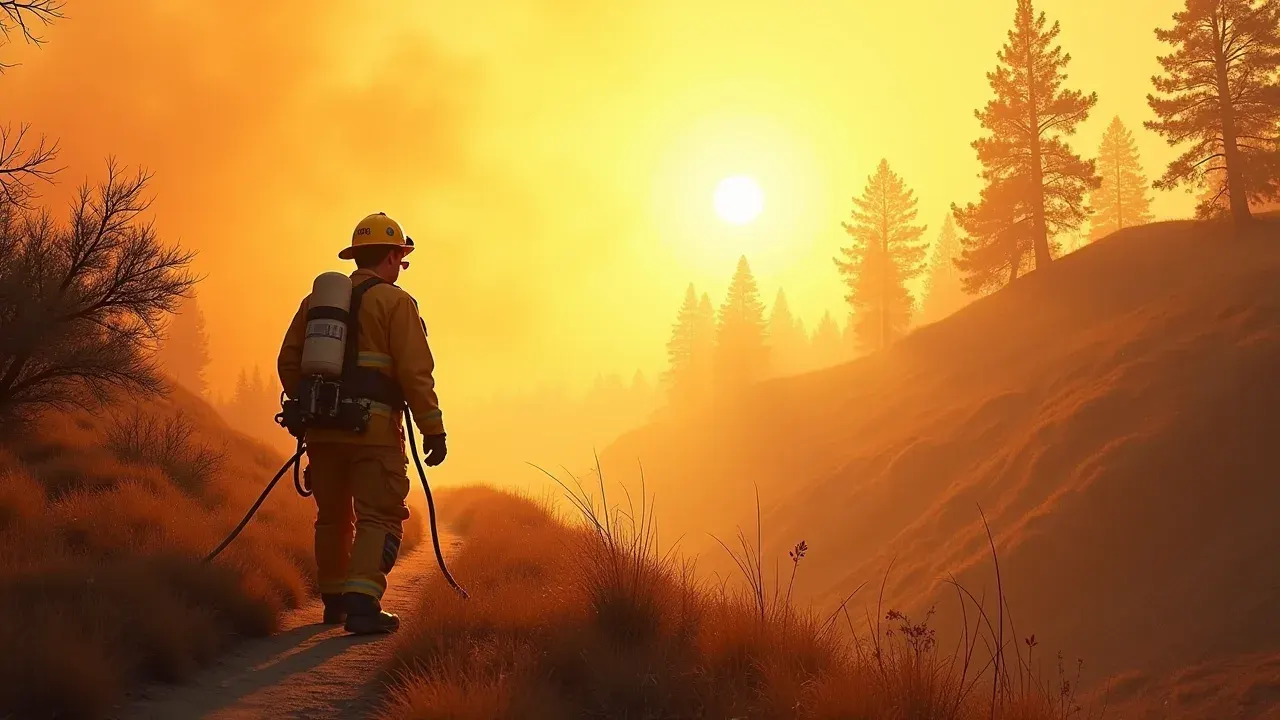
In the quiet moments after the fires die down, the data often tells the story better than the screams. For the families of Reno, the story is written in ash. Three dozen homes no longer stand in the Sierra Nevada foothills. The Hawk Fire has moved beyond a statistic and into the living rooms of parents who are now trying to explain to their children why their playground is now a scorched landscape. This is not just a disaster. This is a rupture. When the wind howls through the canyons of Washoe County, it carries more than smoke. It carries the uncertainty of the future and the heavy burden of lost memories.
Crews have started to contain a wildfire in the Sierra Nevada foothills near Reno. Containment reached 27%. The fire has held steady at about 23 square miles since it burned out of control on Sunday. These numbers offer a sliver of hope in a day that began with chaos. U.S. Forest Service District Ranger Matt Zumstein offered words of encouragement. “We are making progress,” he said. But for a community watching their streets turn to embers, progress is a relative term. The battle is far from over as firefighters contend with hot temperatures and low humidity.
The scale of this event is difficult to grasp. The number of residents under evacuation orders and warnings was reduced to about 63,000. That is down from more than 90,000 people when the blaze mushroomed over the weekend. This reduction is a victory against the flames, but it does not solve the human dilemma. When the sirens stop, the questions begin. Where do we go? What stays? How do we sleep at night? The school board in Washoe County made the practical choice to close schools Monday. They kept the roads clear for emergency crews. For the parents in this district, this meant a disrupted routine. It meant teachers waking up not to lesson plans, but to alerts. It meant the classroom experience shifting from reading and writing to survival and reassurance.

Reno Mayor Hillary Schieve felt the weight of this pressure. She spoke of the speed of the fire. “It lit up these areas like nothing I have seen before,” she said Monday. “It took your breath away, in the worst way.” The mayor’s words echo the sentiment of a city holding its breath. The threat is not just physical. It is psychological. When a mayor admits that a fire was like nothing she has seen before, the public knows the danger is real and unprecedented.
The impact on individual families is where the policy meets the pain. Crystal Hallock, 53, knows this reality well. She has lost her home to fire for the second time in less than a decade. She moved into the rebuilt house in 2019. Just a few years later, she faced the same nightmare. On Saturday, with a giant plume of smoke and flames visible on the nearby mountaintop, she fled with her children, grandchildren and pets. Her ex-husband tried to save the property. He grabbed a garden hose as flames melted children’s toys and burned bushes. She urged him to get out. “He was saying he can’t breathe, it’s so dark I can’t see,” she said. The vintage Cadillac sat there waiting. “I’m screaming at him, ‘Leave the car, just leave it.’” Thirty minutes later, the call came through. He was safe. Hallock is grateful for a place to stay with her animals and grandkids. But the trauma of losing a place to call home twice in ten years leaves a mark that no amount of reassurance can erase.
The community reaction highlights the human spirit even in the face of destruction. At a roadblock, residents expressed frustration that they could not get back into their homes. “There’s no fire here! Why are the National Guard here?” a driver yelled. Washoe County Sheriff Darin Balaam understood the confusion. He understands that some residents are frustrated that they cannot get home. But the danger is not over. “It just takes that little breeze and one ember,” he said. This is the reality of modern firefighting. It is a fight against time and elements, often invisible to those watching from a distance.
Many residents had little time to evacuate after the fire exploded in size. Ruby Delatorre got back from a concert only to find her home in the evacuation zone. She returned Sunday to walk to her house and get a few more possessions. “I literally want to cry and go back for all my stuff,” she said. Jon Hanbury stood at a convention center in Reno, which is now a shelter. He said, “The flames were pretty close to my house, and the smoke was really thick, but we have no idea if our house survived or not.” These are the moments that define a community. When the convention center becomes a shelter and the streets become checkpoints, the fabric of normal life is tested.
The causes of these fires are often discussed in boardrooms and legislative halls. Here, the cause is clear but human. Wildfires near Reno are blamed on human activity. The fire near the California state line began Saturday and exploded in size on Sunday. This is the third large wildfire in the rugged terrain north of Reno in the past two weeks. All three were caused by human activity. At least seven people have been injured. Three were first responders and four were civilians. This strain on the emergency response system mirrors the strain on resources throughout the American West.
The economic and cultural context adds another layer to the story. Reno is home to about 280,000 people and is known for its casinos and as a gateway to nearby Lake Tahoe. It is southwest of Nevada’s Black Rock Desert, the site of the annual Burning Man festival. The organizers asked attendees not to take hotel rooms and other resources away from fire evacuees. “Treat our neighbors, first responders, hospitality workers and everyone affected by this emergency with patience and care,” a Burning Man statement said. This request for patience is a reflection of the broader social contract. We are all in this together when the winds blow hard.
The geographical and meteorological factors are equally important. Reno sits at an elevation of 4,500 feet. Much of the area that burned was sagebrush and grass. Much of Nevada’s western edge is under an increased risk of wildfires this week because of high winds and low relative humidity. The National Weather Service says the region will see warm, dry and breezy conditions, and that critical fire weather conditions are possible in the week's later half. The infrastructure of the city is built on a foundation of nature that is increasingly volatile.
We often look at these events from a distance. We analyze the containment percentages and the acreage burned. But for the families of the 32 homes lost, the data is personal. It is the memory of a life lived in a house that is now a pile of rubble. It is the fear of the next fire season. As the national fire center notes, there have been more than 50,000 wildfires this summer. This is the most over the past 10 years covering the same time period. The trend is not good. The threat is high. But the community response remains strong.
First reported by butlereagle.com.
More in California
- UC Berkeley Lab Proposes New Civic Framework for California’s Next Governor
A research-driven agenda calls for institutionalizing 'co-governance' to address low public trust and lack of resident influence in state decision-making.
- Five Tax Measures on California’s Ballot Aim to Reshape State Finances
Propositions 3, 40–43 would alter income, wealth and local taxation rules—marking the highest number of tax measures on a general election ballot since 1994.
- Catalina Helicopter Crash Highlights Risks of Island Medevac Flights
A medical evacuation chopper carrying Catalina Romero, pilot, and nurse Jessica Devries crashed into the ocean shortly after takeoff, killing all three; federal investigators are assessing causes including night flying, spatial disorientation, and the island’s challenging Pebbly Beach heliport.