FAA Grounding and Funding Disputes
The grounding of thousands of flights on Nov. 13 sparked a debate over the state of the FAA's air traffic control system and the allocation of funding for its modernization.

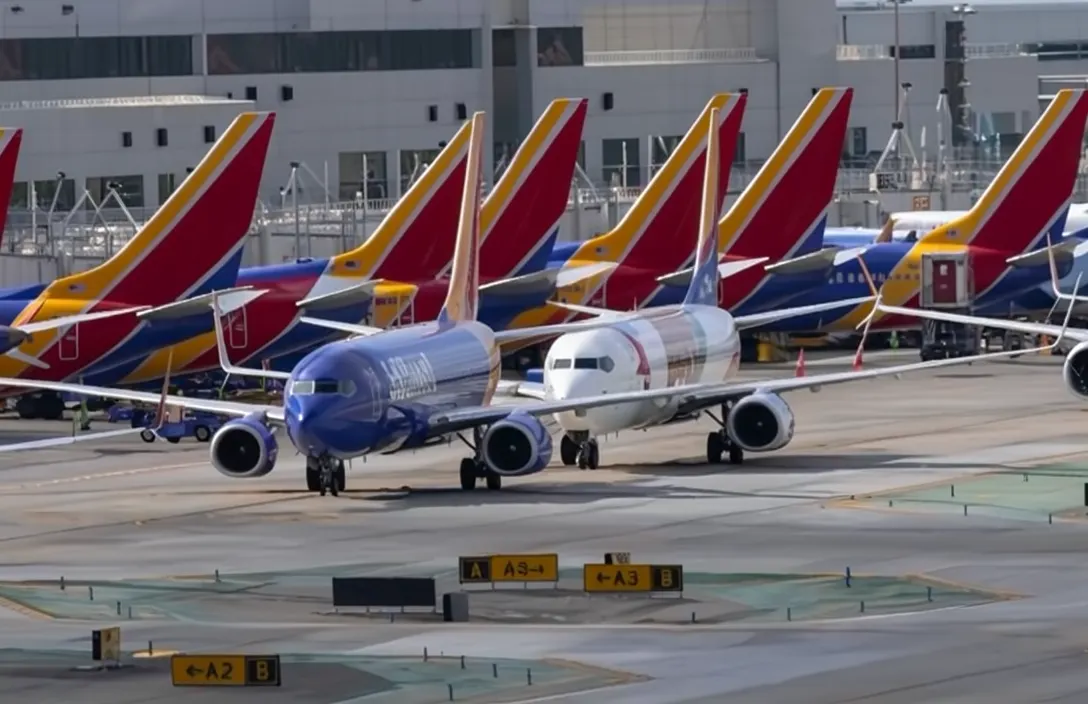
The grounding of thousands of flights on Nov. 13 led to a round of partisan finger-pointing over who is to blame for the current state of the nation’s aging air traffic control system. President Donald Trump blamed the Biden administration for worsening an already flawed system, while Democrats in Congress questioned why Transportation Secretary Sean Duffy’s department has only spent a portion of a $12.5 billion appropriation received in 2025. The Department of Transportation attributed the ground stop to a technical issue involving a new router installed by a contractor as part of the FAA’s efforts to replace old copper wiring with fiber-optic cable (Source ID: 1). [1]
Experts and former FAA officials have emphasized that the challenges facing the air traffic control system are not new and are not solely the result of underfunding. A former FAA official and outside experts told the Washington Post that the delays in modernizing the system have spanned decades and multiple administrations. Lance Sherry, director of the Center for Air Transportation Systems Research at George Mason University, noted that the lack of attention to basic upkeep has contributed to the current crisis, comparing it to ignoring a check-engine light until a car breaks down (Source ID: 1). [1]
Efforts to modernize the air traffic control system date back to the 1980s, when the federal government contracted with IBM to implement the Advanced Automation System. The FAA scrapped or scaled back much of the project in 1994 after years of delays and cost overruns. In 2003, the FAA launched the NextGen project, which aimed to modernize the system by 2025. However, by the end of 2024, the FAA had achieved only about 16% of NextGen’s expected benefits, according to a report from the Department of Transportation’s inspector general (Source ID: 1). [1]
Under the Biden administration, the 2021 Infrastructure Investment and Jobs Act allocated $5 billion for air traffic control improvements, including replacing or upgrading towers and hiring more air traffic controllers. However, John Strong, a professor and aviation-safety expert, noted that the failure of modernization predates the Biden administration and that the funding targeted immediate problems like staffing shortages and equipment breakdowns rather than a comprehensive overhaul (Source ID: 1). [1]
Advertisement
The FAA’s modernization efforts have spanned multiple decades and administrations, with roots dating back to the 1980s when the federal government partnered with IBM on the Advanced Automation System project. Despite initial ambitions, the project was largely scrapped in 1994 due to delays and cost overruns, according to the General Accounting Office. In 2003, the FAA launched the NextGen initiative, aiming to modernize air traffic control by 2025. However, by the end of 2024, only 16% of the expected benefits had been achieved, as reported by the Department of Transportation’s inspector general. This highlights the persistent challenges in implementing large-scale infrastructure upgrades, which have been a recurring issue across multiple presidential administrations. [1]
The One Big Beautiful Bill Act, signed into law by President Trump in July 2025, allocated $12.5 billion for modernizing the air traffic control system. This funding, which lasts through the 2029 fiscal year, was described by Transportation Secretary Sean Duffy as a “down payment” on what he estimated would be a $31.5 billion project. Of the $12.5 billion, $9 billion was designated specifically for telecommunications upgrades, radar systems, and other air traffic control infrastructure. As of early 2026, the Department of Transportation had obligated 48% of the $4.8 billion allocated for telecommunications upgrades, with the replacement of copper wiring with fiber-optic cable reaching 70% completion. [1]
The nationwide ground stop on November 13, 2026, was attributed to a technical issue involving a new router installed at a communications site as part of the FAA’s efforts to replace outdated copper wiring with fiber-optic cable. This incident occurred amid ongoing modernization efforts, which have faced criticism for slow implementation and lack of planning. Experts have noted that the FAA’s struggles to modernize the air traffic control system are not solely due to funding shortfalls but also stem from decades of delays, poor planning, and an overreliance on outdated infrastructure. The incident highlighted the risks of replacing aging systems without sufficient redundancies or planning. [1]
Despite the $12.5 billion in funding provided through the One Big Beautiful Bill Act, the Department of Transportation has spent only a fraction of that amount as of early 2026. As of the latest update, only 48% of the $4.8 billion allocated for telecommunications upgrades had been obligated, and 34% of the $3.5 billion allocated for radar and surveillance systems had been committed. Additionally, just 6% of the $3.4 billion designated for facility construction and consolidation had been obligated. Transportation Secretary Duffy has called for an additional $50 billion in funding, but this request has faced skepticism from lawmakers in both parties, who question the administration’s ability to effectively utilize existing funds. [1]
Advertisement
The 2021 Infrastructure Investment and Jobs Act allocated $5 billion for air traffic control improvements, including the replacement or upgrading of air traffic control towers, power and communications systems, and hiring more air traffic controllers. However, aviation-safety expert John Strong noted that these efforts were largely focused on addressing immediate problems like staffing shortages and equipment failures, rather than fully modernizing the system. Strong emphasized that the failure of air traffic control modernization predates the Biden administration and that the funding provided under the Infrastructure Investment and Jobs Act was inadequate in both scope and long-term planning. [1]
Sources
Prepared with AI assistance from the cited sources.
The Cali Reporter newsletter
The stories worth your time.
California, the country, and what comes next. Join our free newsletter for reporting that keeps you informed.
More in Explainers
- NATO Confronts Escalating Russian Airspace Violations
NATO has faced a sharp increase in Russian airspace violations, with incidents rising sharply in 2025 and continuing into 2026, according to a systematic review of data and events.
- Target-Date Funds and Market Volatility in Retirement Savings
Market fluctuations, particularly in tech stocks like Nvidia, are prompting concerns about the impact on retirement savings held in target-date funds. These funds automatically adjust their asset allocation as…
- Understanding Polyglotism: What It Really Means to Speak Multiple Languages
The term 'polyglot' is often used to describe individuals who speak multiple languages, but determining the exact criteria for such a label remains a complex and debated topic. This section explores historical and…