F1 Sponsorship Market Reaches $3 Billion Amid Rising ROI Concerns
As Formula 1's sponsorship market expands to $3 billion, brands face challenges in proving their return on investment amidst a crowded field of partners and logos.

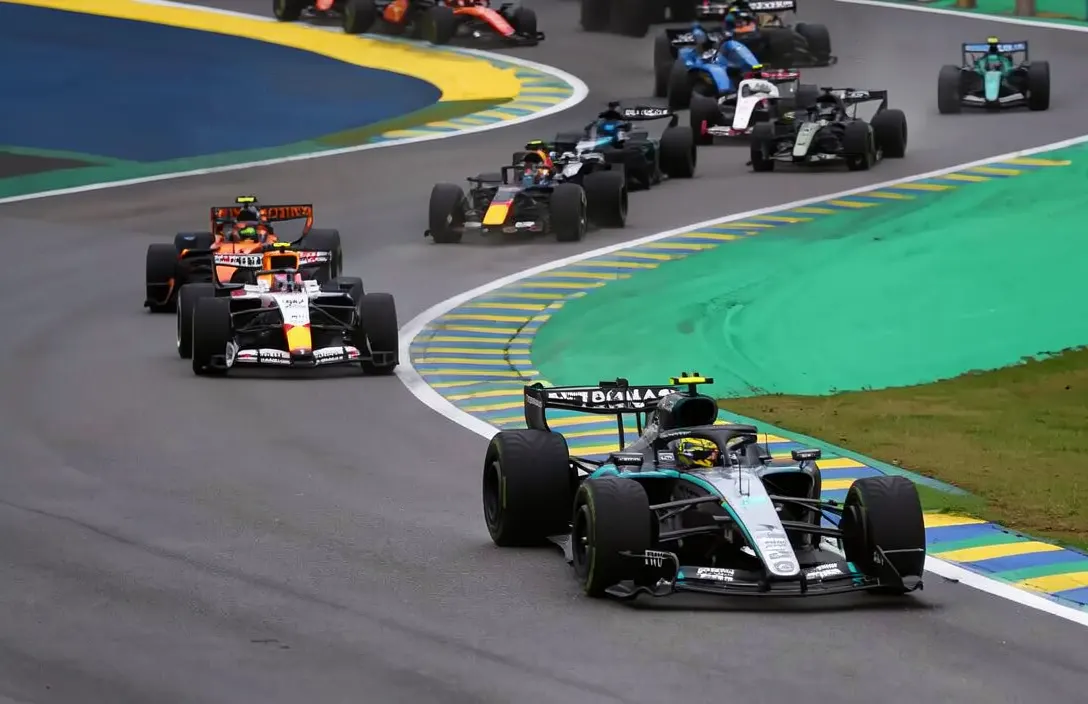
Formula 1's sponsorship market has reached a forecasted value of $3 billion in 2026, reflecting a 15% increase from the previous season and a 66% rise since 2022, according to Ampere Analysis. This growth has led to over 400 sponsorship partners, with teams averaging 34 sponsors each, as noted in a Business Insider article. The average F1 sponsorship deal is valued at $8.1 million, which is nearly four times the average NBA or NFL deal, as per the same source. [1]
Marketers are increasingly scrutinizing the value of F1 sponsorships, with some expressing concerns about overpayment and the clutter of logos on the track. Qualcomm's CMO, Don McGuire, highlighted the issue of brands overpaying for sponsorships and the resulting messy environment for marketers, as reported in the Business Insider article. He emphasized the importance of structuring deals around brand objectives rather than exposure promises. [1]
The challenges of standing out in F1 are compounded by the difficulty of measuring return on investment, particularly with the shift of F1 content to Apple TV, which is outside the Nielsen ratings system. McGuire noted that the old AVE (advertising-value equivalency) equation has been 'completely upended' in the US, as per the Business Insider article. This shift has made it more difficult for brands to assess the true value of their F1 sponsorships. [1]
Formula 1's sponsorship market has reached a forecasted value of $3 billion in 2026, reflecting a 15% increase from the previous season and a 66% rise since 2022, according to Ampere Analysis. The motorsport now has more than 400 sponsorship partners, with teams averaging 34 apiece. At $8.1 million, the average F1 deal is nearly four times the average NBA ($2.18 million) or NFL deal ($2.13 million), per Ampere's data (Source ID: 1). [1]
Advertisement
Marketers are increasingly scrutinizing the value of F1 sponsorships, with some expressing concerns about overpayment and the clutter of logos on the track. Qualcomm CMO Don McGuire stated that he has seen "crazy overpaying for sponsorships" in areas like Formula 1, which creates an environment that is "messy" for other brands. The challenge for F1 sponsors is to stand out in a grid packed nose-to-tail with logos (Source ID: 1). [1]
Measuring return on investment in F1 has become more complex, particularly with the shift of F1 content to Apple TV, which is outside the Nielsen ratings system. McGuire noted that the old AVE (advertising-value equivalency) equation has been "completely upended" in the US, where F1 has moved to Apple TV. Extracting value from a major F1 outlay comes down to contract negotiation: structuring deals around a brand's ultimate objectives, rather than promises of exposure (Source ID: 1). [1]
Formula 1's sponsorship market has reached a forecasted value of $3 billion in 2026, according to Ampere Analysis, marking a 15% increase from the previous season and a 66% rise since 2022. This growth has led to a surge in the number of sponsors, with over 400 sponsorship partners now in the sport, and teams averaging 34 sponsors each. However, this increase has also raised concerns among marketers about the value of F1 sponsorships, with some expressing worries about overpayment and the challenge of standing out in a crowded field (source ID: 1). [1]
The difficulty of measuring return on investment (ROI) has become a pressing issue for F1 sponsors, particularly with the shift of F1 content to Apple TV, which is outside the Nielsen ratings system. This move has complicated the traditional AVE (advertising-value equivalency) equation that marketers have relied on, making it harder to quantify the exposure and impact of F1 sponsorships. Qualcomm CMO Don McGuire emphasized that marketers must now focus on structuring deals around their brand's ultimate objectives rather than promises of exposure (source ID: 1). [1]
Advertisement
Despite these challenges, Formula 1 continues to attract brands due to its large global fan base, which reached 827 million in 2025, and its appeal to younger and more diverse audiences. F1's extended calendar and global reach make it an attractive platform for year-round marketing. Brands that can demonstrate how their technology or products contribute to success on the track tend to achieve better results from their F1 sponsorships, according to industry experts (source ID: 1). [1]
Formula 1's sponsorship market is forecast to reach $3 billion in 2026, representing a 15% increase from the previous season and a 66% rise since 2022, according to Ampere Analysis. This growth is evident in the number of sponsorship partners, which now exceeds 400, with teams averaging 34 sponsors each. The average F1 sponsorship deal is valued at $8.1 million, significantly higher than the average NBA or NFL deal. However, this increase in sponsorship activity has raised concerns among marketers about overpayment and the clutter of logos on the track, which may hinder brand visibility (source ID: 1). [1]
Measuring return on investment (ROI) in Formula 1 has become increasingly complex, particularly with the shift of F1 content to Apple TV, which is not covered by the Nielsen ratings system. This change has disrupted traditional methods of evaluating the effectiveness of sponsorships, making it harder for brands to assess the value of their investments. Qualcomm's CMO, Don McGuire, highlighted the challenges of relying on outdated AVE (advertising-value equivalency) metrics, which have been rendered less relevant by the move to Apple TV (source ID: 1). [1]
Despite these challenges, Formula 1 continues to attract brands due to its large global fan base, which reached 827 million in 2025. The sport's appeal to younger and more diverse audiences, as well as its year-round calendar, makes it an attractive platform for marketing. Brands that can demonstrate how their technology or products contribute to success on the track, such as Oracle with Red Bull and Google with McLaren, tend to achieve greater traction from their sponsorships (source ID: 1). [1]
Advertisement
The Cali Reporter newsletter
The stories worth your time.
California, the country, and what comes next. Join our free newsletter for reporting that keeps you informed.
More in Business
- Kirkland Signature Meals: A Family's Take on Taste and Value
A family's review of Kirkland Signature meals highlights a mix of flavors, textures, and value at Costco, with some dishes standing out while others fall short of expectations.
- Ex-OpenAI Engineer Donates Equity to AI Safety
Jacob Coxon, a former engineer at OpenAI and Anthropic, has pledged to donate his equity in OpenAI to AI safety research, citing concerns over the risks of uncontrolled AI development.
- Scottish Hacker Sentenced for Crypto Theft Scheme
A Scottish hacker has been sentenced to six years in U.S. federal prison for orchestrating a large-scale cryptocurrency theft operation, according to a report from the U.S. Attorney’s Office for the Central District of…