Europe and the U.S. Invest in Photonic Chip Manufacturing
Europe and the United States are both investing heavily in the development of photonic chips, a technology that could revolutionize data processing and AI infrastructure. These efforts are supported by significant…

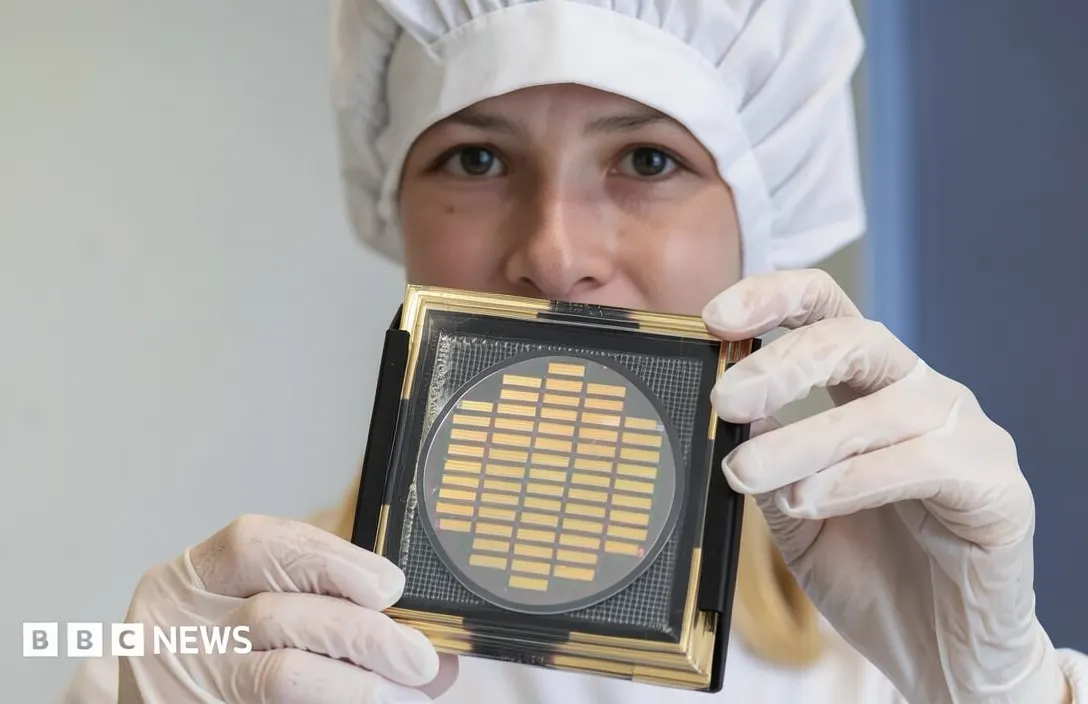

Europe is investing €400 million in a project called PIX Europe, with the goal of making the continent a global leader in photonic integrated chips. This initiative is backed by the European Union and the Dutch government, aiming to reduce reliance on chip manufacturing in the U.S. and China. The project includes the construction of a 10,000 sq m factory in Eindhoven, Netherlands, which is expected to open in 2030 and will focus on producing six-inch indium phosphide wafers (source ID 1). [1]
In the United States, Coherent, a photonics company, has announced the expansion of its manufacturing facility in Sherman, Texas, which will include the world's first and largest volume-production six-inch indium phosphide manufacturing platform. This expansion is supported by a $50 million grant under the U.S. CHIPS Act and is part of a broader effort to bring advanced semiconductor manufacturing back to the U.S. (source ID 2). [2]
Both Europe and the U.S. recognize the strategic importance of photonic chips in advancing AI and data infrastructure. In Europe, the Eindhoven project will provide a pilot production line open to businesses across Europe and beyond, while in the U.S., Coherent's expansion in Sherman, Texas, is part of a growing trend of domestic manufacturing in the semiconductor industry. These developments highlight the global race to establish leadership in photonic chip technology (source ID 1). [1]
Europe is investing €400 million in the PIX Europe project, aiming to make the continent a global leader in photonic integrated chips. According to Ton van Mol of the Dutch research institute TNO, photonic chips use light instead of electricity, making them faster, more energy-efficient, and generating less heat than traditional computer chips (source ID 1). The European Union and the Dutch government are backing the idea with millions of euros, hoping to accelerate the development of photonic chips similar to the advancements seen in electrical chips since the 1970s (source ID 1). [1]
Advertisement
In the United States, Coherent, a photonics company, has announced the expansion of its manufacturing facility in Sherman, Texas, which will include the world's first and largest volume-production six-inch indium phosphide manufacturing platform. This expansion is supported by a $50 million CHIPS Act grant and is part of a broader effort to bring advanced semiconductor manufacturing back to the U.S. (source ID 2). The facility will scale production of indium phosphide wafers, which are essential for high-speed networking and optical interconnects in modern AI infrastructure (source ID 2). [2]
Both Europe and the United States recognize the strategic importance of photonic chips in the future of AI and data communication. In Europe, the Eindhoven project, supported by ASML, aims to establish a pilot production line for six-inch indium phosphide wafers, which will be open to businesses across Europe and beyond (source ID 1). Similarly, in the U.S., Coherent's expansion in Sherman, Texas, is seen as a critical step in building a domestic supply chain for compound semiconductors, which are vital for AI infrastructure (source ID 2). [1] [2]
Europe is investing €400 million in the PIX Europe project, aiming to make the continent a global leader in photonic integrated chips. This initiative is supported by the European Union and the Dutch government, who recognize the strategic importance of photonic chips in the future of AI and data communication (Source ID 1). The project includes the construction of a 10,000 sq m factory in Eindhoven, Netherlands, which is expected to fully open in 2030 and will be a major step forward for photonics in Europe (Source ID 1). [1]
In the United States, Coherent, a photonics company, has announced the expansion of its manufacturing facility in Sherman, Texas, which will include the world's first and largest volume-production six-inch indium phosphide manufacturing platform. This expansion is backed by chip manufacturing giant Nvidia and $50 million in public funds under the U.S. Chips Act (Source ID 2). The facility will scale production of InP wafers, which are essential for high-speed networking and optical interconnects in modern AI infrastructure (Source ID 2). [2]
Advertisement
Both Europe and the United States recognize the strategic importance of photonic chips in the future of AI and data communication. The European Union's investment in the PIX Europe project is part of a broader strategy to establish in-house manufacturing capabilities, reducing dependence on production in the U.S. and China. Similarly, the U.S. is leveraging public and private funding to advance its own photonic chip manufacturing capabilities, as seen in the expansion of Coherent's facility in Sherman, Texas (Sources ID 1 and 2). [1] [2]
Sources
Prepared with AI assistance from the cited sources.
The Cali Reporter newsletter
The stories worth your time.
California, the country, and what comes next. Join our free newsletter for reporting that keeps you informed.
More in World
- Irish Man Charged with Destroying U.S. Military Aircraft at Shannon Airport
A man from Ireland has been indicted for allegedly destroying a U.S. military aircraft at Shannon Airport, according to prosecutors in New York.
- Trump's APEC Summit and Strategic Meetings
President Donald Trump is set to attend the APEC summit in Shenzhen, China, where he is expected to meet with Chinese President Xi Jinping and participate in a trilateral meeting with Russian President Vladimir Putin,…
- Early Snowfall in Northern England and Scotland
Snowfall occurred in parts of Northern England and southern Scotland, with subsequent melting due to milder temperatures, according to the BBC.