ECHR Orders Turkey to Release Jailed Lawmaker Can Atalay
The European Court of Human Rights has ruled that Turkey must release jailed lawmaker Can Atalay and pay him compensation, citing concerns over political pluralism and the silencing of dissent.

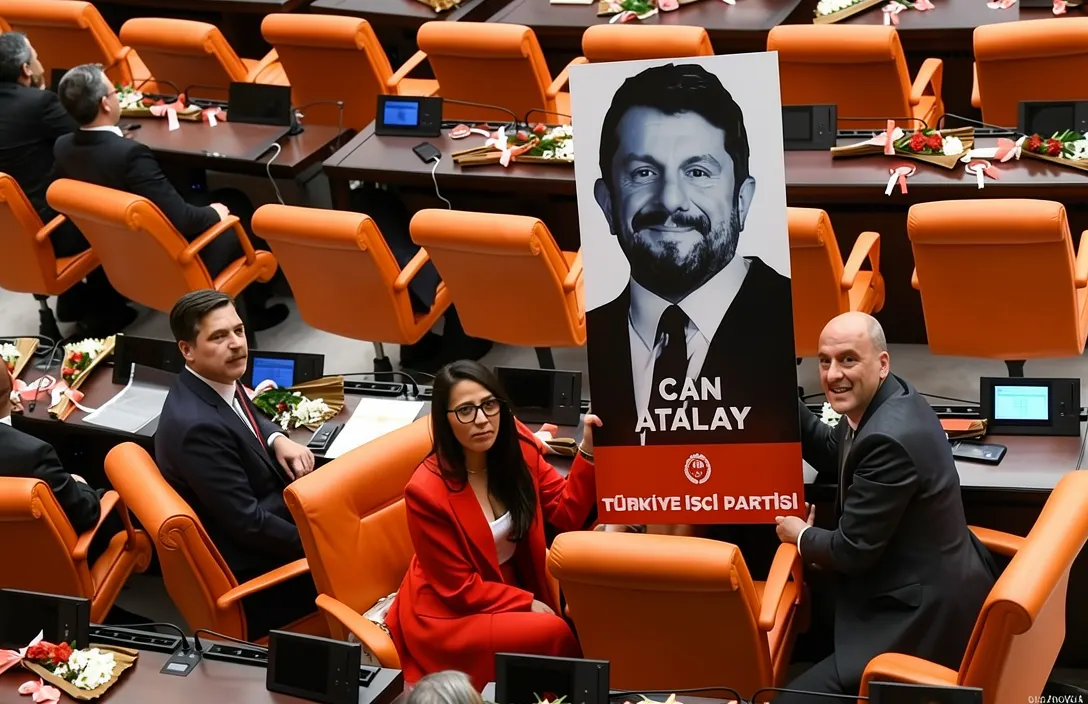
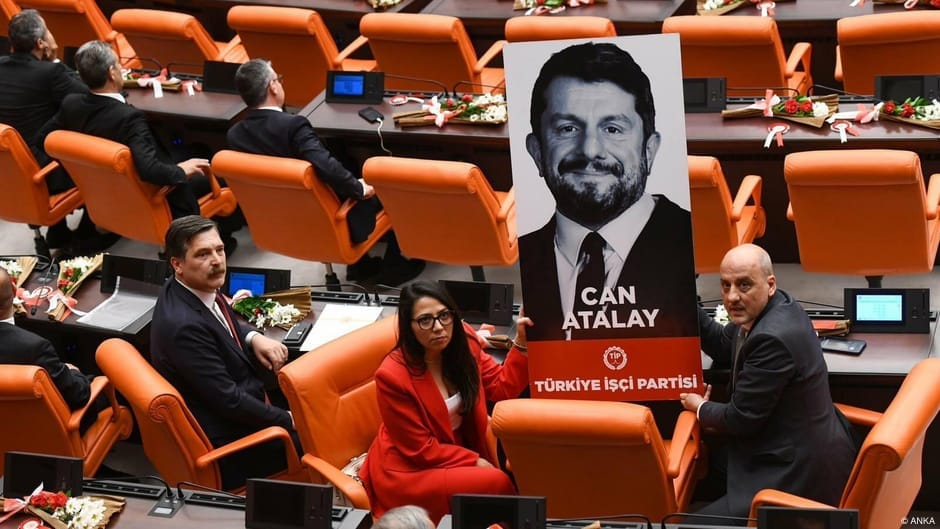
The European Court of Human Rights (ECHR) ruled against Turkey over the detention of human rights lawyer and elected lawmaker Can Atalay, ordering his release and requiring the country to pay him €32,500 in compensation (source ID: 1). The ECHR published its decision, stating that Atalay's continued detention was intended to silence him and undermine political pluralism in Turkey. The court emphasized that his case should be considered in the broader context of the detention of political opponents, human rights activists, and journalists in the country. [1]
Atalay was elected to the Turkish parliament in 2023 but was denied release despite multiple rulings by the Constitutional Court, which later overturned the revocation of his parliamentary status (source ID: 1). His parliamentary mandate was revoked in 2024, but the Constitutional Court later reversed that decision. President Recep Tayyip Erdogan's party reportedly prevented the opposition from formally reading the court's decision in parliament, although an opposition lawmaker eventually did so a year later. [1]
Atalay, a prominent human rights lawyer, has represented victims in numerous social and political cases in Turkey and was among the leading voices in the 2013 Gezi protests, which the government labeled an attempted coup (source ID: 1). He was sentenced to 18 years in prison in April 2022 for "aiding and abetting an attempted coup." Despite the ECHR's ruling, Atalay remains in Silivri prison, and his release has not yet been realized. [1]
The European Court of Human Rights (ECHR) ruled against Turkey over the detention of human rights lawyer and elected lawmaker Can Atalay, ordering his release and requiring the country to pay him €32,500 in compensation (source ID: 1). The ECHR published its decision, stating that Turkey must release Atalay and allow him to take up his seat in the Turkish parliament. The court ruled that his continued detention had been intended to silence him and undermine political pluralism (source ID: 1). [1]
Advertisement
Atalay, a prominent human rights lawyer, has represented victims in numerous social and political cases in Turkey and was among the leading voices in the 2013 Gezi protests, which the government labeled (source ID: 1). Because of his involvement in the protests, Atalay, along with seven others, was sentenced to 18 years in prison in April 2022 for "aiding and abetting an attempted coup." Continuing his struggle from the infamous Silivri prison, Atalay ran as a candidate for the Workers' Party of Turkey (TIP) in the 2023 parliamentary elections (source ID: 1). [1]
A candidate for the earthquake-hit province of Hatay, he won his seat but was denied release despite multiple rulings by the Constitutional Court, Turkey's top court. His parliamentary status was revoked in 2024, a decision the Constitutional Court later overturned (source ID: 1). President Recep Tayyip Erdogan's party stopped the opposition from formally reading the decision in parliament. Although a year later an opposition lawmaker read the decision in parliament, Atalay remains in jail (source ID: 1). [1]
The European Court of Human Rights (ECHR) ruled against Turkey over the detention of human rights lawyer and elected lawmaker Can Atalay, ordering his release and requiring the country to pay him €32,500 in compensation (source ID: 1). The ECHR published its decision, stating that Turkey must release Atalay and allow him to take up his seat in the Turkish parliament. The court ruled that his continued detention had been intended to silence him and undermine political pluralism (source ID: 1). [1]
Atalay, a prominent human rights lawyer, has represented victims in numerous social and political cases in Turkey and was among the leading voices in the 2013 Gezi protests, which the government labeled (source ID: 1). As a lawyer, Atalay represented victims in numerous social and political cases in Turkey, as well as in freedom of speech cases involving journalists and writers (source ID: 1). [1]
Advertisement
A candidate for the earthquake-hit province of Hatay, he won his seat but was denied release despite multiple rulings by the Constitutional Court, Turkey's top court. His parliamentary status was revoked in 2024, a decision the Constitutional Court later overturned (source ID: 1). President Recep Tayyip Erdogan's party stopped the opposition from formally reading the decision in parliament (source ID: 1). [1]
The European Court of Human Rights (ECHR) ruled against Turkey over the detention of human rights lawyer and elected lawmaker Can Atalay, ordering his release and requiring the country to pay him €32,500 in compensation (source ID: 1). The court emphasized that Atalay's continued detention was intended to silence him and undermine political pluralism. The ruling highlights concerns about the broader pattern of detaining political opponents, human rights activists, and journalists in Turkey. [1]
Atalay, a prominent human rights lawyer, has represented victims in numerous social and political cases in Turkey and was among the leading voices in the 2013 Gezi protests, which the government labeled an attempted coup (source ID: 1). As a lawyer, he has been involved in freedom of speech cases involving journalists and writers, further establishing his role as a defender of civil liberties in the country. [1]
A candidate for the earthquake-hit province of Hatay, he won his seat but was denied release despite multiple rulings by the Constitutional Court, Turkey's top court (source ID: 1). His parliamentary status was revoked in 2024, a decision the Constitutional Court later overturned. President Recep Tayyip Erdogan's party stopped the opposition from formally reading the decision in parliament, though an opposition lawmaker later read it in parliament. [1]
Advertisement
The Cali Reporter newsletter
The stories worth your time.
California, the country, and what comes next. Join our free newsletter for reporting that keeps you informed.
More in World
- Irish Man Charged with Destroying U.S. Military Aircraft at Shannon Airport
A man from Ireland has been indicted for allegedly destroying a U.S. military aircraft at Shannon Airport, according to prosecutors in New York.
- Trump's APEC Summit and Strategic Meetings
President Donald Trump is set to attend the APEC summit in Shenzhen, China, where he is expected to meet with Chinese President Xi Jinping and participate in a trilateral meeting with Russian President Vladimir Putin,…
- Early Snowfall in Northern England and Scotland
Snowfall occurred in parts of Northern England and southern Scotland, with subsequent melting due to milder temperatures, according to the BBC.