Eastern DRC Violence Continues Despite Diplomatic Efforts
Residents in eastern Democratic Republic of the Congo face ongoing violence as diplomatic initiatives struggle to bring lasting peace to the region.

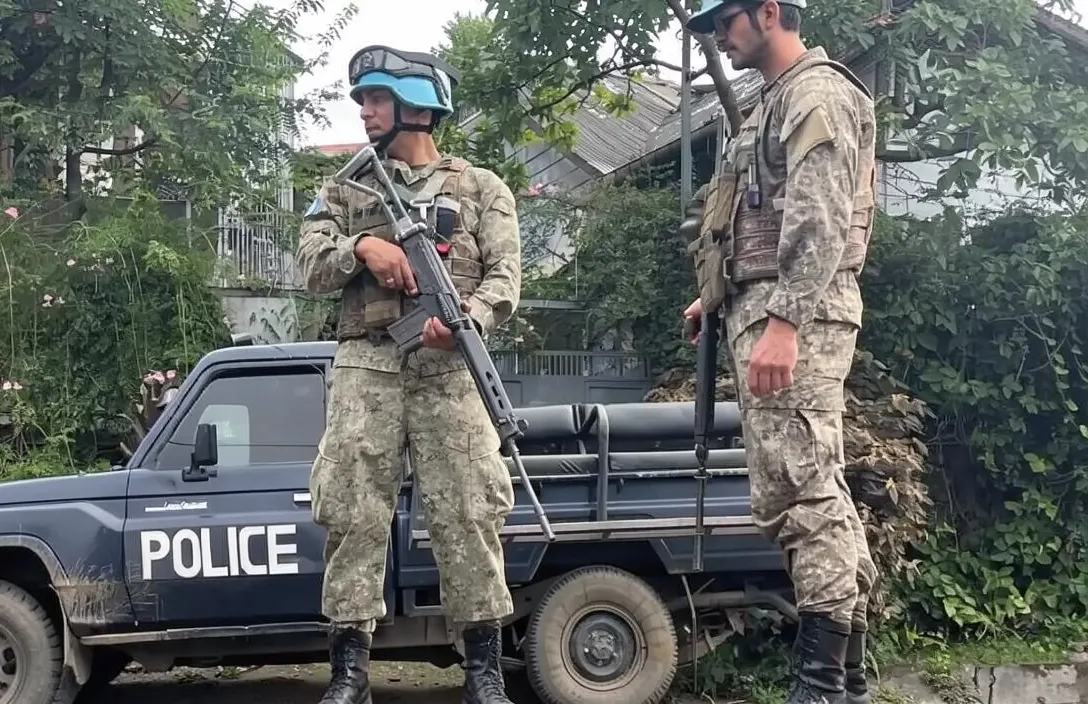

Residents of eastern Democratic Republic of the Congo (DRC) continue to experience violence as fighting between the Congolese army and the Front for the Refoundation of the Nation (FRN) persists despite international efforts to secure a settlement. Civilians in North and South Kivu provinces remain exposed to attacks, displacement, and the disruption of essential services. The latest escalation has raised questions about whether negotiations in Washington and Doha can deliver security on the ground, and whether the separate diplomatic efforts are sufficiently coordinated to make progress (Al Jazeera). [1]
The Washington Accords, signed in December 2025, seek to address tensions between the DRC and neighbouring Rwanda, while the Doha process aims to resolve the conflict between the Congolese government and the Congo River Alliance (AFC), including the Rwanda-backed M23 armed group. However, an agreement between Kinshasa and Kigali cannot, on its own, resolve the confrontation between the Congolese government and armed groups operating inside the country. The Doha Framework for a Comprehensive Peace Agreement was signed in November 2025, but fighting has continued despite the August 2026 agreement on a road map to advance negotiations (Al Jazeera). [1]
The roots of the conflict stretch back decades, with the 1994 genocide in Rwanda and the subsequent presence of armed groups linked to the genocide creating persistent tensions between Kinshasa and Kigali. The First and Second Congo Wars, which began in 1996 and 1998, drew in several neighbouring countries, and although the conflicts formally ended, disputes over land, political representation, citizenship, and control of natural resources have continued to drive violence in the east (Al Jazeera). [1]
The diplomatic landscape has become more complicated with the establishment of the FRN under Kabila’s leadership, which claims to have succeeded the AFC and assumed its commitments. However, the precise relationship between the new coalition and the earlier AFC/M23 structure remains unclear. Fighting in early November underscored the fragility of the diplomatic process, with FRN fighters advancing through Kahuzi-Biega National Park and along National Road 3, capturing several localities before the Congolese army reportedly halted the advance (Al Jazeera). [1]
Advertisement
Residents of eastern Democratic Republic of the Congo (DRC) continue to experience violence as fighting between the Congolese army and the Front for the Refoundation of the Nation (FRN) persists despite international efforts to secure a settlement. In North and South Kivu provinces, the conflict has led to displacement, attacks on civilians, and the disruption of essential services [Al Jazeera]. [1]
The Washington Accords, signed in December 2025, aim to address tensions between the DRC and neighbouring Rwanda, while the Doha process seeks to resolve the conflict between the Congolese government and the Congo River Alliance (AFC), including the Rwanda-backed M23 armed group. However, these diplomatic efforts have not translated into a reduction in violence on the ground [Al Jazeera]. [1]
Fighting has continued despite the Doha Framework for a Comprehensive Peace Agreement signed in November 2025 and a subsequent road map agreed upon in August 2026. An offensive in early November highlighted the fragility of the diplomatic process, with FRN fighters advancing through Kahuzi-Biega National Park and along National Road 3 [Al Jazeera]. [1]
Humanitarian organizations have expressed concerns over the impact of the conflict on essential services, with Doctors Without Borders reducing its presence in the Bunyakiri health zone due to deteriorating security. Meanwhile, the Congolese armed forces have accused Rwanda of supporting the FRN, a claim Rwanda denies [Al Jazeera]. [1]
Advertisement
Residents of eastern Democratic Republic of the Congo (DRC) continue to experience violence as fighting between the Congolese army and the Front for the Refoundation of the Nation (FRN) persists despite international efforts to secure a settlement [Al Jazeera]. In North and South Kivu provinces, civilians remain exposed to attacks, displacement, and the disruption of essential services. The latest escalation has raised questions about whether negotiations in Washington and Doha can deliver security on the ground, and whether the separate diplomatic efforts are sufficiently coordinated to make progress. 'One meeting follows another, and they all end up being much the same,' said Blaise Chasumba, a resident of Bukavu, the provincial capital of South Kivu. 'But the real peace that the warring parties are dangling before us is far from becoming a reality on the ground. We continue to lose our loved ones and our homes.' [1]
The Washington Accords, signed in December 2025, seek to address tensions between the DRC and neighbouring Rwanda, while the Doha process aims to resolve the conflict between the Congolese government and the Congo River Alliance (AFC), including the Rwanda-backed M23 armed group [Al Jazeera]. The distinction is important: an agreement between Kinshasa and Kigali cannot, on its own, resolve the confrontation between the Congolese government and armed groups operating inside the country. The Doha Framework for a Comprehensive Peace Agreement was signed by the DRC government, the AFC, and M23 on November 15, 2025. In August 2026, representatives of the two sides, alongside Qatar, the United States, Togo, the African Union Commission, and Switzerland, agreed on a road map to advance negotiations and establish a mechanism to review implementation. Fighting has nevertheless continued. [1]
The roots of the conflict stretch back decades, with the 1994 genocide in neighbouring Rwanda and the subsequent presence of armed groups linked to the genocide creating conditions for successive wars [Al Jazeera]. The First and Second Congo Wars, which began in 1996 and 1998, drew in several neighbouring countries. Although the conflicts formally ended, disputes over land, political representation, citizenship, and control of natural resources continued to drive violence in the east. M23 emerged in 2012 after a mutiny by former members of the National Congress for the Defence of the People (CNDP). The group had been integrated into the Congolese army under a March 23, 2009 peace agreement, which its leaders later accused the government of failing to honour. [1]
Residents of eastern Democratic Republic of the Congo (DRC) continue to experience violence as fighting between the Congolese army and the Front for the Refoundation of the Nation (FRN) persists despite international efforts to secure a settlement [Al Jazeera]. In North and South Kivu provinces, fighting has continued despite the Washington Accords and the Doha Framework for a Comprehensive Peace Agreement. Civilians remain exposed to attacks, displacement, and the disruption of essential services. The latest escalation has raised questions about whether negotiations in Washington and Doha can deliver security on the ground, and whether the separate diplomatic efforts are sufficiently coordinated to make progress. [1]
Advertisement
The Washington Accords, signed in December 2025, seek to address tensions between the DRC and neighbouring Rwanda, while the Doha process aims to resolve the conflict between the Congolese government and the Congo River Alliance (AFC), including the Rwanda-backed M23 armed group [Al Jazeera]. The distinction is important: an agreement between Kinshasa and Kigali cannot, on its own, resolve the confrontation between the Congolese government and armed groups operating inside the country. The Doha Framework for a Comprehensive Peace Agreement was signed by the DRC government, the AFC, and M23 on November 15, 2025. In August 2026, representatives of the two sides, alongside Qatar, the United States, Togo, the African Union Commission, and Switzerland, agreed on a road map to advance negotiations and establish a mechanism to review implementation. Fighting has nevertheless continued. [1]
Residents of South Kivu say repeated peace negotiations have done little to ease the violence affecting their communities [Al Jazeera]. The African Union (AU) has acknowledged the gap between diplomatic commitments and conditions on the ground. In a communique issued after a Peace and Security Council meeting on October 26, it said implementation of commitments under the Washington and Doha processes remained limited. It called for better coordination between the initiatives and urged inclusive, nationally owned dialogue. The AU’s assessment points to a central weakness in the peace efforts: Agreements and diplomatic meetings have not translated into a sustained improvement in security. [1]
Sources
Prepared with AI assistance from the cited sources.
The Cali Reporter newsletter
The stories worth your time.
California, the country, and what comes next. Join our free newsletter for reporting that keeps you informed.
More in World
- Irish Man Charged with Destroying U.S. Military Aircraft at Shannon Airport
A man from Ireland has been indicted for allegedly destroying a U.S. military aircraft at Shannon Airport, according to prosecutors in New York.
- Trump's APEC Summit and Strategic Meetings
President Donald Trump is set to attend the APEC summit in Shenzhen, China, where he is expected to meet with Chinese President Xi Jinping and participate in a trilateral meeting with Russian President Vladimir Putin,…
- Early Snowfall in Northern England and Scotland
Snowfall occurred in parts of Northern England and southern Scotland, with subsequent melting due to milder temperatures, according to the BBC.