Drug Safety Information Crosses Into AI Search, but Access Gaps Remain Measurable
A 338-homepage review found page-level performance and accessibility problems, while a reported Google ad test raises a separate question: whether risk context survives as drug information travels through AI-assisted search.

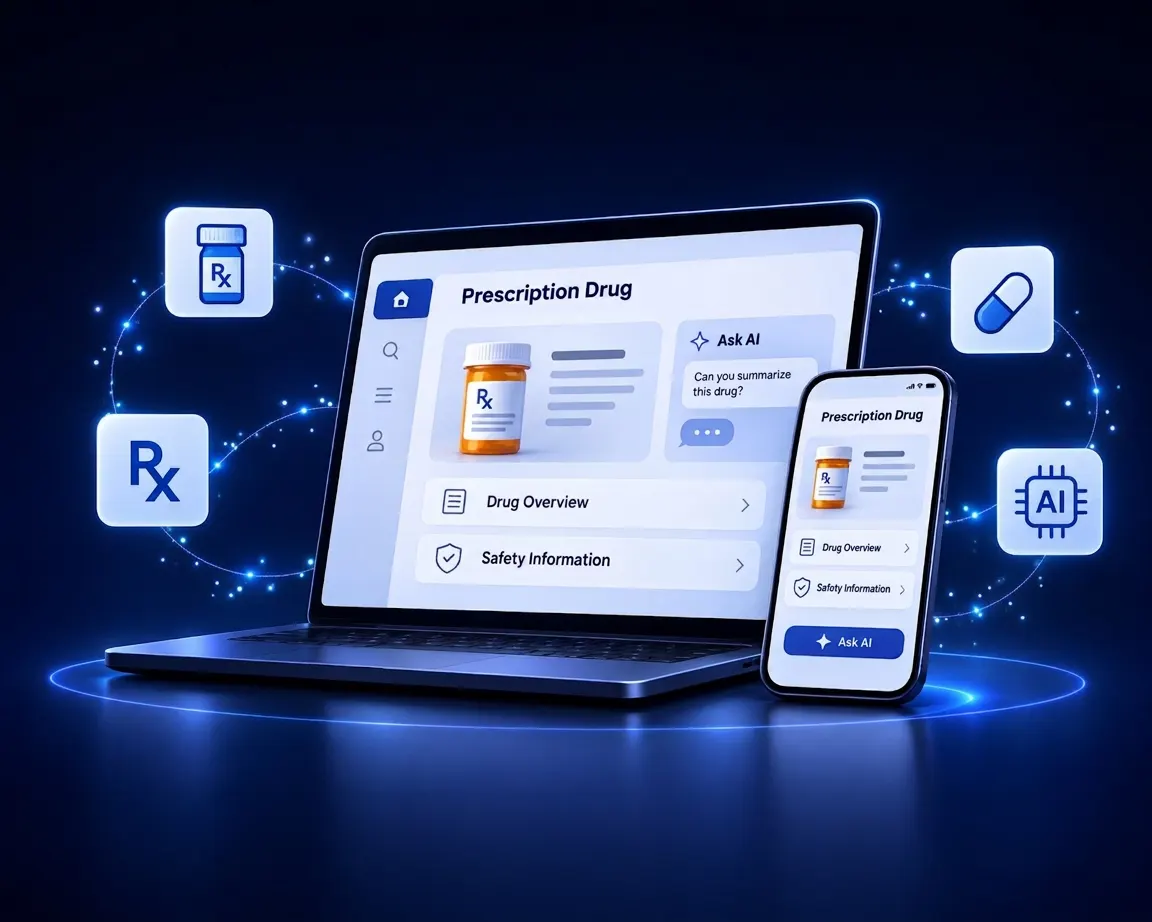

On Nov. 13, 2026, Medical Xpress published a Science X Dialog article by Max Shestov describing a cross-sectional evaluation of prescription drug brand websites. The study appeared in Universal Access in the Information Society in 2026 under DOI 10.1007/s10209-026-01394-9. It examined 338 official U.S. homepages for brand-name prescription drugs and assessed performance, accessibility, visual stability and readability. The same article reports a separate development: Adweek said in October 2026 that Google had begun testing paid promotions for prescription medicines inside AI Mode and AI Overviews in the United States. According to the article, a Google spokesperson confirmed that these are standard text or shopping ads shown in labeled sponsored sections and kept apart from AI-generated answers. [1]
The piece is a researcher account of a published cross-sectional study and a related industry development, not a regulatory inspection or a clinical trial. Shestov is identified as a Georgia Tech master's student in computer science and a technology lead whose work sits at the intersection of health care, technology and AI, with attention to human-computer interaction and digital tools used by patients. Those details help classify the article's scope and perspective. [1]
The article's argument is broader than the homepage audit. It contends that accurate safety language at the source is necessary but not sufficient, because the location and format of that language shape whether patients can use it. The concern becomes more acute, the article says, when patients turn to AI systems for medication answers and sometimes never reach the manufacturer's page. This is a researcher's framing of an information problem, not a measured finding about patient behavior. [1]
The article does not provide prevalence estimates for AI use in medication lookup, nor does it measure how often patients rely on AI summaries instead of manufacturer pages. That gap matters because the concern about AI-assisted search is forward-looking and conceptual in the supplied text, not a count of affected patients. [1]
Advertisement
The author explicitly limits the study's reach, noting that patient comprehension and FDA compliance were outside what was measured. The piece should therefore be read as a researcher commentary tied to a published study, not as an independent replication or an enforcement finding. [1]
The audit's descriptive figures are notable. The median mobile performance score was 56 out of 100. Automated checks against basic accessibility standards detected at least one issue on all but 2.7% of the homepages. Among pages with available real-user data, 20.4% showed poor visual stability, a technical condition in which content can move unexpectedly as a page loads. These are descriptive statistics from one cross-sectional snapshot, not relative risks and not estimates of clinical harm. The median is a central score, not a proportion. [1]
The article identifies the work as a cross-sectional evaluation. It reports page-level measurements at one point and does not describe an intervention or a before-after comparison. It therefore cannot show that a low score caused a patient to miss a warning, that any page violated FDA rules, or that the detected technical issues changed a medication decision. The 2.7% figure describes the pages themselves, not patients. The 20.4% figure applies only to the subset with real-user data, not to all 338 homepages. The median score describes the middle page, not the average. [1]
The author concludes that the findings point to technical obstacles that may impede reaching and using medication information. The article also proposes that repeatable measurements of this kind could help public health agencies spot digital barriers worth further investigation. That is a suggestion for future use, not a report of agency action. The article lists readability among the dimensions evaluated but does not give a readability result in the supplied text. [1]
Advertisement
The article reaches back to a 2017 study by FDA researchers for evidence that placement matters. That study found that where risk information sits on a drug website influences how much consumers recall, with fewer risks remembered when the material appeared on a separate page rather than the homepage. The finding supports treating placement as more than decoration. It does not establish how AI summaries will handle the same material, because the 2017 study predates the AI search arrangements described here. [1]
Current rules supply context but not a template. The article says FDA requires prescription drug promotion to present benefits and risks with fair balance, yet the agency does not prescribe one universal interface for important safety information, or ISI. ISI is essential for conveying drug risks, but long safety sections or panels that stay visible while scrolling can consume scarce screen room and complicate navigation, particularly on mobile devices. The article describes a genuine design tension among marketing, regulatory and technology teams. It does not show that one priority has prevailed. [1]
The distinction between accuracy and usability is central. The article notes that a warning can be factually correct and still be hard for a patient to use, and that what matters is not only the information but how and where people receive it. That claim is a rationale for studying delivery, not proof that any particular delivery method has failed patients. [1]
On a manufacturer's own site, the company controls the content and its presentation. In AI-assisted search, the article says, a patient may see a summary that draws on multiple sources through an interface outside the manufacturer's control. The reported ads are described as separate from AI answers, but both can occupy the same information experience. The article does not supply data on the accuracy of AI-generated drug summaries or on how often patients see them. [1]
Advertisement
The article's framing avoids a replacement story. It says the more important question is what happens across a wider system that includes patients, AI technologies, medical sources and advertising platforms, rather than whether AI will displace pharmaceutical websites. A company may review its safety information closely, yet the article says that does not guarantee an AI-generated explanation will keep the same details, context or balance between benefits and risks. Preservation is the open question, not a demonstrated failure. [1]
Several questions follow directly. Do AI systems retain essential safety information when they summarize? Do they distinguish medical evidence from commercial messages? Do they help patients make informed decisions? The article raises these as research questions. It does not answer them, and it does not report an audit of the Google ads or of AI answers. [1]
For patients, the practical implication is conditional. Technical barriers can make medication information harder to access and use, particularly when safety sections are long or mobile pages perform poorly. Patients who rely on AI summaries may miss the original safety details, but how often that happens, and whether it changes understanding, remains unknown. The evidence supports attention to access; it does not support a claim that patients are currently being misled. [1]
For companies, the article describes a balancing act. Marketing teams emphasize benefits, regulatory teams emphasize compliance, and technology and design teams must turn both into an interface that works for patients. The article says these priorities can be hard to reconcile and that presenting fair-balance information creates its own challenges. That is a description of product-design tension, not evidence of a regulatory violation. [1]
Advertisement
For regulators, the article offers a measurement proposal. It says repeatable evaluations could help public health agencies identify digital barriers that deserve further investigation. It reports no enforcement step, no new requirement and no agency finding. The proposal should be read as forward-looking. [1]
For researchers, the article calls for widening the lens. Checking accuracy at the original source remains important, but the article says researchers should also examine how information is presented, transformed and understood across different interfaces. It adds that ensuring access and comprehension wherever patients encounter drug information deserves attention equal to ensuring accuracy at the source. These are proposed directions, not completed evaluations. [1]
The open questions are substantial. It is not known from this article whether AI-generated summaries preserve ISI details, whether patients recognize labeled sponsored sections as advertising, or whether the presence of ads changes how people read AI answers. It is also not known whether the website issues detected by automated checks translate into comprehension problems, delayed access or different medication decisions. Nor does the article report results by drug class, company size or therapeutic area, or provide a longitudinal view of whether accessibility improves over time. [1]
What to watch is therefore a set of questions. Will independent researchers test AI drug answers for preservation of safety information and separation of commercial content? Will public health agencies use repeatable website measurements to identify barriers? Will companies revise how ISI appears on mobile homepages? Will the reported Google test expand, pause or change? These are open questions for follow-up reporting and study, not outcomes established by the available evidence. [1]
The bottom line is provisional. A cross-sectional audit found widespread detected accessibility and performance issues across official prescription drug brand homepages, and the article links that finding to a changing information environment in which AI search can sit between a manufacturer and a patient. The evidence supports concern about access and about whether safety context survives that journey. It does not establish patient harm, regulatory noncompliance or AI failure. [1]
Sources
Prepared with AI assistance from the cited sources.
The Cali Reporter newsletter
The stories worth your time.
California, the country, and what comes next. Join our free newsletter for reporting that keeps you informed.
More in Health & Medicine
- Brain Energy Mismatches in Schizophrenia
A new study explores the potential role of energy bottlenecks in brain cells in explaining fragmented experiences of time, space, and self in schizophrenia.
- Brazil Reports First Mpox Death in 2026
Brazil has recorded its first mpox-related death in 2026, but public health officials are not classifying the current surge in cases as an outbreak, according to the Fiocruz Institute.
- Personalized Therapies for IBD May Target Specific Harmful Gut Bacteria
A study led by Dr. Lukas Mager and Prof. Kathy McCoy has identified two gut bacteria that promote inflammation in inflammatory bowel disease, opening the door for personalized treatments.