

Do Birds Have Best Friends? New Study Proves They Trade Favors Like Humans
A 20-year look at African starlings reveals they form non-kin relationships.

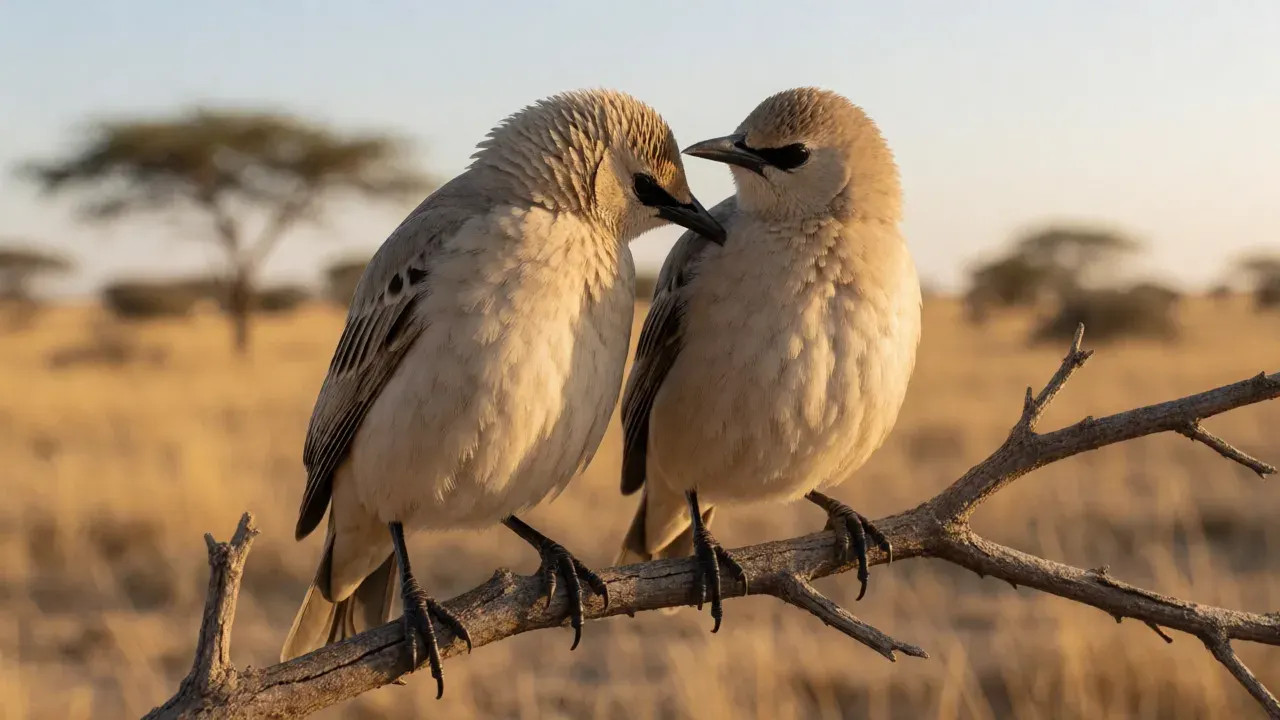
We all have that friend. The one who lends you cash when you're broke and listens to your problems at 3 AM. We call it friendship. We assume it is a uniquely human trait. But what if your buddy in the aviary is doing the exact same thing?
A study published this week in the journal Nature challenges the idea that only humans build these complex, non-kin relationships. Researchers led by Alexis Earl and Dustin Rubenstein tracked African starlings living in the harsh climate of east African savannahs for two decades. They found that these birds demonstrate "reciprocity." They help each other with the expectation that help will be returned eventually. This behavior mirrors the mutual support that sustains our longest-running human friendships.
Rubenstein notes that starling societies are not just simple families. They are much more complex. They contain a mixture of related and unrelated individuals living together. This complexity is exactly what makes proving this behavior so difficult. It requires large amounts of data gathered over long stretches of time to account for these social nuances. From 2002 to 2021, the team collected DNA and observed thousands of interactions between hundreds of birds across 40 breeding seasons. They wanted to know if birds preferentially helped relatives or if they extended kindness to strangers too.

The data was robust. The researchers found that helpers preferentially aided their relatives. This aligns with the scientific community's understanding of kin selection, where animals help direct blood relatives with the goal of boosting their genetic fitness and prolonging their genes. However, they also frequently and consistently helped specific non-relative birds. Even when relatives were available, they helped these non-kin partners. This proves that non-relative helping occurs through the formation of reciprocal helping relationships. These relationships can sometimes take place over many years.
"Many of these birds are essentially forming friendships over time," Rubenstein said. He added that the next step is to explore how these relationships form and why some last while others fall apart. This study builds on decades of research from Rubenstein and his colleagues. They have examined animal societies not just in birds but also in a diversity of species around the globe. This includes snapping shrimp throughout the Caribbean, wasps in Africa, beetles in Asia, and mice and lizards in Australia. Rubenstein suggests that this reciprocal helping behavior is likely going on in a lot of animal societies, but people just haven't studied them long enough to detect it. It seems the line between us and the rest of the animal kingdom might be blurrier than we thought.
First reported by ScienceDaily: Relationships.
More in Love & Relationships
- Clear requests and respectful boundaries belong in everyday relationships
NIH guidance highlights honest conversation, listening and limits as parts of supportive connections.
- How Eye-Tracking Revealed Hidden Social Skills in Severely Disabled Youth
A new study finds that personalized training can unlock social abilities in people often considered untestable.
- Sleep matters: Duration, timing, quality and more may affect cardiovascular disease risk
Healthy sleep includes multiple components, such as number of hours of sleep per night, how long it takes to fall asleep, daytime functionin