Digital Credit Instruments and Their Evaluation Framework
Digital credit is an emerging asset class that transforms corporate Bitcoin balance sheets into income-producing securities. This article evaluates six U.S.-listed digital credit instruments based on four key…


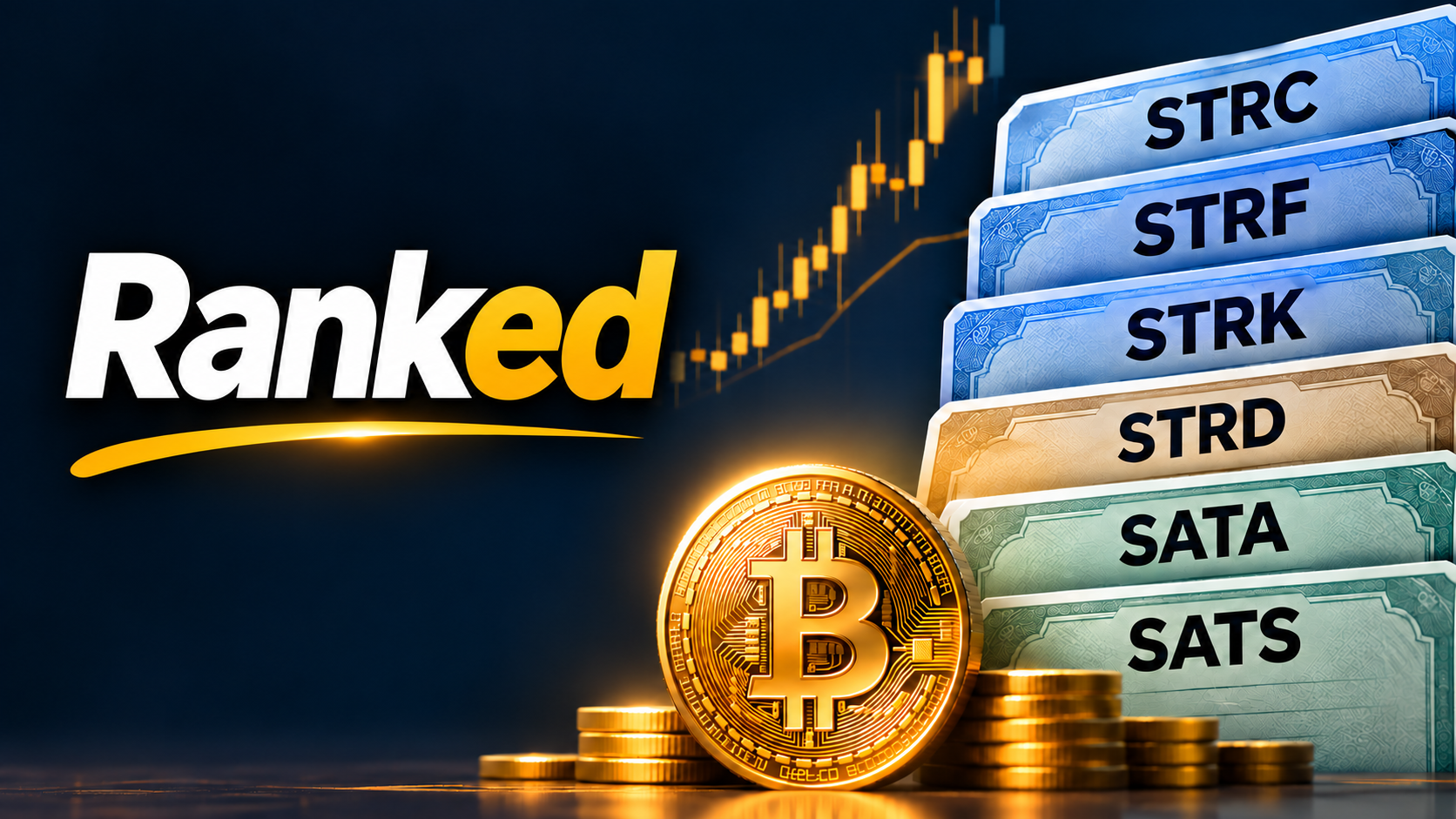
Digital credit is an emerging asset class that transforms corporate Bitcoin balance sheets into income-producing securities. Strategy pioneered the market with five perpetual preferred equity instruments: STRK, STRF, STRD, STRC, and STRE (the first four are listed in the U.S.). Strive subsequently introduced SATA and SATS, bringing the category to six U.S. instruments across two issuers. These securities offer investors preferred equity (read: credit-like) exposure to companies whose balance sheets are dominated by Bitcoin. Their perpetual structure means investors principally rely on recurring dividends and the continued financial strength of the issuer. Unlike term debt, there is no maturation date at which the full principal is ever paid back. Evaluating digital credit requires examining four characteristics: creditworthiness, investor protections, liquidity, and dividend profile. This article explains all four dimensions and then offers a ranking for the six digital credit instruments along these lines. None of this should be taken as investment advice—it is only a systematic framework for analyzing digital credit. [1]
Creditworthiness measures an issuer’s ability to support its financial obligations. Traditional credit analysis focuses on earnings, free cash flow, and refinancing capacity. Companies with strong cash generation can service interest and repay maturing debt. Digital credit issuers today derive financial strength primarily from their Bitcoin reserves, placing greater emphasis on net asset coverage. In the future we could certainly see digital credit issuers that also have significant cash flows on top of Bitcoin holdings, which would add to creditworthiness. The central question is how much Bitcoin supports each dollar of credit obligations. One useful measure is the BTC Rating, which compares the dollar value of Bitcoin reserves with the outstanding credit, accounting for the seniority of each credit instrument. Cash reserves can further strengthen creditworthiness by reducing net obligations. [1]
Investor protections determine what happens when an issuer fails to pay its promised dividends. While creditworthiness concerns an issuer’s ability to pay, investor protections govern the consequences of missed payments, and more specifically the compensation investors may receive for delayed income. The first distinction is cumulative versus noncumulative dividends. Cumulative dividends continue accumulating when payments are skipped, preserving the investor’s claim to unpaid distributions. Noncumulative dividends permit the issuer to permanently forgo a payment. The second distinction is the treatment of unpaid dividends. Some instruments preserve unpaid amounts without additional compensation. Others compound arrears at the regular dividend rate. The strongest protections impose penalty rates, which cause unpaid dividends to compound at progressively higher rates as deferrals continue. [1]
Liquidity measures how easily investors can enter and exit positions without materially affecting market prices. This is especially important for digital credit, which does not mature and pay back principal on a fixed date. A liquid market is how an investor would “get his money back” if he wants to exit his position. Digital credit has developed substantial secondary market liquidity, particularly in its leading instruments. The six U.S.-listed digital credit tickers are among the most actively traded preferred equity securities in the U.S. markets. Two metrics help investors evaluate liquidity. Absolute trading volume measures the total dollar value traded over a given period. Greater volume accommodates larger transactions and makes it easier for institutions to establish or liquidate positions. [1]
Advertisement
Digital credit is an emerging asset class that transforms corporate Bitcoin balance sheets into income producing securities. Strategy pioneered the market with five perpetual preferred equity instruments: STRK, STRF, STRD, STRC, and STRE (the first four are listed in the U.S.). Strive subsequently introduced SATA and SATS, bringing the category to six U.S. instruments across two issuers. These securities offer investors preferred equity (read: credit-like) exposure to companies whose balance sheets are dominated by Bitcoin. Their perpetual structure means investors principally rely on recurring dividends and the continued financial strength of the issuer. Unlike term debt, there is no maturation date at which the full principal is ever paid back. Evaluating digital credit requires examining four characteristics: creditworthiness, investor protections, liquidity, and dividend profile. This article explains all four dimensions and then offers a ranking for the six digital credit instruments along these lines. None of this should be taken as investment advice—it is only a systematic framework for analyzing digital credit. [1]
Creditworthiness measures an issuer’s ability to support its financial obligations. Traditional credit analysis focuses on earnings, free cash flow, and refinancing capacity. Companies with strong cash generation can service interest and repay maturing debt. Digital credit issuers today derive financial strength primarily from their Bitcoin reserves, placing greater emphasis on net asset coverage. In the future we could certainly see digital credit issuers that also have significant cash flows on top of Bitcoin holdings, which would add to creditworthiness. The central question is how much Bitcoin supports each dollar of credit obligations. One useful measure is the BTC Rating, which compares the dollar value of Bitcoin reserves with the outstanding credit, accounting for the seniority of each credit instrument. [1]
Investor protections determine what happens when an issuer fails to pay its promised dividends. While creditworthiness concerns an issuer’s ability to pay, investor protections govern the consequences of missed payments, and more specifically the compensation investors may receive for delayed income. The first distinction is cumulative versus noncumulative dividends. Cumulative dividends continue accumulating when payments are skipped, preserving the investor’s claim to unpaid distributions. Noncumulative dividends permit the issuer to permanently forgo a payment. The second distinction is the treatment of unpaid dividends. Some instruments preserve unpaid amounts without additional compensation. Others compound arrears at the regular dividend rate. The strongest protections impose penalty rates, which cause unpaid dividends to compound at progressively higher rates as deferrals continue. [1]
Liquidity measures how easily investors can enter and exit positions without materially affecting market prices. This is especially important for digital credit, which does not mature and pay back principal on a fixed date. A liquid market is how an investor would “get his money back” if he wants to exit his position. Digital credit has developed substantial secondary market liquidity, particularly in its leading instruments. The six U.S.-listed digital credit tickers are among the most actively traded preferred equity securities in the U.S. markets. Two metrics help investors evaluate liquidity. Absolute trading volume measures the total dollar value traded over a given period. Greater volume accommodates larger transactions and makes it easier for institutions to establish or liquidate positions. [1]
Advertisement
The Cali Reporter newsletter
The stories worth your time.
California, the country, and what comes next. Join our free newsletter for reporting that keeps you informed.
More in Business
- Nvidia CEO Resignation Sparks Market Volatility
The sudden resignation of Nvidia CEO Jensen Huang has triggered significant market reactions, with both the company’s stock and Bitcoin experiencing notable declines.
- Nvidia CEO Resignation Highlights Leadership and Governance Challenges
The resignation of Jensen Huang, CEO of Nvidia, has sparked discussions about corporate governance and leadership development, with insights from McKinsey's global managing partner, Bob Sternfels.
- Unocoin Suspends Services Amid Security Probe
Unocoin, an Indian cryptocurrency exchange, has suspended deposits and withdrawals following the detection of unauthorized activity and a potential breach of its systems.