Deutsche Bank Faces Scrutiny Over Past Business Practices
Deutsche Bank is under renewed scrutiny following the release of internal documents that reveal its extensive business dealings with high-profile individuals and entities, including Jeffrey Epstein, Donald Trump, and…

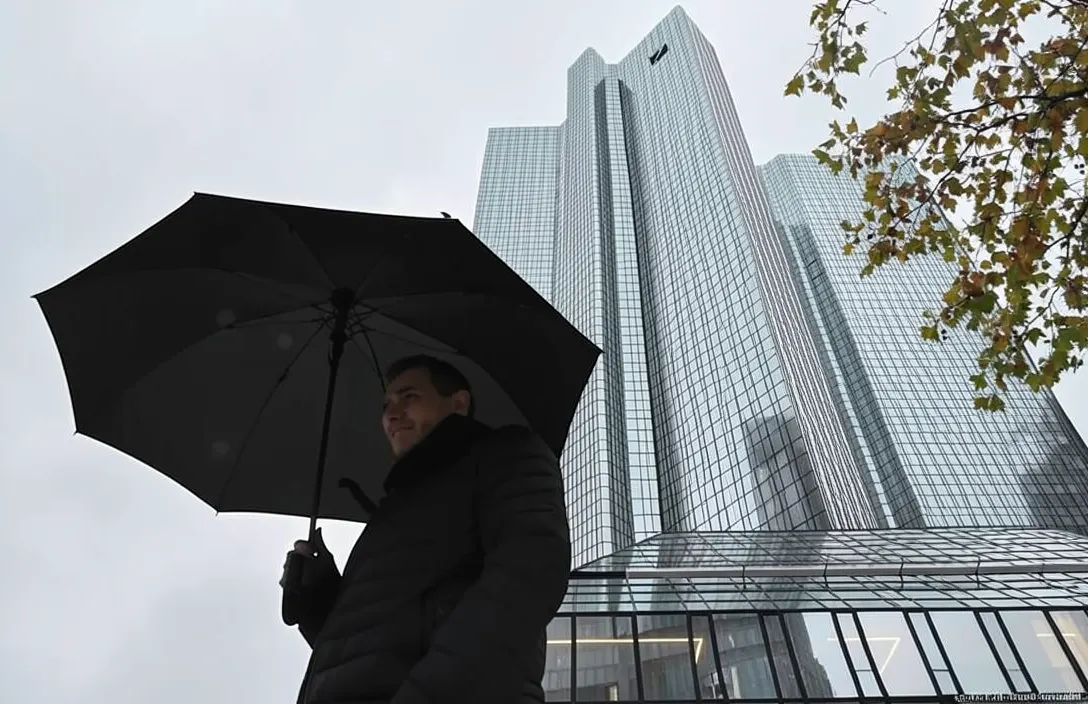
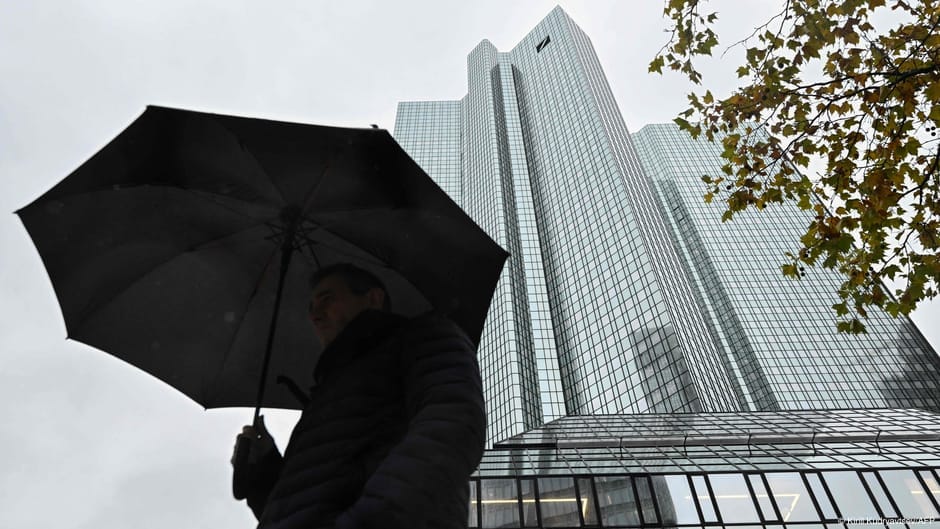
Deutsche Bank is in damage control mode again after an international consortium of more than 200 investigative journalists published internal documents from the global lender on Tuesday under the name 'Inside Deutsche Bank' (ID:1). The documents, published in Der Spiegel, Financial Times, Le Monde, and The New York Times, among others, cover Deutsche Bank's business dealings with convicted sex offender Jeffrey Epstein, now US President Donald Trump, and a host of Russian oligarchs. Gleaned from nearly 15 million documents leaked to a journalist from India and another from South Africa, the e-mails and meeting minutes trace the bank's aggressive pursuit of business deals in Russia, and with high-profile Russian oligarchs, right up until Moscow launched its full-scale invasion of Ukraine in 2022 — despite risk warnings from numerous managers. [1]
Deutsche Bank CEO Christian Sewing was among the executives who took part in the bank's Russia strategy working group (ID:1). The bank also still employs more than 160 people in Russia and generated 2025 pre-tax profits of €61 million ($67 million) there through a local subsidiary. The documents also raise questions about the efficacy of internal controls by showing that Deutsche Bank had repeatedly put financial interests before international sanctions compliance and anti-money laundering rules. [1]
Other red flags raised in Tuesday's reports suggest that Deutsche Bank sought to set up tax-optimization schemes for wealthy clients, that criminal networks may have been able to move illicit cash through the institution, that it helped facilitate arms deals, that it helped companies in environmentally damaging industries and that it held funds for the far-right populist Alternative for Germany (AfD) party (ID:1). [1]
Deutsche Bank is in damage control mode again after an international consortium of more than 200 investigative journalists published internal documents from the global lender on Tuesday under the name 'Inside Deutsche Bank' (ID:1). The documents, published in Der Spiegel, Financial Times, Le Monde and The New York Times, among others, cover Deutsche Bank's business dealings with convicted sex offender Jeffrey Epstein, now US President Donald Trump, and a host of Russian oligarchs. Gleaned from nearly 15 million documents leaked to a journalist from India and another from South Africa, the e-mails and meeting minutes trace the bank's aggressive pursuit of business deals in Russia, and with high-profile Russian oligarchs, right up until Moscow launched its full-scale invasion of Ukraine in 2022 — despite risk warnings from numerous managers (ID:1). [1]
Advertisement
Deutsche Bank CEO Christian Sewing was among the executives who took part in the bank's Russia strategy working group (ID:1). The bank also still employs more than 160 people in Russia and generated 2025 pre-tax profits of €61 million ($67 million) there through a local subsidiary. Other red flags raised in Tuesday's reports suggest that Deutsche Bank sought to set up tax-optimization schemes for wealthy clients, that criminal networks may have been able to move illicit cash through the institution, that it helped facilitate arms deals, that it helped companies in environmentally damaging industries and that it held funds for the far-right populist Alternative for Germany (AfD) party (ID:1). [1]
Beyond more recent negative headlines involving alleged anti-money laundering and compliance failures, Deutsche Bank has been trying to restore its public image ever since its involvement in the US subprime mortgage rate scandal helped trigger the 2008 global financial crisis — a fiasco that ultimately cost the bank more than €20 billion in penalties and settlements (ID:1). When Sewing later took over in 2018, he promised to turn the institution around. Although he has made Deutsche Bank profitable once again, he did so at the cost of massive job cuts, and some compliance failings have continued (ID:1). [1]
Deutsche Bank is in damage control mode again after an international consortium of more than 200 investigative journalists published internal documents from the global lender on Tuesday under the name 'Inside Deutsche Bank' (ID:1). The documents, published in Der Spiegel, Financial Times, Le Monde and The New York Times, among others, cover Deutsche Bank's business dealings with convicted sex offender Jeffrey Epstein, now US President Donald Trump, and a host of Russian oligarchs. Gleaned from nearly 15 million documents leaked to a journalist from India and another from South Africa, the e-mails and meeting minutes trace the bank's aggressive pursuit of business deals in Russia, and with high-profile Russian oligarchs, right up until Moscow launched its full-scale invasion of Ukraine in 2022 — despite risk warnings from numerous managers (ID:1). [1]
Deutsche Bank CEO Christian Sewing was among the executives who took part in the bank's Russia strategy working group (ID:1). The bank also still employs more than 160 people in Russia and generated 2025 pre-tax profits of €61 million ($67 million) there through a local subsidiary. Other red flags raised in Tuesday's reports suggest that Deutsche Bank sought to set up tax-optimization schemes for wealthy clients, that criminal networks may have been able to move illicit cash through the institution, that it helped facilitate arms deals, that it helped companies in environmentally damaging industries and that it held funds for the far-right populist Alternative for Germany (AfD) party (ID:1). [1]
Advertisement
Beyond more recent negative headlines involving alleged anti-money laundering and compliance failures, Deutsche Bank has been trying to restore its public image ever since its involvement in the US subprime mortgage rate scandal helped trigger the 2008 global financial crisis — a fiasco that ultimately cost the bank more than €20 billion in penalties and settlements (ID:1). When Sewing later took over in 2018, he promised to turn the institution around. Although he has made Deutsche Bank profitable once again, he did so at the cost of massive job cuts, and some compliance failings have continued (ID:1). [1]
Deutsche Bank is in damage control mode again after an international consortium of more than 200 investigative journalists published internal documents from the global lender on Tuesday under the name 'Inside Deutsche Bank' (ID:1). The documents, published in Der Spiegel, Financial Times, Le Monde, and The New York Times, among others, cover Deutsche Bank's business dealings with convicted sex offender Jeffrey Epstein, now US President Donald Trump, and a host of Russian oligarchs. Gleaned from nearly 15 million documents leaked to a journalist from India and another from South Africa, the e-mails and meeting minutes trace the bank's aggressive pursuit of business deals in Russia, and with high-profile Russian oligarchs, right up until Moscow launched its full-scale invasion of Ukraine in 2022 — despite risk warnings from numerous managers (ID:1). [1]
Deutsche Bank CEO Christian Sewing was among the executives who took part in the bank's Russia strategy working group (ID:1). The bank also still employs more than 160 people in Russia and generated 2025 pre-tax profits of €61 million ($67 million) there through a local subsidiary. Other red flags raised in Tuesday's reports suggest that Deutsche Bank sought to set up tax-optimization schemes for wealthy clients, that criminal networks may have been able to move illicit cash through the institution, that it helped facilitate arms deals, that it helped companies in environmentally damaging industries and that it held funds for the far-right populist Alternative for Germany (AfD) party (ID:1). [1]
Beyond more recent negative headlines involving alleged anti-money laundering and compliance failures, Deutsche Bank has been trying to restore its public image ever since its involvement in the US subprime mortgage rate scandal helped trigger the 2008 global financial crisis — a fiasco that ultimately cost the bank more than €20 billion in penalties and settlements (ID:1). When Sewing later took over in 2018, he promised to turn the institution around. Although he has made Deutsche Bank profitable once again, he did so at the cost of massive job cuts, and some compliance failings have continued (ID:1). [1]
Advertisement
The Cali Reporter newsletter
The stories worth your time.
California, the country, and what comes next. Join our free newsletter for reporting that keeps you informed.
More in World
- Irish Man Charged with Destroying U.S. Military Aircraft at Shannon Airport
A man from Ireland has been indicted for allegedly destroying a U.S. military aircraft at Shannon Airport, according to prosecutors in New York.
- Trump's APEC Summit and Strategic Meetings
President Donald Trump is set to attend the APEC summit in Shenzhen, China, where he is expected to meet with Chinese President Xi Jinping and participate in a trilateral meeting with Russian President Vladimir Putin,…
- Early Snowfall in Northern England and Scotland
Snowfall occurred in parts of Northern England and southern Scotland, with subsequent melting due to milder temperatures, according to the BBC.