Declining Fertility Rates and the Case for Having More Children
A new edition of Bryan Caplan's book 'Selfish Reasons to Have More Kids' highlights the declining global fertility rates and argues for the benefits of having more children.
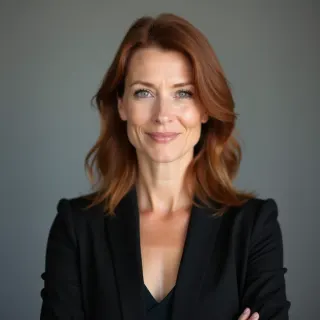


Bryan Caplan, an economist and father of four, has revisited his 15-year-old book 'Selfish Reasons to Have More Kids' in light of declining global fertility rates. According to the NY Post, the total fertility rate has dropped significantly since the 1950s, with American women now averaging just 1.6 children, far below the 2.1 needed for population stability in developed countries. Caplan notes that big families have 'all but disappeared,' with fewer than 4% of women in their early forties having five or more children by 2006, compared to 20% in 1976 (NY Post). [1]
Caplan argues that having more children is not only personally fulfilling but also beneficial for society. He claims that parenting has become unnecessarily burdensome, with excessive focus on early years of child-rearing, leading to a higher perceived cost of raising children. However, he emphasizes that the long-term benefits of having children, such as future grandchildren and personal fulfillment, outweigh the initial challenges (NY Post). [1]
Caplan suggests that despite modern concerns about safety and the challenges of parenting, the world is actually safer and more prosperous than in the past. He points to medical advances, reduced accidents, and greater affluence as reasons to consider having more children. He also notes that parenting efforts have little enduring impact on children's intelligence, happiness, or health, as evidenced by studies of twins raised apart (NY Post). [1]
Bryan Caplan, the author of 'Selfish Reasons to Have More Kids,' is based in the United States and has written extensively on the topic of population decline. His original book was published 15 years prior to the article’s release in 2026, and the new edition was released by Basic Books, a publishing house based in New York City. Caplan, who resides in the U.S. and is a father of four, including identical twins, has lived through a period of significant demographic change in America, where the average number of children per woman has dropped to 1.6, far below the replacement level of 2.1 needed to sustain population in developed countries. This decline is particularly evident in the U.S., where 20% of women in their early forties had five or more children in 1976, but by 2006, that number had fallen to less than 4%. [1]
Advertisement
The book’s original publication coincided with a period when overpopulation was a prominent concern, but today, the global total fertility rate is roughly half of what it was in the 1950s. In many parts of the world, including Europe and Asia, fertility rates are well below replacement levels, with China at 1.0. Caplan’s new edition was released in 2026 with an updated afterword, reflecting a growing awareness of the challenges posed by declining fertility rates in the U.S. and globally. This awareness has evolved over the past 15 years, as concerns about aging societies, economic stagnation, and labor shortages have become more mainstream. [1]
Caplan argues that having more children can be both personally fulfilling and beneficial for society. He points out that despite the increased effort and anxiety modern parents invest in raising children, studies of twins raised apart suggest that genetics play a more significant role in shaping adult outcomes than parenting practices. This insight challenges the common belief that intensive parenting leads to better outcomes for children. Instead, Caplan suggests that the modern emphasis on safety, education, and constant supervision may be overcomplicating the process and inadvertently discouraging people from having larger families. [1]
The author also highlights that the world is safer and more prosperous than in previous centuries, noting that children today are less likely to face the dangers of diseases like polio, the hardships of the Great Depression, or the devastation of the bubonic plague. He emphasizes that while raising children involves initial challenges, the long-term rewards—such as future grandchildren, stronger marriages, and personal fulfillment—are significant. Caplan concludes that the selfish reasons for having more children align with altruistic goals, as increasing the population can contribute positively to the world by adding more people, ideas, and labor to society. [1]
Bryan Caplan, an economist and father of four, has revisited his 15-year-old book 'Selfish Reasons to Have More Kids' in light of declining global fertility rates. According to the NY Post, Caplan argues that having more children is not only personally fulfilling but also beneficial for society. He notes that the world's 'total fertility rate' is roughly half of what it was in the 1950s, with many countries now below replacement levels. American women now have an average of 1.6 children, a record low, compared with the 2.1 needed to maintain population in a developed country (NY Post). [1]
Advertisement
Caplan acknowledges that the American family has drastically downsized over his lifetime, with big families 'all but disappearing.' In 1976, 20% of women in their early forties had five or more kids; by 2006, less than 4% did. He emphasizes that the concerns about overpopulation from the past are no longer relevant, as the current issue is a 'birth dearth' that could lead to economic stagnation, labor shortages, and political turmoil (NY Post). [1]
Caplan argues that parenting is often more exhausting and time-consuming than it needs to be, with modern parents focusing too much on early years and not enough on the long-term rewards. He cites studies of twins raised apart, showing that heredity has a greater impact on children's outcomes than parenting. He suggests that many of the efforts parents undertake to shape their children's lives have only temporary effects (NY Post). [1]
Despite modern concerns about safety, Caplan insists that the world is actually safer and more prosperous than in the past. He points out that kids are much safer today than during the polio epidemic, the Great Depression, or the bubonic plague. He argues that prospective parents should consider the long-term benefits of having children, including future grandchildren and the joy that children bring to a home (NY Post). [1]
Sources
Prepared with AI assistance from the cited sources.
The Cali Reporter newsletter
The stories worth your time.
California, the country, and what comes next. Join our free newsletter for reporting that keeps you informed.
More in U.S. News
- Nvidia CEO Returns to Denny's After Plaque Removal
Nvidia's CEO, Jensen Huang, has returned to the Denny's in San Jose, California, where the company was founded, following the temporary removal of a commemorative plaque.
- Taylor Frankie Paul Hints at Applying for Sam Hartman's 'Bachelor' Season
Taylor Frankie Paul, whose 'Bachelorette' season was canceled, is jokingly suggesting she may apply for Sam Hartman's upcoming 'Bachelor' season.
- Kentucky Couple's Dream Home Turns Into Snake-Infested Nightmare
A Kentucky couple's new home has become a snake-infested nightmare, with evidence suggesting the infestation may have been present for decades.