Dakar Youth Olympics Conclude with Cultural and Political Undercurrents
The Dakar Youth Olympics concluded with a mix of athletic competition, cultural expression, and political reflection, highlighting both the unifying power of sport and the lingering tensions of global conflicts.

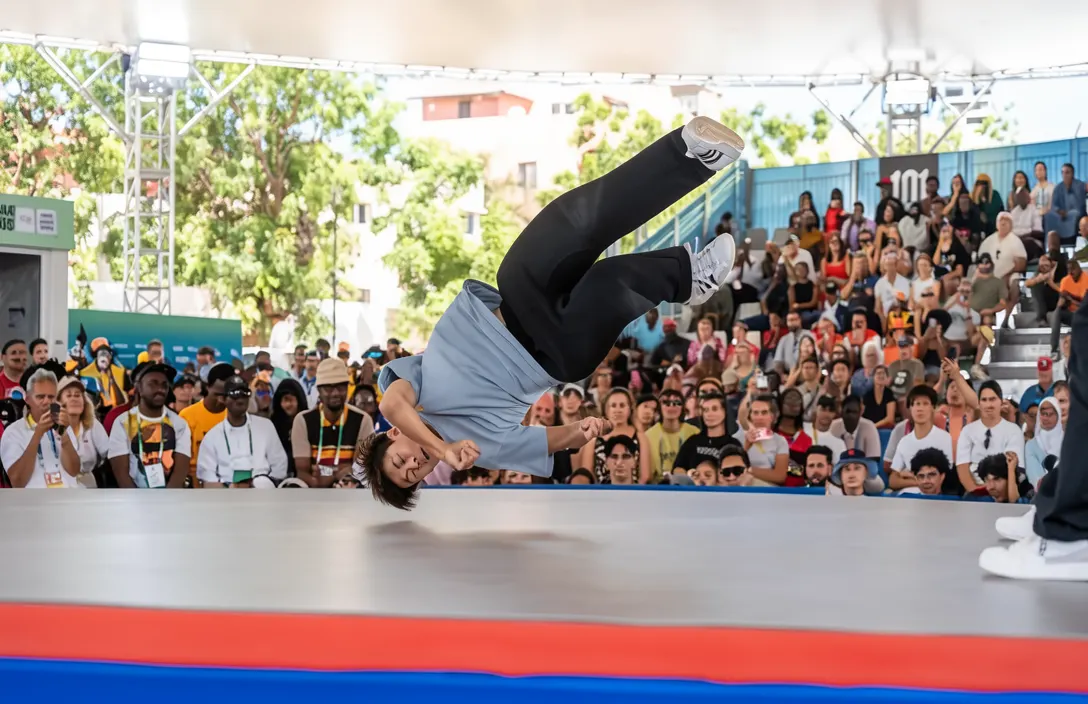

The final event of the Dakar Youth Olympics 2026 saw breakdancers from around the world competing in a display of creativity and skill, showcasing the unique blend of athleticism and artistry that defined the games. The competition, held in Senegal, emphasized innovation, balance, and nerve, with participants embodying a mix of gymnast, basketballer, and boxer. This event marked the culmination of a two-week games that brought together young athletes from diverse backgrounds, all set against the backdrop of Senegal's first hosting of an Olympic event (Al Jazeera, 2026). [1]
France's development agency provided 80 million euros to Senegal for the construction of sporting facilities, a gesture that has sparked discussions about the lingering influence of former colonial powers in the region. At Dakar’s railway station, a statue depicting two bronze soldiers—one African and one French—stood as a reminder of historical tensions, with some viewing the gesture as an example of colonial paternalism (Al Jazeera, 2026). [1]
The return of Russia's flag and anthem to an Olympic event marked a significant moment for Russian athletes and supporters, symbolizing a shift after the country's suspension following its invasion of Ukraine in 2022. Meanwhile, Israel's participation in the games, despite its ongoing conflict in Gaza, led to the arrest of a Senegalese man over a video opposing its presence, highlighting the complex interplay between politics and sport (Al Jazeera, 2026). [1]
The International Olympic Committee (IOC) maintains a stance of political neutrality, emphasizing that youth athletes should not be held accountable for the actions of their governments. However, the flags carried by athletes at the games remain inextricably linked to the conflicts beyond the podium, as seen in the symbolic message from Palestinian swimmer Alma Shaat, who encouraged children in Gaza to continue pursuing their dreams (Al Jazeera, 2026). [1]
Advertisement
The final event of the Dakar Youth Olympics 2026 saw breakdancers from around the world competing in a display of creativity and skill, showcasing the unique blend of athleticism and artistry that defined the games (1). The competition on Friday, the last in the two-week games, was less about brute strength or speed than invention, creativity, balance and nerve. Each of the teenaged breakers was part gymnast, part basketballer, part boxer all at once, and they brought a fitting energy to the end of a Youth Olympics held on the world’s youngest continent. [1]
Before Senegal became the first African country to host an Olympic event, France’s development agency lent the already heavily indebted West African country 80 million euros ($88m) for sporting facilities for the games (1). It came as young people across the region are increasingly questioning the former colonial power’s lingering influence. At Dakar’s railway station, I watched French police helping secure the event. Above them stood a statue of two bronze soldiers – one African, the other French. The African one, named Demba, represents the colonial troops who fought and died for France during World War I. The French one, named Dupont, rests an arm on his shoulder, a gesture of fraternity that others see as colonial paternalism. [1]
At the first swimming medal ceremony I attended, Russia’s 17-year-old Serafima Fokina stood on the podium, gold around her neck, singing her national anthem. Some spectators rose. Others remained seated (1). For Russian athletes and their supporters, it was a moment of enormous symbolism: The Russian flag and anthem were back at an Olympic event for the first time since the country’s suspension after its full-scale invasion of Ukraine in 2022. [1]
Israel competed too despite its genocidal war on Gaza. A Senegalese man was arrested over a video opposing its participation that authorities described as threatening (1). The International Olympic Committee (IOC) insists on political neutrality, a principle it considers fundamental to the Olympic spirit. “Youth athletes should not be held accountable for the actions of their governments,” the IOC said, arguing that sport offers them access to hope. [1]
Advertisement
The Cali Reporter newsletter
The stories worth your time.
California, the country, and what comes next. Join our free newsletter for reporting that keeps you informed.
More in World
- Irish Man Charged with Destroying U.S. Military Aircraft at Shannon Airport
A man from Ireland has been indicted for allegedly destroying a U.S. military aircraft at Shannon Airport, according to prosecutors in New York.
- Trump's APEC Summit and Strategic Meetings
President Donald Trump is set to attend the APEC summit in Shenzhen, China, where he is expected to meet with Chinese President Xi Jinping and participate in a trilateral meeting with Russian President Vladimir Putin,…
- Early Snowfall in Northern England and Scotland
Snowfall occurred in parts of Northern England and southern Scotland, with subsequent melting due to milder temperatures, according to the BBC.