COP31 Negotiations Face Stiff Challenges Over Fossil Fuel Phaseout and IPCC Reports
Delegates at COP31 are locked in intense negotiations over the draft climate deal, with disagreements over the phaseout of fossil fuels and the timeline for the IPCC's seventh assessment report.

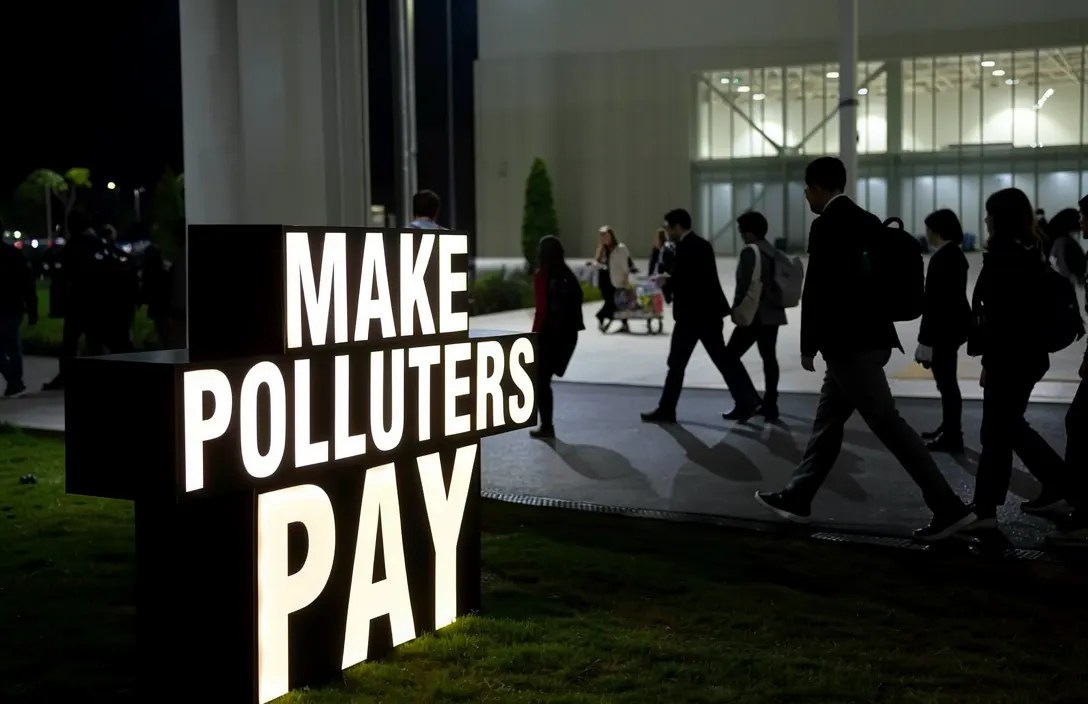

The publication of the IPCC’s seventh assessment report has become a sticking point at the UN climate talks in Turkiye, as the 18-page draft 'cover decision' published by summit cohost Australia highlights deep divisions among delegates. The draft includes a call for a phaseout of fossil fuels, a demand that has drawn criticism from some quarters, with the European Union's climate envoy, Wopke Hoekstra, stating that the text could make negotiations 'untenable' and requiring 'significant change' (1). [1]
Australian Climate Minister Chris Bowen acknowledged that the draft text contains elements that not all parties agree on and noted that there might be 'at least one more draft' introduced before the end of the week. The talks are scheduled to end on Friday, but climate negotiations often extend beyond the deadline as agreements must be reached by consensus, meaning even a single country can block the entire process (1). [1]
The draft text also includes a call for wealthy nations to achieve net zero emissions by 2030, a target that oil-rich countries have long resisted. The dispute has become one of the main issues being debated at COP31, with Saudi Arabia defending its position on the publication timeline for the IPCC report, stating that it 'advocates publication timelines that allow sufficient scientific review, transparency and meaningful participation' (1). [1]
The contentious 18-page draft 'cover decision' published by Australia, the cohost of COP31, has highlighted divisions among delegates over the call for a phaseout of fossil fuels (1). The draft text has been criticized by several parties, including the European Union’s climate envoy, Wopke Hoekstra, who stated that it 'does not go in the right direction and needs significant change' (1). Australian Climate Minister Chris Bowen acknowledged that the text includes elements 'that not all parties agree on' and noted that there may be 'at least one more draft' introduced before the end of the week (1). [1]
Advertisement
The draft text includes a call for wealthy nations to achieve net zero emissions by 2030, a target that oil-rich countries have long resisted (1). Michael Joseph, the environment minister of Antigua and Barbuda, stated that consensus on the issue of net zero emissions at COP31 'might be very, very difficult' and emphasized the importance of a commitment to phase out fossil fuels (1). An anonymous official from a European country described the demands from emerging countries as 'tactical' and 'obviously unacceptable,' citing a bloc of countries that includes Saudi Arabia and India (1). [1]
Saudi Arabia is also at the center of a dispute over the timeline for the publication of the IPCC’s seventh assessment report (1). Dozens of European, African, and Pacific states have called for the reports to be published before the next COP33 conference in 2028 (1). Saudi Arabia’s delegation at COP31 defended its position, stating that the country 'is not seeking to delay climate science' and 'advocates publication timelines that allow sufficient scientific review, transparency, and meaningful participation' (1). [1]
The 18-page draft 'cover decision' published by Australia, the cohost of COP31, has sparked tensions among delegates over the call for a phaseout of fossil fuels (1). The document, which includes a broad range of demands, has been described as potentially making negotiations 'untenable' by Wopke Hoekstra, the European Union’s climate envoy (1). He stated that the cover decision does not go in the right direction and needs significant change (1). Australian Climate Minister Chris Bowen acknowledged that the text includes elements that not all parties agree on and noted that there might be 'at least one more draft' introduced before the end of the week (1). [1]
The draft text includes a call for wealthy nations to achieve net zero emissions by 2030, a target that oil-rich countries have long resisted (1). Michael Joseph, the environment minister of the island state of Antigua and Barbuda, said consensus on the issue of net zero emissions at COP31 'might be very, very difficult' (1). He expressed a desire to see a commitment that calls on the phasing out of fossil fuels (1). Joao Paulo Capobianco, Brazil’s environment minister, noted that deadlocks can be overcome through 'an adjustment in the wording' in the draft (1). [1]
Advertisement
Saudi Arabia is also at the center of a dispute over the timeline for the publication of the IPCC’s seventh assessment report (1). Dozens of European, African, and Pacific states want the report published before the next COP33 conference in 2028 (1). The IPCC suspended its last meeting after failing to break the impasse, and a new session was set for December to resolve the issue (1). Ilana Seid, chair of the Alliance of Small Island States, described delays in publishing the IPCC’s seventh assessment report as 'unjustifiable' (1). [1]
A contentious 18-page draft 'cover decision' published by Australia, the cohost of COP31, has highlighted divisions among delegates over the call for a phaseout of fossil fuels (1). The draft text includes a call for wealthy nations to achieve net zero emissions by 2030, a target that oil-rich countries have long resisted (1). The European Union’s climate envoy, Wopke Hoekstra, stated that the draft could make negotiations 'untenable' and requires 'significant change' (1). [1]
Australian Climate Minister Chris Bowen acknowledged that the draft text contains elements 'that not all parties agree on' and noted that there might be 'at least one more draft' introduced before the end of the week (1). The talks are scheduled to end on Friday, but climate negotiations usually run into overtime as agreements must be reached by consensus, meaning even a single country can block the entire process (1). [1]
Saudi Arabia is also at the center of a dispute over the timeline for the publication of the IPCC’s seventh assessment report (1). The kingdom’s delegation at COP31 defended its position on the publication timeline for the IPCC report, stating that 'Saudi Arabia is not seeking to delay climate science' and that it advocates for timelines that allow 'sufficient scientific review, transparency and meaningful participation' (1). [1]
Advertisement
The Cali Reporter newsletter
The stories worth your time.
California, the country, and what comes next. Join our free newsletter for reporting that keeps you informed.
More in World
- Irish Man Charged with Destroying U.S. Military Aircraft at Shannon Airport
A man from Ireland has been indicted for allegedly destroying a U.S. military aircraft at Shannon Airport, according to prosecutors in New York.
- Trump's APEC Summit and Strategic Meetings
President Donald Trump is set to attend the APEC summit in Shenzhen, China, where he is expected to meet with Chinese President Xi Jinping and participate in a trilateral meeting with Russian President Vladimir Putin,…
- Early Snowfall in Northern England and Scotland
Snowfall occurred in parts of Northern England and southern Scotland, with subsequent melting due to milder temperatures, according to the BBC.