COP31 Guidance Puts AI's Climate Claims Under Scrutiny
UN News reports that the UN, UNESCO and Brazil used the Antalya conference to issue priorities asking AI developers to measure and publish their climate impacts and urging governments to fold information integrity into…

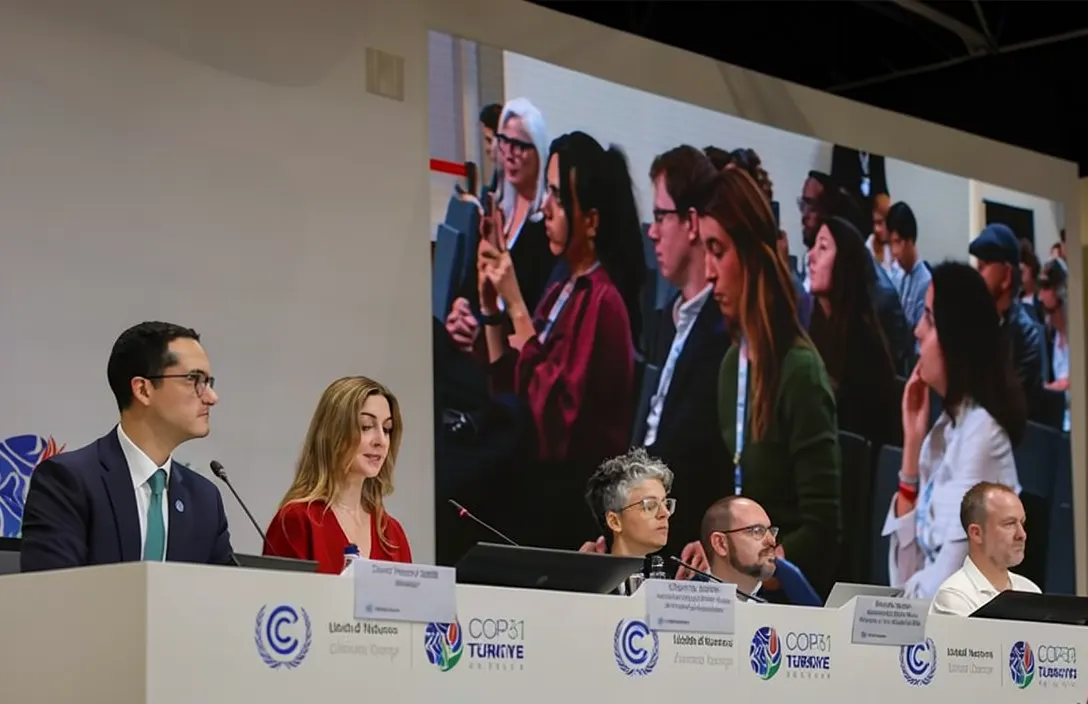
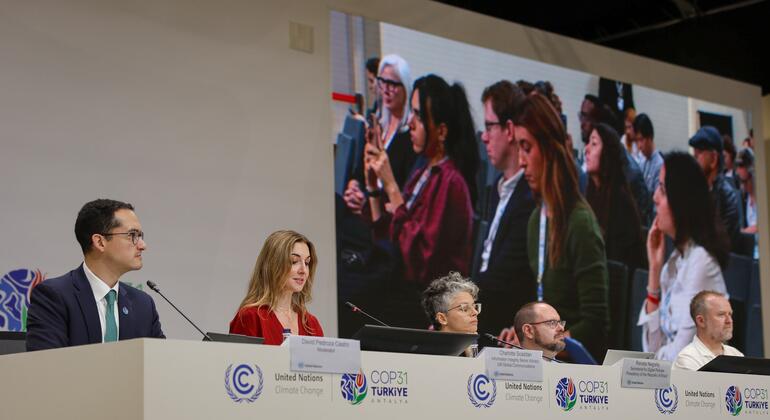
A set of voluntary guidelines issued at COP31 asks artificial intelligence developers to examine how their products shape climate information and to publish both those assessments and the resources their computing consumes [1]. UN News reported on 13 November 2026 that the document, Priorities for Action on AI and Climate Information Integrity, was presented in Antalya, Türkiye, by the Global Initiative for Information Integrity on Climate Change, a body that the UN, UNESCO and Brazil lead jointly [1]. The conference began that month with ten declared themes—among them electrification and the clean energy shift, waste reduction and cities able to withstand climate shocks—and is set to close on 20 November [1]. [1]
The grouping behind the guidance traces to the G20 gathering in Rio de Janeiro in November 2024, where it was first announced as a joint undertaking by governments and international bodies to pay for research and practical work on the reliability of climate information [3]. A UN page on the initiative quotes Secretary-General António Guterres saying the world body would join Brazil and UNESCO in working with researchers and partners to counter climate disinformation, and President Luiz Inácio Lula da Silva describing the aim of uniting governments, international organizations and research networks ahead of COP30 in Brazil [3]. [3]
Since then the effort has built institutions around itself. UNESCO administers a Global Fund, set up as a Multi-Partner Trust Fund, that pays for coordinated research intended to expose and dismantle climate-related disinformation and to circulate the findings [3]. The UN lists participants including 17 governments—among them Australia, Belgium, Brazil, Canada, Chile, Colombia, Denmark, Finland, France, Germany, Morocco, the Netherlands, Peru, Spain, Sweden, the United Kingdom and Uruguay—as well as UN Climate Change, the World Meteorological Organization, the OECD and civil society representatives [3]. At the COP30 meeting in Belém in November 2025, the final Mutirão Decision described information integrity as necessary for effective climate action, which the UN calls the first formal embedding of the concept in international climate governance [3]. [3]
To align with the new priorities, technology firms are expected to assess how their systems influence the accuracy of climate information, publicly share these evaluations, and report their energy use alongside their carbon, water, and land footprints. Governments are also urged to incorporate information integrity into their national AI strategies and climate plans. These action points are rooted in human rights and are supported by two prior documents: the Belém Declaration on Information Integrity on Climate Change, introduced at COP30, and the UN Global Principles for Information Integrity [1]. According to the UN, the Belém Declaration, presented on 12 November 2025, sets international commitments to counter climate disinformation and promote accurate, evidence-based climate information. It also urges governments, businesses, civil society, academia, and funders to address disinformation, misinformation, denialism, and deliberate attacks on environmental journalists, defenders, scientists, and researchers [2]. [1] [2]
Advertisement
Part of the case for acting comes from the Independent International Scientific Panel on AI, which UN News says has cautioned that writing convincing prose is simpler for the technology than writing accurate prose [1]. The General Assembly created the panel on 26 August 2025 through Resolution A/RES/79/325, carrying out a pledge made in the Global Digital Compact at the 2024 Summit of the Future; the UN calls it the first global scientific body on artificial intelligence, assembled to evaluate how AI is reshaping societies [4]. According to UN News, the initiative's co-chairs warn that dangers can grow during climate emergencies, when synthetic images and videos may travel faster than official warnings [1]. [1] [4]
Charlotte Scaddan, a senior advisor on information integrity at the UN Department of Global Communications, told UN News that the issue is not whether AI helps or harms the climate, but whether people can trust what AI tells them and what they are told about AI [1]. Also unveiled at the launch was the Charter for Climate Information Integrity in Advertising, which UN News says targets problems such as profiting from disinformation and denial. The article cites Jake Dubbins, co-founder of the Conscious Advertising Network, on the charter's call for transparency along the advertising supply chain, so that advertisers can see where their ads run while user privacy is protected [1]. [1]
Only one government contribution is specified in the supplied material: UN News reports that Germany pledged more than $2.2 million for research, communication strategy development and public awareness campaigns [1]. That pledge operates alongside the UNESCO-administered fund, which the UN describes as financing coordinated research and spreading its results [2]. [1] [2]
The UN Global Principles for Information Integrity underpin the initiative. The UN says the principles envision an information environment offering choice, freedom, privacy and safety, in which people can speak freely and reach informed, independent decisions, and that they support those publishing facts in the public interest as well as vulnerable and marginalized groups that often absorb targeted disinformation and hate [3]. One working program is Verified for Climate, run with the social impact agency Purpose, which promotes science-based, solutions-oriented content to counter denialism, doomism and delay; the UN says Verified began as a response to the COVID-19 pandemic and rests on three parts—trusted messengers and community engagement, global creative campaigns, and gatherings of climate communications experts [3]. [3]
Advertisement
Putting an information-integrity item on a conference agenda dominated by electrification and resilient cities aligns with an argument the initiative has made from the start: that disinformation slows and derails climate action while scientists warn time is short [3]. Whether that causal link holds in any specific policy area remains a subject of research, which is what the Global Fund is designed to finance [3]. The guidance also lands as more people consult AI for climate information, a shift the co-chairs give as the reason to act now [1]. [1] [3]
Concerns run in two directions. One is that AI output may read smoothly but prove unreliable, a hazard the scientific panel has raised according to UN News [1]. The other is that the public cannot readily assess the environmental price of the computing behind those outputs, because energy use and carbon, water and land footprints have not been routinely published [1]. Because the priorities are framed as appeals—for firms to assess and disclose, for States to build information integrity into national strategies—rather than binding duties, the supplied material describes no enforcement mechanism and no compliance timetable [1]. [1]
COP31 is due to end on 20 November 2026, and the near-term test is whether its outcome texts carry the information-integrity language forward as the Mutirão Decision did at COP30 in 2025 [3]. The UN calls the Belém Decision the first formal embedding of information integrity in international climate governance [3]; whether COP31 yields a comparable or stronger written commitment is a question the supplied evidence does not answer. One possibility to watch, offered as a scenario rather than a prediction, is that the AI-specific priorities become a reference for national AI strategies, which the guidance urges States to integrate with information integrity and climate plans [1]. [1] [3]
Corporate disclosure is a second area to track. The guidance asks AI firms to publish assessments of how their systems affect climate information integrity and to reveal energy and carbon, water and land footprints [1]. How many will comply, what methods they would use to measure those footprints, and whether disclosures would be comparable across companies are open questions rather than reported outcomes [1]. Broader publication under a shared method could narrow the data gap the co-chairs describe; voluntary, fragmented disclosure could leave comparability limited. Neither path is asserted here—the evidence establishes the request, not the response [1]. [1]
Advertisement
A third is the research pipeline. The Global Fund is built to finance coordinated, in-depth work on climate disinformation and to disseminate results [3], and Germany's contribution is designated for research, communication strategies and awareness campaigns [1]. How soon that research appears, and whether it feeds the advertising charter's transparency work, remain open [1]. The charter's provisions—visibility of ad placements while protecting user privacy—also leave unresolved implementation questions about where such visibility sits in the advertising supply chain and how privacy safeguards would be defined [1]. [1] [3]
Scope is another unknown. The UN's published participant list names 17 States plus UN Climate Change, the World Meteorological Organization, the OECD and civil society representatives [3]; whether more governments join after the COP31 launch is not stated in the supplied reporting. The Global Fund's total resources and the size of any pledges beyond Germany's are not given [1,3]. The role of the AI scientific panel also remains unsettled: its mandate is to supply rigorous, independent insight as AI transforms societies [4], but the supplied material describes no specific panel report feeding into the COP31 priorities beyond the warning the co-chairs cited [1,3]. The documents available also do not say how progress against the Belém Declaration's commitments will be tracked, or how the new advertising charter will be monitored [1,3]. [1] [3] [4]
Launched during COP31 in Antalya, Türkiye, the Global Initiative for Information Integrity on Climate Change is co-chaired by the United Nations, UNESCO, and Brazil [1]. Its objective is to tackle climate disinformation and promote the sharing of accurate, evidence-based climate information [3]. Germany has committed over $2.2 million to support research, develop communication strategies, and implement public awareness campaigns [1]. The conference concluded on 20 November [1]. The initiative is guided by the Belém Declaration on Information Integrity on Climate Change, introduced at COP30 in Brazil, and the UN Global Principles for Information Integrity [1]. The Independent International Scientific Panel on AI was established by the UN General Assembly through Resolution A/RES/79/325 on 26 August 2025 [4]. Data regarding participation, funding—such as the 17 named States, Germany's over $2.2 million contribution, and the 20 November conclusion of the conference—are as reported by the sources and have not been independently verified here. Discussions on the potential impact of the guidance are presented as open questions and scenarios, not as confirmed outcomes. No interviews or independent reporting were conducted. [1] [3] [4]
This article was prepared with the assistance of AI. [1] [2] [3]
Advertisement
Editorial note: This article is sourced. Some claims are awaiting further verification.
Sources
Prepared with AI assistance from the cited sources.
The Cali Reporter newsletter
The stories worth your time.
California, the country, and what comes next. Join our free newsletter for reporting that keeps you informed.
More in World
- Former Hamas Bodyguard Convicted in UK Knife Attack
A former Hamas bodyguard, Mohammed Alfatih, has been found guilty of a knife attack on a bailiff outside his UK home, according to a report by the BBC.
- Woman Survives Near-Fatal Reaction to Unlicensed Weight-Loss Injection
A woman from Birkenhead narrowly avoided death after suffering severe hypoglycaemia from an unlicensed weight-loss injection, highlighting the dangers of black market drugs.
- US Air Force Responds to Drone Activity at UK Base
The US Air Force has confirmed it responded to suspected unauthorized drone activity at RAF Lakenheath in Suffolk, though no damage or injuries were reported. The incident has raised concerns about security at US…