Consumer Sentiment Rises in November 2026 Amid Post-Election Optimism
The University of Michigan's November 2026 Consumer Sentiment Index showed a 7% increase, driven by post-election expectations and falling gas prices, though inflation concerns remain high.

The University of Michigan released the final results for the November 2026 Consumer Sentiment Index, showing a 7% increase compared to the previous month (Source ID: 1). This rise was attributed to post-election optimism, particularly in expectations for short- and long-run business conditions. The report noted that low-wealth consumers experienced improved personal finances, partly due to falling gas prices, while middle-wealth consumers saw moderate improvements. However, those with significant stockholdings reported a decline in personal finances, linked to ongoing AI-related volatility in stock markets. [1]
According to the report, the expectations index surged for independents, who shifted left in the midterms, and increased more moderately for Democrats (Source ID: 1). In contrast, expectations fell for Republicans, who may be less supportive of a potential slowdown in the White House's policy agenda. Despite the month-over-month increase, consumer sentiment remains 9% below February 2026 levels, which were recorded before the start of the Iran conflict. This reflects ongoing uncertainty about cost-of-living factors that continue to dominate consumer perspectives. [1]
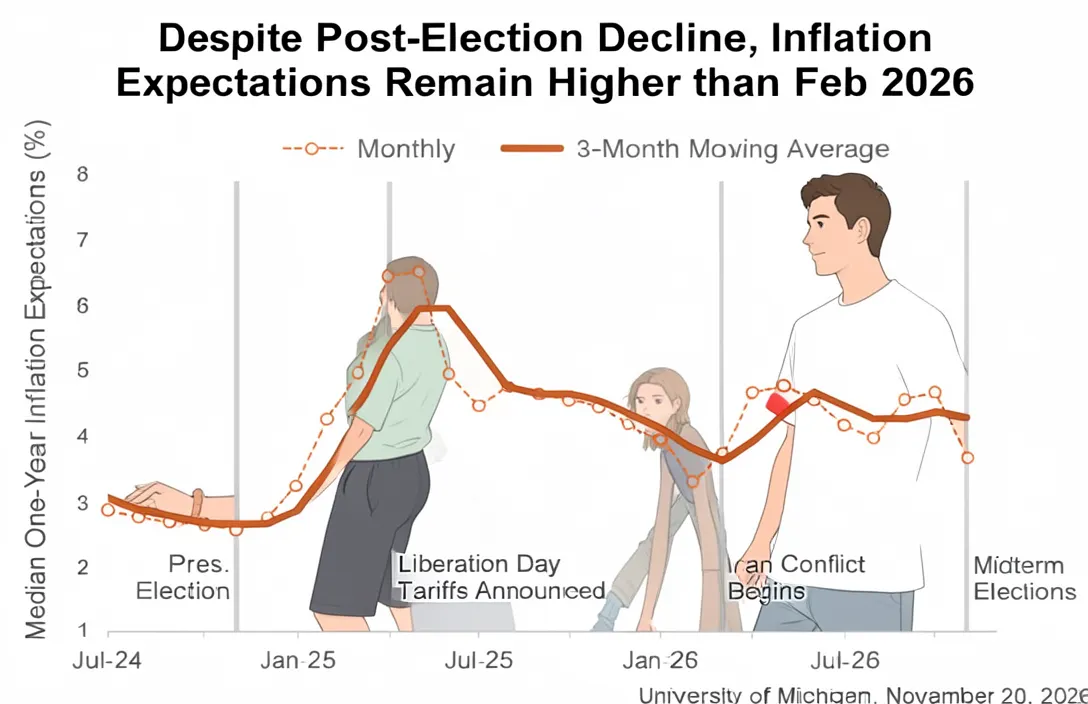
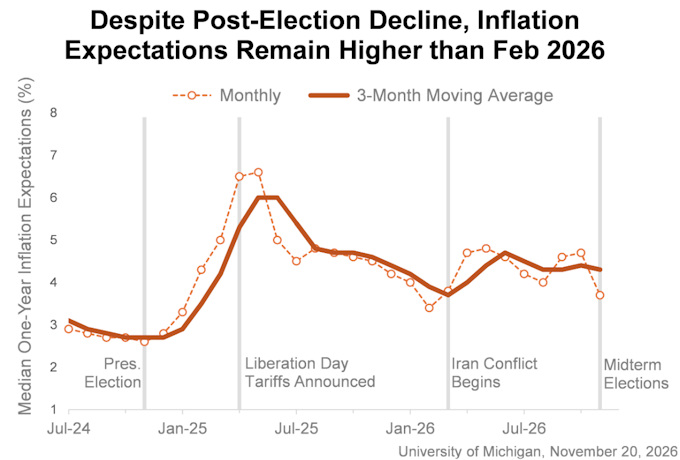
The median year-ahead inflation expectations dropped from 4.7% in October to 3.7% in November, though it still remains above the 3.4% level seen in February 2026, before the Iran conflict began (Source ID: 1). Long-run inflation expectations also declined slightly, from 3.5% to 3.3%, but remain higher than their 2024 range of 2.8% to 3.2%. Despite the decline in inflation expectations, consumers continue to indicate that inflation—rather than unemployment—will pose greater hardship in the next one to two years. [1]
The University of Michigan released the final results for the November 2026 Consumer Sentiment Index, showing a 7% increase compared to the previous month (Source ID: 1). The report highlights a surge in the expectations index for independents, who shifted left in the midterms, and a more moderate increase for Democrats (Source ID: 1). This rise in sentiment is attributed to post-election gains in both short- and long-run expected business conditions, as well as improvements in current personal finances for low-wealth consumers (Source ID: 1). [1]
Advertisement
Median year-ahead inflation expectations dropped from 4.7% in October to 3.7% in November, though it still remains above the 3.4% level seen in February 2026, before the Iran conflict began (Source ID: 1). Long-run inflation expectations also decreased slightly, from 3.5% in October to 3.3%, but remain higher than their 2024 range of 2.8% to 3.2% (Source ID: 1). Despite this softening in inflation expectations, consumers continue to report that inflation—rather than unemployment—will cause greater hardship in the next one or two years (Source ID: 1). [1]
The report notes that those with the largest stockholdings reported a decline in personal finances, consistent with continued AI-related agitation in stock markets (Source ID: 1). Consumers also appear to anticipate potential changes to public policy under a divided government, with expectations falling for Republicans, who may not favor a slowdown of the White House policy agenda (Source ID: 1). [1]
The University of Michigan released the final results for the November 2026 Consumer Sentiment Index, showing a 7% increase compared to the previous month (Source ID: 1). The report highlights that the expectations index surged for independents, who shifted left in the midterms, and increased more moderately for Democrats (Source ID: 1). This rise in sentiment is attributed to post-election gains in expected business conditions, as well as some relief for low- and middle-wealth consumers due to falling gas prices (Source ID: 1). [1]
Median year-ahead inflation expectations dropped from 4.7% in October to 3.7% in November, though it still remains above the 3.4% level seen in February 2026, before the Iran conflict began (Source ID: 1). Despite this decline, consumers continue to report that inflation—rather than unemployment—will cause greater hardship for consumers in the next one or two years (Source ID: 1). The report also notes that those with the largest stockholdings reported a decline in personal finances, consistent with continued AI-related agitation in stock markets (Source ID: 1). [1]
Advertisement
Sentiment remains subdued at 9% below February, prior to the start of the Iran conflict, reflecting continued uncertainty regarding the cost-of-living factors that dominate consumers’ perspectives (Source ID: 1). Consumers appear to anticipate potential changes to public policy under a divided government to come, which may influence future expectations and economic behavior (Source ID: 1). [1]
The University of Michigan released the final results for the November 2026 Consumer Sentiment Index, showing a 7% increase compared to the previous month (Source ID: 1). The report highlights that the expectations index surged for independents, who shifted left in the midterms, and increased more moderately for Democrats (Source ID: 1). This increase follows post-election gains in both short- and long-run expected business conditions, according to Surveys of Consumers Director Joanne Hsu (Source ID: 1). [1]
Median year-ahead inflation expectations dropped from 4.7% in October to 3.7% in November, though it still remains above the 3.4% level seen in February 2026, before the Iran conflict began (Source ID: 1). Despite this decline, long-run inflation expectations ticked down from 3.5% in October to 3.3%, which is higher than their 2024 range of 2.8% to 3.2% (Source ID: 1). Consumers continue to report that inflation—rather than unemployment—will cause greater hardship for consumers in the next one or two years (Source ID: 1). [1]
The report notes that those with the largest stockholdings reported a decline in personal finances, consistent with continued AI-related agitation in stock markets (Source ID: 1). Current personal finances improved for low-wealth consumers and, to a lesser extent, middle-wealth consumers, who experienced some relief with falling gas prices (Source ID: 1). Sentiment remains subdued at 9% below February, prior to the start of the Iran conflict, reflecting continued uncertainty regarding the cost-of-living factors that dominate consumers’ perspectives (Source ID: 1). [1]
Advertisement
The Cali Reporter newsletter
The stories worth your time.
California, the country, and what comes next. Join our free newsletter for reporting that keeps you informed.
More in California
- Survivors Support Governor Newsom's Commutation of Death Sentences
Survivors of violent crime in California have expressed support for Governor Gavin Newsom's decision to commute all death sentences, emphasizing the need for healing and resources over state-sanctioned killing.
- Caltrans Announces Winter Closure of Mountain Passes
Caltrans has officially closed several mountain passes in California due to recent snowfall and adverse weather conditions, ensuring the safety of drivers and maintenance crews.
- Documentary Explores Indigenous History of California
A new documentary series, 'People of the West,' delves into the history of California's Indigenous communities through Native voices and perspectives, highlighting overlooked aspects of their past and ongoing struggles…