

The Climate Crisis is Hiding Inside Your Child’s Lunchbox
New dashboard reveals how extreme weather reshapes early childhood nutrition across Brazil

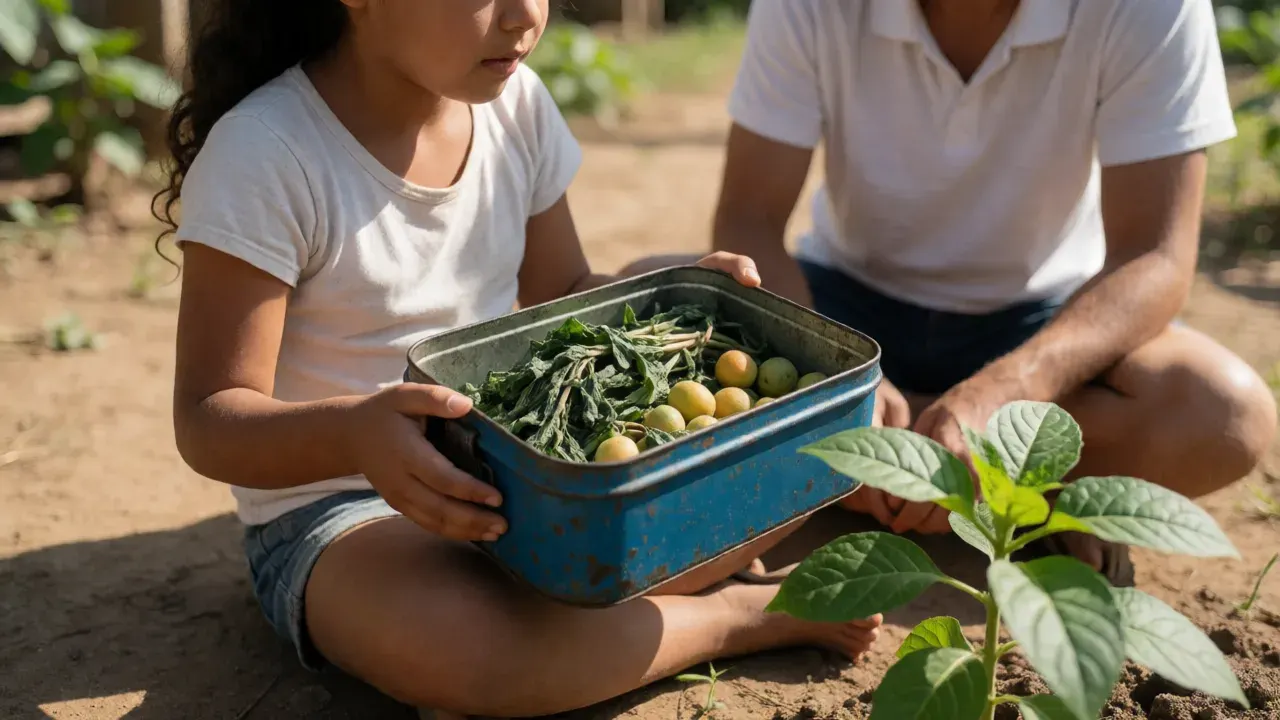
When we discuss the public health impacts of climate change, we often focus on vector-borne diseases, heat exhaustion, or respiratory issues from smoke. However, there is a subtler and perhaps more pervasive mechanism altering human health that rarely gets the clinical spotlight. It is not a virus or a toxin. It is the disruption of the food system itself. Wildfires, floods, and droughts are no longer the only ways in which climate change affects the lives of children around the world. Increasingly, its also impacting their diets. Droughts reduce agricultural production. Floods cut off roads and disrupt supply chains. Rising prices limit families’ access to fruits, vegetables, and other fresh foods. In this scenario, cheaper, longer-lasting products with low nutritional value are gaining ground. This creates a clinical paradox. It increases the risk of two conditions that, at first glance, may seem contradictory but frequently coexist in the same households: childhood obesity and malnutrition. This is the central finding of a new interactive panel focused on the Global Syndemic in Children Under Five.
To understand this, we must move beyond looking at these issues as separate silos. This panel is part of the project Global Syndemic: The Impact of Anthropogenic Climate Change on the Health and Nutrition of Children Under Five Served by the Unified Health System (SUS). It presents Brazilian municipal-level data on nutritional issues and greenhouse gas emissions. The goal of this dashboard is not only to show where malnutrition and overweight conditions are concentrated in the country, but also to help understand how these conditions are distributed across the territory and relate to environmental factors. This tool allows users to set severity alerts when more than one health issue is present in the same municipality and when there is a trend toward worsening of this situation over the years. The tool was developed by Sustentarea, a research group that brings together Brazilian researchers, students, and professionals from different fields to study and develop creative interventions in the context of food systems, sustainable nutrition, and the global syndemic. This research and outreach group is based at the School of Public Health of the University of São Paulo (FSP-USP).
The starting point for understanding this issue lies in the fact that obesity, malnutrition, and climate change are not isolated problems. In 2019, an international commission from the scientific journal The Lancet brought these three crises together under the concept of global syndemic. The term "syndemic" describes the simultaneous occurrence of two or more epidemics that interact with one another, exacerbate each other’s effects, and share common social causes. In the case of the global syndemic, obesity, malnutrition, and climate change coexist and are driven by similar structural factors. These include social inequality, limited access to healthy foods, and sustainable food production systems. Transportation and changes in land use also contribute, both of which have impacts on human health and the environment. At the heart of these dynamics are food systems, which encompass the network of actors and all stages of the food production, processing, distribution, marketing, and consumption chain, as well as the interactions between them and external influences, such as environmental, economic, political, technological, and cultural factors. These systems are associated with approximately 74% of Brazil’s greenhouse gas emissions. At the same time, these systems determine which foods reach different regions, how much they cost, and who can afford them, a situation that can contribute to both malnutrition and overweight conditions.

The panel focuses on children under 5 years of age, who are in a phase of high biological and social vulnerability. In the early years, diet and environmental conditions influence growth, development, immunity, and health throughout life. The effects of the climate crisis and malnutrition are not distributed equally: young children and low-income families tend to suffer more severe impacts and have fewer resources to adapt. The tool compiles data from Brazilian municipalities between 2008 and 2019 and allows users to track, simultaneously, trends in stunting and overweight and per capita greenhouse gas emissions. Rather than addressing each problem separately, the tool seeks to identify where they overlap and which areas should be prioritized in health, food, and climate policies. How the dashboard identifies priorities To identify the most vulnerable municipalities, the dashboard combines data from the Brazilian Ministry of Health’s Food and Nutrition Surveillance System (Sisvan) on stunting and overweight with municipal estimates of greenhouse gas emissions from SEEG Brasil. The analysis considers both the situation recorded in 2019 and the trends in these indicators between 2008 and 2019. The years 2020 through 2022 were excluded because they represent an atypical period. During the COVID-19 pandemic, there was a reduction in the demand for medical care. This reduction significantly distorted the trends used in the analysis, compromising the reliability of the data for that period. For each of the three components of the syndemic, each municipality receives a rating ranging from "very good" to "very poor," based on the trend of increase or decrease and the prevalence recorded in the last year analyzed. The nutritional criteria follow guidelines from UNICEF, the World Health Organization, and the World Bank, while the emission limits were defined based on the climate targets set by the Intergovernmental Panel on Climate Change (IPCC).
The results are then combined. The panel also identifies areas with a double burden of malnutrition, where undernutrition and overweight coexist, and those where nutritional problems are associated with high emissions. The remaining categories indicate specific alerts regarding climate, undernutrition, or overweight, as well as situations considered more favorable. This does not mean, however, that a municipality’s emissions are the direct cause of the observed nutritional problems. The maps serve primarily to identify territorial patterns, guide new research, and help policymakers direct health, food, and climate policies. There is no single Brazilian food system. Conditions related to production, access, consumption, and environmental impact vary according to the economic, social, and geographic characteristics of each region. To represent this diversity, the researchers used the Brazilian Multidimensional Index of Sustainable Food Systems (MISFS-R). The index comprises 46 indicators organized into four dimensions, social, nutritional, environmental, and economic, and allows for a comparison of the performance of the states and their capitals. Based on an analysis that grouped territories with similar characteristics, the researchers identified four major food system profiles in Brazil:
1) Agricultural Belt, comprising the Brazilian states of Acre, Rondônia, Mato Grosso, Mato Grosso do Sul, Goiás, and Tocantins. It is characterized by strong agricultural and livestock production and indicators of sound economic development, but also by high environmental pressure associated with extensive livestock farming and deforestation. This profile illustrates the tension between economic output and ecological footprint. 2) Central Economic Hub, comprising Brazilian states in the South and Southeast regions. It shows the best overall performance on the index. Nevertheless, it faces challenges such as gender and racial inequalities in rural areas and high pesticide use. This highlights that even in regions with high performance, structural inequities persist. 3) Latent Development Axis, corresponding to the Brazilian states of the Northeast region. It has the most unfavorable results in terms of income, food productivity, and nutrition indicators. Here, food insecurity is often a primary concern. 4) Vulnerability Frontier, comprising the Brazilian states of Pará, Amazonas, Roraima, and Amapá. This area is marked by a higher prevalence of food insecurity, lower dietary diversity, and difficulties in accessing food. The isolation of these regions due to geographic barriers interacts heavily with climate stressors.
These four profiles help contextualize the panel’s data. In one region, food-related problems may be linked to low income and limited access. In another, they may stem from the expansion of food environments dominated by ultra-processed products or from the environmental consequences of an intensive production model. The panel’s survey reinforces that protecting children from the climate crisis requires a nuanced approach. It requires looking at the intersection of health and environment. It requires understanding that a child’s weight is not just a matter of individual choice but is deeply entwined with global systems. The tools developed by Sustentarea and FSP-USP provide the map we need to navigate this complex landscape.
First reported by The Conversation.
More in Health & Nutrition
- Long-term opioid use fails to alleviate chronic back pain, Northwestern University study suggests
Researchers identified distinct brain activity patterns and molecular markers that may guide future treatments for pain management and opioid tapering.
- Human tau seeds trigger disease-specific shapes in mouse brains, new study finds
Study in Nature shows that injectable human tau aggregates from Alzheimer’s and corticobasal degeneration template their 3D folds onto mouse tau, supporting the prion-like seeding model.
- Menopause Largely Missing from Electronic Health Records Despite Its Health Impact
study of nearly 240,000 women finds only 12% of electronic records include menopause status, even though over half reported being in transition.